Menu
Store
Blog
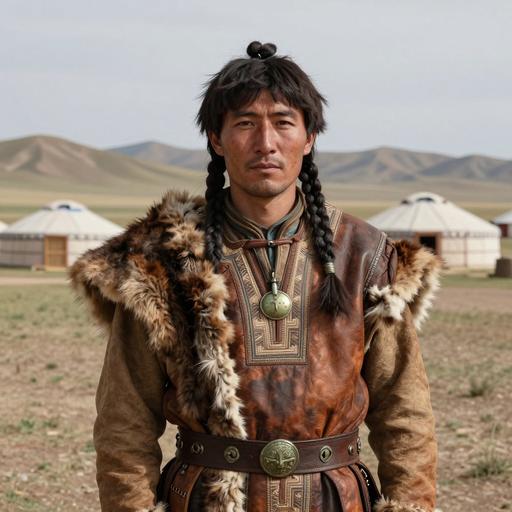
Portrait reconstruction of SBG001
Ancient Individual

A man buried in Mongolia in the Middle Late Bronze Age era

SBG001
1442 BCE - 1281 BCE
Male
Middle to Late Bronze Age Khovd, Mongolia
Mongolia
Scroll to begin
Chapter I

Identity

The biological and cultural markers that define this ancient individual

Sample ID

SBG001

Date Range

1442 BCE - 1281 BCE

Biological Sex

Male

mtDNA Haplogroup

G2b2

Y-DNA Haplogroup

Q-L330

Cultural Period

Middle to Late Bronze Age Khovd, Mongolia

Chapter II

Place

Where this individual was discovered

Country Mongolia
Locality Khovd. Shar Gobi-3. Shar gov' 3
Coordinates 47.0600, 91.8425
Chapter III

Time

When this individual lived in the broader context of human history

SBG001 1442 BCE - 1281 BCE
Chapter IV

Story

The narrative of this ancient life

The Middle to Late Bronze Age in the Khovd region of Mongolia, situated on the Eurasian Steppe, is a fascinating period that highlights the region's dynamic cultural and environmental interactions. This era roughly spans from the mid-2nd millennium BCE to the end of the 1st millennium BCE. The Khovd area, characterized by its steppe and semi-desert environment interspersed with mountains, was home to nomadic pastoralist societies that played a significant role in the cultural transference across the vast expanse of Eurasia.

Geographic and Environmental Context

Khovd is located in western Mongolia, bordered by the Altai Mountains to the southwest. The landscape features a combination of open steppe, which is well-suited for pastoral activities, and more rugged terrain, which offers resources like mineral ores and wood. The climate is largely continental, with cold winters and relatively warmer summers. These environmental factors influenced the livelihoods and movements of the Bronze Age populations in this region.

Sociocultural Aspects

During the Middle to Late Bronze Age, Khovd was inhabited by various tribes often referred to collectively as steppe nomads. These groups were engaged in pastoralism, relying heavily on herds of sheep, goats, cattle, and horses. Horse domestication and its use for travel and transport were significant developments during this period, enhancing mobility and enabling long-distance interactions.

The societies of this era were predominantly organized in tribal structures with a high degree of social stratification. Tribal leaders likely gained status through control over resources and successful inter-group alliances, sometimes marked by exchanges of goods, people, and ideas with neighboring cultures.

Material Culture

The material culture of the Khovd region during the Bronze Age is evidenced by a variety of archaeological finds, including metalwork, pottery, and funerary practices. Bronze, a crucial technological advancement, was used to create tools, weapons, and ornaments. The metallurgical skills of the Khovd inhabitants indicate interaction with neighboring cultures, possibly through trade networks that spanned Central Asia.

Pottery from this period often features geometric patterns, indicative of both functional uses and potential ritualistic or symbolic purposes. Excavations in the region have unveiled burial sites that provide insights into the spiritual and social hierarchies of these societies. Kurgans, or burial mounds, are typical of the era and reveal sophisticated burial practices that suggest beliefs in an afterlife or reverence for ancestors.

Exchange and Interaction

The Middle to Late Bronze Age in Khovd was marked by significant interactions with other cultures across the Eurasian Steppe, largely facilitated by the region's strategic position along ancient trade routes. Nomadic groups in Khovd likely participated in the early stages of what would later become the Silk Road. As a result, there was a rich exchange of not only goods but also cultural practices, technological innovations, and genetic diversity.

Religious and Ritual Practices

Although specific details about the religious beliefs of the Khovd Bronze Age societies remain elusive, burial practices and the occasional presence of ritual sites suggest complex spiritual lives. The construction of elaborate kurgans points to rituals that involved both animal sacrifices and grave goods placed with the deceased, likely intended to serve them in the afterlife. Such practices imply a belief system that revered natural forces and possibly included shamanistic elements, which were common across many Eurasian steppe societies.

Conclusion

The Middle to Late Bronze Age in the Khovd region of Mongolia provides a glimpse into the adaptive strategies of nomadic societies in a challenging environment. These communities not only survived but thrived through their mastery of pastoralism, metalwork, and strategic interactions with neighboring cultures. Archaeological findings from this era continue to offer valuable insights into the complexity of ancient societies on the Eurasian Steppe, highlighting their contributions to the broader tapestry of human history.

Chapter V

Genetics

The genetic ancestry of this ancient individual

Ancient Genetic Admixture

This analysis compares the DNA profile of SBG001 with ancient reference populations, showing the genetic composition in terms of prehistoric ancestral groups.

Ancient Asians 40.5%
Western Steppe Pastoralists 30.6%
European Hunter-Gatherers 15.8%
Neolithic Farmers 9.0%
Ancient Native Americans 4.1%

Modern Genetic Admixture

This analysis compares the DNA profile with present-day reference populations, showing what percentage of genetic makeup resembles modern populations from different regions.

Asia 55.8%
Central Asian, Northern Indian & Pakistani 34.3%
Central Asian 26.8%
Pakistan 5.0%
Indian 2.5%
Northern Asian 18.7%
Siberian 18.7%
Chinese & Southeast Asian 1.9%
Chinese 1.9%
Northern West Asian 0.9%
Caucasian 0.9%
Europe 37.1%
Eastern European 19.4%
Northwestern European 17.7%
Finnish 10.8%
English 6.1%
Northwestern European 0.8%
America 6.2%
America 6.2%
Native American 6.2%
Africa 0.5%
Northern East African 0.5%
Eastern African 0.5%

Closest Modern Populations

These are the modern populations showing the closest statistical alignment to A man buried in Mongolia in the Middle Late Bronze Age era, ranked by genetic distance. Lower distance values indicate closer statistical similarity.

1
Bashkir
5.2215
2
Tatar Crimean Steppe
7.3498
3
Tatar Lipka
7.3827
4
Khanty O1
7.7495
5
Udmurt
7.8454
6
Besermyan
7.8843
7
Tatar Siberian
8.3546
8
Uzbek
8.8119
9
Turkmen Uzbekistan
9.3002
10
Tatar Kazan
9.4566
Chapter VI

Context

Other ancient individuals connected to this sample

Sources

References

Scientific publications and genetic data

Scientific Publication

A Dynamic 6,000-Year Genetic History of Eurasia's Eastern Steppe

Authors Jeong C, Wang K, Wilkin S
Abstract

The Eastern Eurasian Steppe was home to historic empires of nomadic pastoralists, including the Xiongnu and the Mongols. However, little is known about the region's population history. Here, we reveal its dynamic genetic history by analyzing new genome-wide data for 214 ancient individuals spanning 6,000 years. We identify a pastoralist expansion into Mongolia ca. 3000 BCE, and by the Late Bronze Age, Mongolian populations were biogeographically structured into three distinct groups, all practicing dairy pastoralism regardless of ancestry. The Xiongnu emerged from the mixing of these populations and those from surrounding regions. By comparison, the Mongols exhibit much higher eastern Eurasian ancestry, resembling present-day Mongolic-speaking populations. Our results illuminate the complex interplay between genetic, sociopolitical, and cultural changes on the Eastern Steppe.

G25 Coordinates

The G25 coordinates for sample SBG001 can be used for detailed admixture analysis in our G25 Studio tool.

SBG001,0.09528792,-0.06819462,0.05328962,0.05046716,-0.03159928,0.00808112,-0.00437272,-0.00048396,-0.00044276,-0.0161294,0.00130796,-0.00037434,0.0053931,-0.0182215,0.00846766,0.00365622,-0.01008354,-0.00050598,0.0021489,0.00398256,-0.01819272,0.00713416,0.00376362,-0.00102892,-0.00374032
Analyze in G25 Studio
Use code for 40% off Expires Feb 27