Menu
Store
Blog
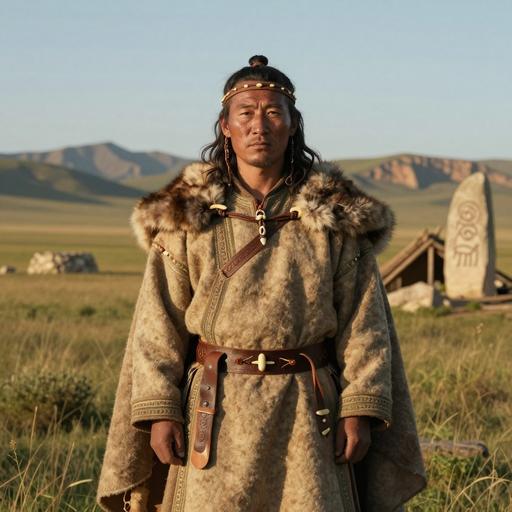
Portrait reconstruction of SHT001
Ancient Individual

A man buried in Mongolia in the Early Bronze Age era

SHT001
3320 BCE - 2918 BCE
Male
Early Bronze Age Mongolia
Mongolia
Scroll to begin
Chapter I

Identity

The biological and cultural markers that define this ancient individual

Sample ID

SHT001

Date Range

3320 BCE - 2918 BCE

Biological Sex

Male

mtDNA Haplogroup

Not available

Y-DNA Haplogroup

Not available

Cultural Period

Early Bronze Age Mongolia

Chapter II

Place

Where this individual was discovered

Country Mongolia
Locality Bayankhongor. Shatar Chuluu
Chapter III

Time

When this individual lived in the broader context of human history

SHT001 3320 BCE - 2918 BCE
Chapter IV

Story

The narrative of this ancient life

The Early Bronze Age in Mongolia, particularly in the region of Bayankhongor, sheds light on a fascinating period of transformation and adaptation on the Eurasian Steppe. This era, broadly dating from roughly 3000 to 1000 BCE, is characterized by significant developments in metallurgy, social organization, and interactions with neighboring cultures.

Geography and Environment

Bayankhongor, located in central Mongolia, is characterized by diverse landscapes that include mountains, steppe, and desert, providing a challenging yet resource-rich environment for early inhabitants. The climate during the Early Bronze Age was somewhat more temperate than today, allowing for better pasture and water availability which were crucial for sustenance.

Society and Lifestyle

Nomadic Pastoralism: The inhabitants of the Eurasian Steppe, including those in Bayankhongor, were predominantly nomadic pastoralists. Their economy and survival heavily depended on the herding of sheep, goats, cattle, and horses. Horses, in particular, emerged as crucial for mobility, transport, and communication across vast distances.

Settlement Patterns: The nomadic lifestyle resulted in temporary settlements. Archaeological evidence points to seasonal camps with dwellings that were likely yurts or similar portable structures. These temporary camps allowed for the efficient management of herds and utilization of the diverse landscapes.

Social Structure: The Early Bronze Age saw the emergence of more complex social structures. The hierarchical organization would have likely been based on kinship and clan affiliations, with leaders or chieftains playing pivotal roles in decision-making and management of resources.

Material Culture and Technology

Metallurgy: The period is marked by advancements in metallurgy. Bronze, an alloy of copper and tin, began to appear, leading to improved tools and weapons compared to their stone predecessors. This technological shift not only improved efficiency in daily tasks such as farming, herding, and hunting but also impacted social dynamics through changes in warfare and defense strategies.

Pottery and Artifacts: Pottery of this era is often plain, made with simple geometric designs, and produced by hand. Other artifacts, such as stone tools, bone implements, and jewelry, highlight the artisanal skills and aesthetic sensibilities of these communities.

Burial Practices: Kurgans or burial mounds are a significant feature of the Bronze Age in this region. These mounds often contain multiple burials along with grave goods such as pottery, metal objects, and ornaments, indicating a belief in an afterlife and the social status of the individuals buried within.

Cultural Interactions and Influences

The Eurasian Steppe acted as a vast corridor for cultural exchange and interaction. The inhabitants of Bayankhongor were not isolated; rather, they were part of extensive networks. Exchanges with neighboring cultures from China, Siberia, and Central Asia facilitated the spread of technological innovations, artistic styles, and possibly even linguistic elements.

Influence from the West: Cultural elements from the west, including those of the Yamnaya culture, infiltrated these regions, perhaps contributing to or influencing the development of horse domestication and innovations in chariot technology.

Inter-tribal Interactions: Evidence suggests that there was constant movement and interaction between different groups within the Steppe. These interactions could have been peaceful trade exchanges or violent conflicts, both serving as catalysts for social and technological changes.

Conclusion

The Early Bronze Age in Bayankhongor, Mongolia, represents a dynamic period of evolution where environmental adaptation, technological advancements, and cultural interactions played vital roles. This era laid the groundwork for the complex nomadic cultures that would continue to develop on the Eurasian Steppe, ultimately influencing a broad swath of history in Asia and beyond. The archaeological and anthropological investigation of these societies continues to reveal the intricate web of human development during this critical period in prehistory.

Chapter V

Genetics

The genetic ancestry of this ancient individual

Ancient Genetic Admixture

This analysis compares the DNA profile of SHT001 with ancient reference populations, showing the genetic composition in terms of prehistoric ancestral groups.

Western Steppe Pastoralists 51.0%
European Hunter-Gatherers 29.0%
Neolithic Farmers 13.5%
Ancient Asians 3.8%
Ancient Native Americans 2.8%

Modern Genetic Admixture

This analysis compares the DNA profile with present-day reference populations, showing what percentage of genetic makeup resembles modern populations from different regions.

Europe 63.4%
Northwestern European 40.6%
English 26.2%
Finnish 10.1%
Northwestern European 3.9%
Eastern European 22.8%
Asia 33.1%
Northern West Asian 30.7%
Caucasian 30.7%
Central Asian, Northern Indian & Pakistani 2.5%
Pakistan 2.5%
America 2.5%
America 2.5%
Native American 2.5%
Africa 0.9%
African Hunter-Gatherer 0.9%

Closest Modern Populations

These are the modern populations showing the closest statistical alignment to A man buried in Mongolia in the Early Bronze Age era, ranked by genetic distance. Lower distance values indicate closer statistical similarity.

1
Turkish Deliorman
6.2665
2
Moksha
6.6617
3
Moldovan O
6.7436
4
Mordovian
6.9353
5
Moldovan
6.9623
6
Erzya
7.0459
7
Ukrainian Zakarpattia
7.1663
8
Tatar Mishar
7.1922
9
Hungarian
7.2461
10
Turkish Rumeli
7.4121
Chapter VI

Context

Other ancient individuals connected to this sample

Sources

References

Scientific publications and genetic data

Scientific Publication

A Dynamic 6,000-Year Genetic History of Eurasia's Eastern Steppe

Authors Jeong C, Wang K, Wilkin S
Abstract

The Eastern Eurasian Steppe was home to historic empires of nomadic pastoralists, including the Xiongnu and the Mongols. However, little is known about the region's population history. Here, we reveal its dynamic genetic history by analyzing new genome-wide data for 214 ancient individuals spanning 6,000 years. We identify a pastoralist expansion into Mongolia ca. 3000 BCE, and by the Late Bronze Age, Mongolian populations were biogeographically structured into three distinct groups, all practicing dairy pastoralism regardless of ancestry. The Xiongnu emerged from the mixing of these populations and those from surrounding regions. By comparison, the Mongols exhibit much higher eastern Eurasian ancestry, resembling present-day Mongolic-speaking populations. Our results illuminate the complex interplay between genetic, sociopolitical, and cultural changes on the Eastern Steppe.

G25 Coordinates

The G25 coordinates for sample SHT001 can be used for detailed admixture analysis in our G25 Studio tool.

SHT001,0.11608486,0.08989472,0.03106376,0.04108342,-0.00127578,0.01876804,0.00581044,0.0028141,-0.02183722,-0.02758472,0.00031798,-0.00081614,0.00088544,0.0001019,0.00602922,-4.992E-05,-0.00523324,0.0003539,9.02E-06,-0.00388648,0.00059556,0.00055728,-0.00080038,0.0104424,0.00033925
Analyze in G25 Studio
Use code for 40% off Expires Feb 26