Menu
Store
Blog
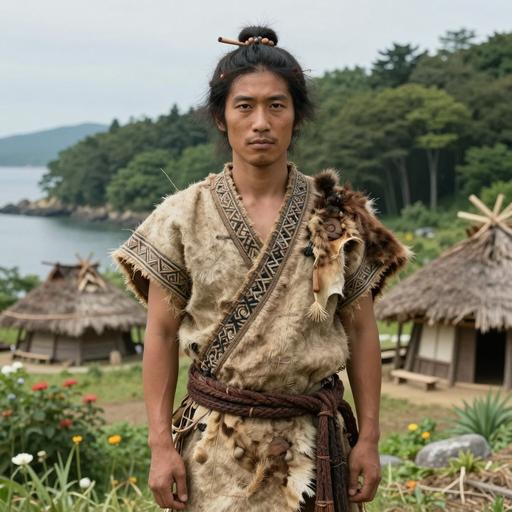
Portrait reconstruction of Sanganji131421-3
Ancient Individual

A man buried in Japan in the Mesolithic era

Sanganji131421-3
1370 BCE - 1127 BCE
Male
The Jomon Period in Japan
Japan
Scroll to begin
Chapter I

Identity

The biological and cultural markers that define this ancient individual

Sample ID

Sanganji131421-3

Date Range

1370 BCE - 1127 BCE

Biological Sex

Male

mtDNA Haplogroup

N9b

Y-DNA Haplogroup

D-M64

Cultural Period

The Jomon Period in Japan

Chapter II

Place

Where this individual was discovered

Country Japan
Locality Tohoku. Fukushima. Sanganji Shell Mound
Chapter III

Time

When this individual lived in the broader context of human history

Sanganji131421-3 1370 BCE - 1127 BCE
Chapter IV

Story

The narrative of this ancient life

The Jomon period in Japan, lasting from approximately 14,000 BCE to 300 BCE, represents a significant era in the prehistoric culture of East Asia. This era is named after the \cord-marked" pottery that characterizes the period, which is known as "Jomon" ware in Japanese. Distinctive for its duration and development, the Jomon period spans thousands of years and provides rich insights into early human society, subsistence patterns, and technological innovations in Japan.

Chronology and Subdivisions

The Jomon period is traditionally divided into several phases, each characterized by unique cultural and technological developments. These phases are:

  1. Incipient Jomon (c. 14,000–10,000 BCE): This initial phase marks the transition from a hunter-gatherer society to one that started experimenting with the earliest forms of pottery, suggesting sedentism and adaptation to changing environmental conditions following the last Ice Age.

  2. Initial Jomon (c. 10,000–7,000 BCE): During this period, there was a notable increase in the production of pottery, which was mainly used for cooking and storage. Communities began to settle in more permanent locations, leading to the formation of small villages.

  3. Early Jomon (c. 7,000–5,000 BCE): This phase saw the expansion of settlement sizes and increased complexity in social structures. The Jomon people developed intricate pottery designs, incorporating creativity and utility. There was also evidence of trade networks for stone tools and other resources.

  4. Middle Jomon (c. 5,000–3,500 BCE): This is often considered the peak of Jomon society, characterized by flourishing culture and artistry. Settlements expanded further, and there was a significant diversification in pottery styles and designs. The use of pit dwellings became prevalent, and large storage pits for food were introduced.

  5. Late Jomon (c. 3,500–1,000 BCE): During this period, there was a gradual decline in the population, possibly due to environmental changes. However, cultural activities and artistic expression remained vibrant, with the continued refinement of pottery and the production of clay figurines known as "dogu."

  6. Final Jomon (c. 1,000–300 BCE): This phase saw increased contact with continental Asia, which led to some changes in material culture. Although there was a continuation of many traditional practices, signs of technological and cultural shifts began as society moved toward the subsequent Yayoi period, characterized by the introduction of wet-rice agriculture.

Lifestyle and Economy

The Jomon people were primarily hunter-gatherers, relying on a rich natural environment teeming with resources. They had a diverse diet consisting of nuts, seeds, fish, shellfish, and game. This varied subsistence base, along with the development of semi-sedentary villages, allowed Jomon communities to thrive for millennia.

Their economy was supported by advanced fishing techniques and the sustainable exploitation of forest resources. The Jomon people used stone tools, crafted from obsidian and other materials, for hunting and processing food. Evidence suggests that they engaged in early forms of plant cultivation, although large-scale agriculture did not develop until the Yayoi period.

Material Culture and Art

Jomon pottery is its most renowned artifact, distinguished by its cord-marked designs created using sticks wrapped with cords. This artistry evolved over time, with regional variations contributing to an array of complex and beautiful styles. Pottery served not only functional purposes but also ceremonial ones, reflecting the symbolic and spiritual life of the Jomon people.

In addition to pottery, the Jomon culture is notable for its "dogu" figurines, small humanoid and animal figures made from clay. These are believed to have had religious or ritual significance, serving as talismans or in fertility rites.

Social Structure and Religion

The Jomon society was likely organized along clan or kinship lines with a relatively egalitarian structure. There is limited evidence of social stratification, although some regions indicate a level of societal division, perhaps related to ritual or ceremonial leadership rather than economic disparity.

Religion in Jomon society likely involved animism, as suggested by the abundance of ritual objects and burial practices. The reverence for nature and the use of symbols in their art indicate a spiritual belief system deeply tied to the natural world.

Legacy and Influence

The Jomon period constitutes a vital chapter in Japan's history, laying the foundational cultural and technological developments that would influence subsequent periods. Despite the gradual shift towards agriculture and metallurgy in the following Yayoi period, elements of Jomon material culture and spirituality continued to resonate throughout Japanese history.

Recent archaeological research continues to shed light on this fascinating era, revealing the adaptability and creativity of the Jomon people in response to their environment. The study of Jomon sites across Japan provides a window into ancient human resilience, underscoring the depth and richness of prehistoric East Asian societies."

Chapter V

Genetics

The genetic ancestry of this ancient individual

Ancient Genetic Admixture

This analysis compares the DNA profile of Sanganji131421-3 with ancient reference populations, showing the genetic composition in terms of prehistoric ancestral groups.

Ancient Asians 77.1%
Ancient Africans 20.6%
Ancient Oceanians 2.3%

Modern Genetic Admixture

This analysis compares the DNA profile with present-day reference populations, showing what percentage of genetic makeup resembles modern populations from different regions.

Asia 67.1%
Japanese & Korean 63.1%
Japanese 63.1%
Chinese & Southeast Asian 4.0%
Chinese 4.0%
Europe 25.0%
Northwestern European 13.8%
Scandinavian 13.8%
Southern European 11.2%
Sardinian 11.2%
Africa 7.9%
West African 7.9%
Nigerian 7.9%

Closest Modern Populations

These are the modern populations showing the closest statistical alignment to A man buried in Japan in the Mesolithic era, ranked by genetic distance. Lower distance values indicate closer statistical similarity.

1
Kazakh
6.0145
2
Kazakh Xinjiang
6.4363
3
Kirghiz Tajikistan Pamir
6.7160
4
Kirghiz China
7.0433
5
Kirghiz
7.2048
6
Karakalpak
7.4236
7
Buryat O
7.8758
8
Hazara
8.0840
9
Kazakh China
8.6259
10
Nogai
8.6961
Chapter VI

Context

Other ancient individuals connected to this sample

Sources

References

Scientific publications and genetic data

G25 Coordinates

The G25 coordinates for sample Sanganji131421-3 can be used for detailed admixture analysis in our G25 Studio tool.

Sanganji131421-3,0.05641624,-0.22539206,0.0271757,0.00451186,-0.0299835,-0.01415268,0.01173062,0.0192695,0.0231027,0.02576046,-0.00615596,0.00453628,-0.00634288,0.00364118,-0.0031134,-0.01212728,-0.00933346,0.00487364,0.00620664,0.00434674,0.01305426,-0.00667936,-0.0029566,-0.00355862,0.00652852
Analyze in G25 Studio
Use code for 40% off Expires Feb 27