Menu
Store
Blog
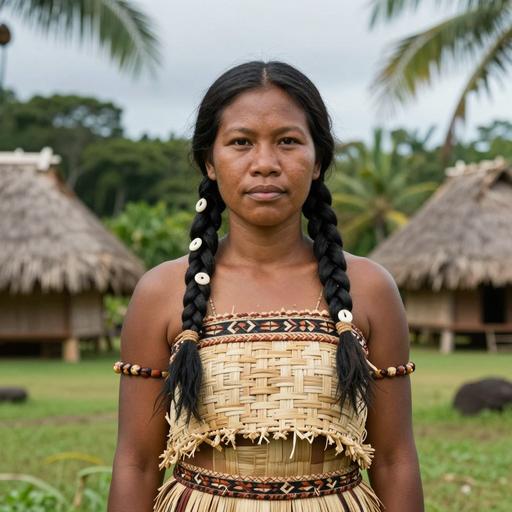
Portrait reconstruction of Sk10
Ancient Individual

A woman buried in Tonga in the Iron Age era

Sk10
805 BCE - 549 BCE
Female
Tonga 2,700 Years Ago
Tonga
Scroll to begin
Chapter I

Identity

The biological and cultural markers that define this ancient individual

Sample ID

Sk10

Date Range

805 BCE - 549 BCE

Biological Sex

Female

mtDNA Haplogroup

Not available

Cultural Period

Tonga 2,700 Years Ago

Chapter II

Place

Where this individual was discovered

Country Tonga
Locality Talasiu site. Tongatapu
Chapter III

Time

When this individual lived in the broader context of human history

Sk10 805 BCE - 549 BCE
Chapter IV

Story

The narrative of this ancient life

Tonga, located in the central South Pacific, is an archipelago that has a rich cultural history stretching back several millennia. Around 2,700 years ago, Tonga was undergoing significant developments as part of the broader prehistoric Polynesian cultural horizon known as the Lapita culture, which provides key insights into early Polynesian societies.

The Lapita Culture

Origins and Expansion: The Lapita culture, which originated from the Bismarck Archipelago in what is now Papua New Guinea, began spreading across the Pacific around 3,500 years ago. By approximately 2,700 years ago, this culture had reached and begun to establish settlements in Tonga. The Lapita people are renowned for their remarkable ocean-going capabilities and navigational skills, which allowed them to travel vast distances across the Pacific Ocean, ultimately leading to the settlement of diverse island groups including Tonga, Samoa, and Fiji.

Pottery and Artifacts: A distinctive feature of the Lapita culture was its pottery, characterized by intricate geometric designs created using a method called dentate stamping. These ceramics serve as crucial archaeological markers for identifying Lapita settlements. In Tonga, archaeologists have unearthed fragments of decorated pottery that provide valuable insights into the artistic and functional aspects of this early culture.

Sociopolitical Structure

Village Life: The Tongan Lapita communities likely consisted of small to medium-sized villages, typically situated along coastlines or near fertile valleys and river mouths. These communities were organized along kinship lines, and extended families lived together in single compounds.

Social Organization: The social structure was likely stratified, with emergent chiefly systems beginning to form, laying the groundwork for the highly organized Tongan chiefdoms observed at contact with Europeans. Chiefs, or 'eiki,' held positions of power, possibly overseeing resource management, ceremonial duties, and maintaining social harmony.

Economy and Subsistence

Agriculture: Agriculture was a central part of life, with the cultivation of root crops such as taro and yams. These crops, along with breadfruit and bananas, provided the staples of the diet.

Fishing and Marine Resources: The sea was a crucial resource, and Lapita communities in Tonga were adept at fishing and exploiting marine resources. Evidence suggests they utilized sophisticated fishing techniques and tools and likely engaged in deep-sea fishing for species such as tuna.

Technological Innovations

Tool Making: Stone tools were an essential component of Lapita technology. Obsidian and other types of stone were used to make sharp cutting implements, which were, in turn, employed in a range of daily activities, from food preparation to canoe building.

Canoe Building and Navigation: The design and construction of canoes were vital aspects of Tongan society 2,700 years ago. The Lapita were expert navigators, using canoes to travel and trade between islands, spreading their cultural practices and genetic lineage across the Pacific Ocean.

Religion and Beliefs

While direct evidence of the spiritual beliefs of Lapita communities is limited, it is likely that animistic beliefs played a role in their lives. This would involve the worship of natural spirits and ancestors, practices commonly found in later Polynesian cultures.

Environmental Interaction

Adaptation and Sustainability: The early Tongans showed an aptitude for adapting to their environment, employing sustainable agricultural methods to maximize land fertility. Their settlements were strategically located to exploit both land and marine resources, ensuring a balanced diet and stable food supply.

Environmental Impact: Archaeological evidence suggests that early human activity may have led to some environmental changes, including deforestation and the extinction of certain bird species. Nonetheless, these communities displayed resilience and adaptability in their interaction with the environment.

Conclusion

Tonga, 2,700 years ago, was part of a dynamic and expanding Lapita culture that showcased advanced maritime skills, distinctive art in pottery, and complex social systems. The descendants of these early settlers laid the foundation for the highly sophisticated and organized Tongan society that would follow, ultimately contributing to the broader Polynesian narrative across the Pacific.

Chapter V

Genetics

The genetic ancestry of this ancient individual

Ancient Genetic Admixture

This analysis compares the DNA profile of Sk10 with ancient reference populations, showing the genetic composition in terms of prehistoric ancestral groups.

Ancient Asians 88.3%
Western Steppe Pastoralists 7.2%
Ancient Native Americans 2.4%
Ancient Oceanians 2.2%

Modern Genetic Admixture

This analysis compares the DNA profile with present-day reference populations, showing what percentage of genetic makeup resembles modern populations from different regions.

Asia 92.7%
Chinese & Southeast Asian 90.7%
Chinese 56.0%
Vietnamese 34.7%
Japanese & Korean 2.0%
Japanese 2.0%
Oceania 2.6%
Melanesian 2.6%
Papuan 2.6%
Europe 2.0%
Eastern European 2.0%
Africa 1.9%
West African 1.9%
Ghanaian, Liberian, Sierra Leonean 1.9%
America 0.9%
America 0.9%
Native American 0.9%

Closest Modern Populations

These are the modern populations showing the closest statistical alignment to A woman buried in Tonga in the Iron Age era, ranked by genetic distance. Lower distance values indicate closer statistical similarity.

1
Lao
2.3717
2
Cambodian
3.6795
3
Dai
3.7446
4
Kinh Vietnam
3.9604
5
Tai Lue
3.9910
6
Gelao
4.8359
7
Blang
5.1159
8
Lahu
5.2285
9
Thai
5.3395
10
Wa
5.3399
Chapter VI

Context

Other ancient individuals connected to this sample

Sources

References

Scientific publications and genetic data

Scientific Publication

Genomic insights into the peopling of the Southwest Pacific

Authors Skoglund P, Posth C, Sirak K
Abstract

The appearance of people associated with the Lapita culture in the South Pacific around 3,000 years ago marked the beginning of the last major human dispersal to unpopulated lands. However, the relationship of these pioneers to the long-established Papuan people of the New Guinea region is unclear. Here we present genome-wide ancient DNA data from three individuals from Vanuatu (about 3,100-2,700 years before present) and one from Tonga (about 2,700-2,300 years before present), and analyse them with data from 778 present-day East Asians and Oceanians. Today, indigenous people of the South Pacific harbour a mixture of ancestry from Papuans and a population of East Asian origin that no longer exists in unmixed form, but is a match to the ancient individuals. Most analyses have interpreted the minimum of twenty-five per cent Papuan ancestry in the region today as evidence that the first humans to reach Remote Oceania, including Polynesia, were derived from population mixtures near New Guinea, before their further expansion into Remote Oceania. However, our finding that the ancient individuals had little to no Papuan ancestry implies that later human population movements spread Papuan ancestry through the South Pacific after the first peopling of the islands.

G25 Coordinates

The G25 coordinates for sample Sk10 can be used for detailed admixture analysis in our G25 Studio tool.

Sk10,0.01405912,-0.4098915,-0.0528765,-0.0485678,0.11671314,0.06238684,-0.0013946,-0.00563658,-0.015448,-0.01235148,0.02566444,0.00281476,0.00111198,-0.00674016,0.00332278,0.00172068,0.00611968,-0.00350138,-0.00197974,-0.00628246,0.00617372,0.00859326,0.00954346,0.00343734,0.00967997
Analyze in G25 Studio
Use code for 40% off Expires Feb 27