Menu
Store
Blog
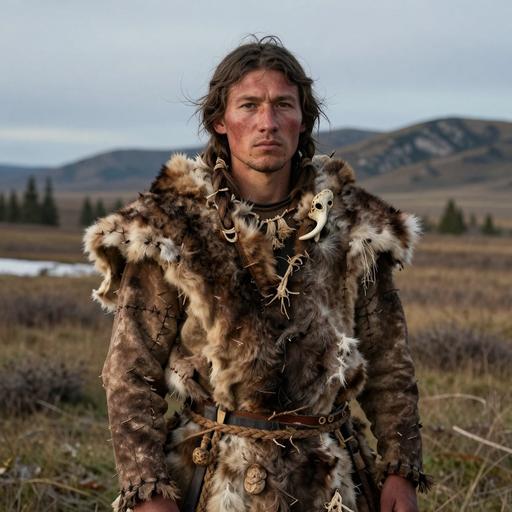
Portrait reconstruction of UKY001
Ancient Individual

A man buried in Russia in the Pleistocene era

UKY001
12100 BCE - 11858 BCE
Male
Upper Paleolithic Siberia, Russia
Russia
Scroll to begin
Chapter I

Identity

The biological and cultural markers that define this ancient individual

Sample ID

UKY001

Date Range

12100 BCE - 11858 BCE

Biological Sex

Male

mtDNA Haplogroup

C4*

Y-DNA Haplogroup

C2b

Cultural Period

Upper Paleolithic Siberia, Russia

Chapter II

Place

Where this individual was discovered

Country Russia
Locality Siberia. Eastern Siberia. Ust'Kyakhta
Chapter III

Time

When this individual lived in the broader context of human history

UKY001 12100 BCE - 11858 BCE
Chapter IV

Story

The narrative of this ancient life

The Upper Paleolithic period, roughly dating from 50,000 to 10,000 years ago, marks a crucial phase in human history, particularly in regions like Siberia, Russia. This era in Siberia provides fascinating insights into the adaptability, technological advancements, and cultural developments of early humans in harsh subarctic environments.

Environment and Geography

During the Upper Paleolithic, Siberia was characterized by a challenging climate with extreme cold and arid conditions. Large parts of the region were covered by tundra and steppe environments, with only occasional pockets of forested areas. The glacial periods saw ice sheets advancing and retreating, influencing migration patterns and habitation sites. Water sources such as rivers and lakes became vital for sustaining life, and many archaeological sites are located near these essential features.

Human Inhabitants and Migration

The inhabitants of Upper Paleolithic Siberia were anatomically modern humans, primarily Homo sapiens, with evidence suggesting groups were possibly migrating from the western parts of Asia and Europe. The harsh climate necessitated highly mobile lifestyles and the development of specialized adaptations for survival. Despite the challenges, these groups demonstrated remarkable resilience and ingenuity in exploiting the resources available to them.

Technological and Tool Advancements

Upper Paleolithic Siberians are notable for their sophisticated toolkits, showcasing technological advancements over their predecessors. Stone tools feature finely crafted blades, burins, and scrapers used for processing animal hides and woodwork. Bone, antler, and ivory were also utilized to create tools such as needles, fish hooks, and projectile points.

The creation of composite tools indicates a complex understanding of materials and craftsmanship. The development of advanced hunting weapons such as the atlatl (spear thrower) enabled these communities to hunt large megafauna, including mammoths, bison, and reindeer, effectively.

Art and Symbolism

One of the distinguishing features of the Upper Paleolithic era is the emergence of art and symbolic expression. While Siberian archaeological sites are less abundant with cave paintings than counterparts in Europe, they reveal unique forms of creativity.

The Mal'ta–Buret' culture, for instance, produced a significant number of venus figurines made from ivory and other materials. These sculptures, often interpreted as fertility symbols, demonstrate complex artistry and a deep cultural significance. Moreover, engraved objects and decorated tools found at various sites suggest that symbolic communication and cultural expressions were evident.

Subsistence and Lifestyle

The subsistence strategies of Upper Paleolithic Siberians were centered around hunting, gathering, and fishing. They depended heavily on the large herd animals of the steppe-tundra, with hunting practices requiring coordination and strategic planning. Evidence suggests seasonal movement patterns as communities followed animal migrations, which necessitated portable dwellings such as tents made from animal hides.

Gathering plant resources played a complementary role, with groups exploiting available berries, nuts, and tubers during the brief warm seasons. The use of subterranean storage pits provided a means to preserve food over the harsh winters.

Social Organization and Behavior

Though the precise social structures of Upper Paleolithic Siberians remain unclear, there is evidence to suggest that they lived in small, mobile groups. The family unit likely formed the core societal structure, with kinship ties facilitating cooperation and resource sharing. Seasonal aggregation sites indicate temporary gatherings of multiple groups for trade, socialization, and ceremonial purposes.

End of the Era

The transition from the Upper Paleolithic to the Mesolithic in Siberia is set against the backdrop of a warming climate as the Pleistocene ice age gradually drew to a close. This climatic shift led to changes in flora and fauna, necessitating further adaptations in human behavior and technology.

Overall, Upper Paleolithic Siberia reflects a period of incredible human ingenuity and adaptability. The archaeological record from this era not only highlights technological and artistic advancements but also underscores the resilience and creativity required to thrive in one of the planet's most formidable environments.

Chapter V

Genetics

The genetic ancestry of this ancient individual

Ancient Genetic Admixture

This analysis compares the DNA profile of UKY001 with ancient reference populations, showing the genetic composition in terms of prehistoric ancestral groups.

Ancient Asians 68.6%
Ancient Native Americans 14.1%
Neolithic Farmers 6.8%
Western Steppe Pastoralists 6.1%
Ancient Africans 4.5%

Modern Genetic Admixture

This analysis compares the DNA profile with present-day reference populations, showing what percentage of genetic makeup resembles modern populations from different regions.

Asia 75.8%
Northern Asian 33.3%
Siberian 29.7%
Mongolian 3.6%
Central Asian, Northern Indian & Pakistani 19.8%
Central Asian 16.5%
Indian 3.3%
Japanese & Korean 14.0%
Japanese 14.0%
Chinese & Southeast Asian 8.8%
Tibetan 4.5%
Chinese 4.3%
America 19.0%
America 19.0%
Native American 19.0%
Africa 3.7%
West African 3.7%
Ghanaian, Liberian, Sierra Leonean 3.1%
Oceania 0.8%
Melanesian 0.8%
Papuan 0.8%
Europe 0.8%
Northwestern European 0.8%
Scandinavian 0.8%

Closest Modern Populations

These are the modern populations showing the closest statistical alignment to A man buried in Russia in the Pleistocene era, ranked by genetic distance. Lower distance values indicate closer statistical similarity.

1
Itelmen
11.7493
2
Chukchi
11.8748
3
Altaian
12.0669
4
Altaian Kizhi
12.0799
5
Khakass Kachins
12.0823
6
Mogush
12.1418
7
Greenlander East
12.1478
8
Teleut O
12.3395
9
Eskimo Sireniki
12.5244
10
Mongol Xinjiang
12.7846
Chapter VI

Context

Other ancient individuals connected to this sample

Sources

References

Scientific publications and genetic data

Scientific Publication

Paleolithic to Bronze Age Siberians Reveal Connections with First Americans and across Eurasia

Authors Yu H, Spyrou MA, Karapetian M
Abstract

Modern humans have inhabited the Lake Baikal region since the Upper Paleolithic, though the precise history of its peoples over this long time span is still largely unknown. Here, we report genome-wide data from 19 Upper Paleolithic to Early Bronze Age individuals from this Siberian region. An Upper Paleolithic genome shows a direct link with the First Americans by sharing the admixed ancestry that gave rise to all non-Arctic Native Americans. We also demonstrate the formation of Early Neolithic and Bronze Age Baikal populations as the result of prolonged admixture throughout the eighth to sixth millennium BP. Moreover, we detect genetic interactions with western Eurasian steppe populations and reconstruct Yersinia pestis genomes from two Early Bronze Age individuals without western Eurasian ancestry. Overall, our study demonstrates the most deeply divergent connection between Upper Paleolithic Siberians and the First Americans and reveals human and pathogen mobility across Eurasia during the Bronze Age.

G25 Coordinates

The G25 coordinates for sample UKY001 can be used for detailed admixture analysis in our G25 Studio tool.

UKY001,0.03472928,-0.31501348,0.07705184,0.02551018,-0.07357032,-0.0251761,-0.05028314,-0.05372616,0.00343288,-0.00742866,0.00084526,-0.00503414,0.00830516,-0.01914292,-0.01607778,-0.00791304,-0.0034437,0.007289,0.0200473,0.01362848,0.00540148,-0.01968728,0.00621684,0.01477344,0.02303518
Analyze in G25 Studio
Use code for 40% off Expires Feb 27