Menu
Store
Blog
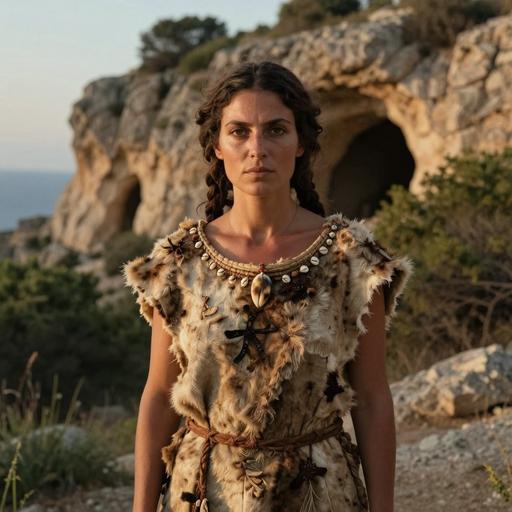
Portrait reconstruction of UZZ096
Ancient Individual

A woman buried in Italy in the Mesolithic era

UZZ096
8800 BCE - 7800 BCE
Female
Early Mesolithic Sicily
Italy
Scroll to begin
Chapter I

Identity

The biological and cultural markers that define this ancient individual

Sample ID

UZZ096

Date Range

8800 BCE - 7800 BCE

Biological Sex

Female

mtDNA Haplogroup

U2'3'4'7'8'9

Cultural Period

Early Mesolithic Sicily

Chapter II

Place

Where this individual was discovered

Country Italy
Locality Sicily. Grotta dell’Uzzo
Coordinates 38.1100, 12.7866
Chapter III

Time

When this individual lived in the broader context of human history

UZZ096 8800 BCE - 7800 BCE
Chapter IV

Story

The narrative of this ancient life

The Early Mesolithic period in Sicily, which is part of the broader Mediterranean Mesolithic epoch, represents a significant era in the prehistoric development of human societies within this island and offers compelling insights into the adaptive strategies of hunter-gatherer communities in the Mediterranean basin. Dating from approximately 10,000 to 8,000 BCE, this epoch marks a transitional phase following the end of the last Ice Age, characterized by significant environmental, technological, and cultural transformations.

Environment and Climate: During the Early Mesolithic period, Sicily experienced considerable climatic and ecological transformations. As the Pleistocene epoch concluded, glacial retreat resulted in rising sea levels, which altered coastlines and led to the separation of Sicily from the Italian mainland. This change significantly impacted the local flora and fauna. The climate became warmer and more temperate, fostering the expansion of forests dominated by oak, pine, and other deciduous trees. These environmental shifts created diverse ecosystems rich in resources, promoting a broad spectrum of subsistence strategies for human inhabitants.

Communities and Social Structure: Early Mesolithic communities in Sicily were likely organized into small, mobile bands that relied heavily on the diverse resources available in their landscapes. The social structures of these groups were relatively egalitarian, as inferred from the lack of pronounced social stratification in archaeological findings. Kinship and family ties played a crucial role in structuring these societies, which were characterized by a high degree of mobility to exploit seasonal resources effectively.

Subsistence and Economy: The Sicilian Mesolithic was primarily characterized by a hunter-gatherer economy. Archaeological evidence indicates a reliance on both terrestrial and marine resources, reflecting the adaptive strategies to the environmental conditions on the island. Faunal remains from archaeological sites reveal the hunting of deer, wild boar, and small mammals, as well as the gathering of plant resources like nuts, fruits, and tubers. The proximity to the sea also facilitated fishing and the collection of shellfish, contributing to a varied and rich diet.

Technology and Material Culture: Technological developments during this period were marked by the refinement of microlithic stone tools, which were often used to create composite tools such as arrows, spears, and harpoons. The craftsmanship of these tools reflects significant skill and innovation, allowing for more efficient hunting and processing of resources. In addition to lithic technology, the use of organic materials such as bone, antler, and wood was prevalent. Decorative and utilitarian artifacts, though sparse, suggest an emerging complexity in material culture.

Settlement Patterns: Settlement patterns in Mesolithic Sicily were characterized by temporary and seasonal campsites, which facilitated the mobility required for effective resource exploitation. These sites were often strategically located to maximize access to diverse ecological zones, including coastal, forest, and riverine environments. Evidence of hearths, tool-making debris, and post-hole alignments at some sites offer insights into the domestic activities and spatial organization of these communities.

Cultural and Ritual Practices: Although evidence is limited, certain archaeological findings suggest the presence of ritualistic behavior and symbolic practices. The discovery of burials, sometimes with grave goods, indicates an emerging complexity in spiritual and ritual life. These practices may have involved beliefs related to the afterlife or ancestral reverence, reflecting early expressions of symbolic thought and cultural identity.

Legacy and Influence: The Early Mesolithic period in Sicily laid foundational elements for subsequent cultural and technological developments. This era paved the way for the dramatic shifts of the Neolithic, as new technologies and agricultural practices began to emerge. The adaptation and innovations of these Early Mesolithic peoples highlight their role in shaping the cultural trajectory of prehistoric Sicily, rendering them a crucial precursor to the island's enduring human narrative.

In conclusion, the Early Mesolithic period in Sicily represents a dynamic and pivotal epoch in human history. Through adaptive strategies and innovations, the inhabitants of Mesolithic Sicily navigated a rapidly changing environment, setting the stage for the complex societies that would eventually flourish in this region.

Chapter V

Genetics

The genetic ancestry of this ancient individual

Ancient Genetic Admixture

This analysis compares the DNA profile of UZZ096 with ancient reference populations, showing the genetic composition in terms of prehistoric ancestral groups.

Western Steppe Pastoralists 61.8%
European Hunter-Gatherers 17.8%
Ancient Asians 13.1%
Neolithic Farmers 4.0%
Ancient Africans 3.4%

Modern Genetic Admixture

This analysis compares the DNA profile with present-day reference populations, showing what percentage of genetic makeup resembles modern populations from different regions.

Europe 95.3%
Northwestern European 88.0%
Finnish 35.9%
English 28.6%
Scandinavian 18.5%
Northwestern European 5.0%
Southern European 7.2%
Iberian 7.2%
Oceania 2.5%
Melanesian 2.5%
Papuan 2.5%
Africa 2.3%
Congolese & Southern East African 1.9%
South East African 1.9%

Closest Modern Populations

These are the modern populations showing the closest statistical alignment to A woman buried in Italy in the Mesolithic era, ranked by genetic distance. Lower distance values indicate closer statistical similarity.

1
Swedish
2.5416
2
Polish Kashubian
2.8694
3
Polish
2.9733
4
Czech
3.1425
5
German Hamburg
3.2839
6
Polish Silesian
3.3191
7
Ukrainian Dnipro
3.3858
8
Cossack Ukrainian
3.4431
9
Russian Kursk
3.4434
10
Ukrainian Rivne
3.5272
Chapter VI

Context

Other ancient individuals connected to this sample

Sources

References

Scientific publications and genetic data

Scientific Publication

Genomic and dietary discontinuities during the Mesolithic and Neolithic in Sicily

Authors Yu H, van de Loosdrecht MS, Mannino MA
Abstract

Sicily is a key region for understanding the agricultural transition in the Mediterranean because of its central position. Here, we present genomic and stable isotopic data for 19 prehistoric Sicilians covering the Mesolithic to Bronze Age periods (10,700-4,100 yBP). We find that Early Mesolithic hunter-gatherers (HGs) from Sicily are a highly drifted lineage of the Early Holocene western European HGs, whereas Late Mesolithic HGs carry ∼20% ancestry related to northern and (south) eastern European HGs, indicating substantial gene flow. Early Neolithic farmers are genetically most similar to farmers from the Balkans and Greece, with only ∼7% of ancestry from local Mesolithic HGs. The genetic discontinuities during the Mesolithic and Early Neolithic match the changes in material culture and diet. Three outlying individuals dated to ∼8,000 yBP; however, suggest that hunter-gatherers interacted with incoming farmers at Grotta dell'Uzzo, resulting in a mixed economy and diet for a brief interlude at the Mesolithic-Neolithic transition.

G25 Coordinates

The G25 coordinates for sample UZZ096 can be used for detailed admixture analysis in our G25 Studio tool.

UZZ096,0.13476812,0.11689084,0.07229124,0.06402588,0.03832012,0.0275943,0.00681528,0.01157392,0.0024836,-0.01677934,-0.005296,0.00042692,0.00830698,0.00604438,0.00541888,0.00238146,-0.00481212,-0.00016722,0.00173538,0.00086466,0.00476602,5.288E-05,0.00211218,0.0066045,-0.00081039
Analyze in G25 Studio
Use code for 40% off Expires Feb 27