Menu
Store
Blog
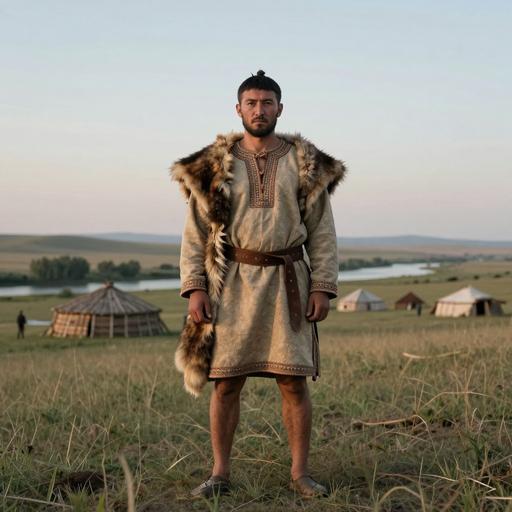
Portrait reconstruction of Yamnaya
Ancient Individual

A man buried in Kazakhstan in the Early Bronze Age era

Yamnaya
3016 BCE - 2885 BCE
Male
Early Bronze Age Yamnaya Culture, Kazakhstan
Kazakhstan
Scroll to begin
Chapter I

Identity

The biological and cultural markers that define this ancient individual

Sample ID

Yamnaya

Date Range

3016 BCE - 2885 BCE

Biological Sex

Male

mtDNA Haplogroup

R1a1a*

Y-DNA Haplogroup

R-Z2109

Cultural Period

Early Bronze Age Yamnaya Culture, Kazakhstan

Chapter II

Place

Where this individual was discovered

Country Kazakhstan
Locality Karagash
Coordinates 49.1342, 75.8518
Chapter III

Time

When this individual lived in the broader context of human history

Yamnaya 3016 BCE - 2885 BCE
Chapter IV

Story

The narrative of this ancient life

The Yamnaya culture, which flourished during the Early Bronze Age, is a significant archaeological culture that has profoundly influenced the understanding of Indo-European origins and migrations. Originating on the Pontic-Caspian steppe, which spans parts of modern Ukraine and southern Russia, the Yamnaya culture's influence extended across vast territories, including parts of Kazakhstan. This culture is central to discussions about the spread of Indo-European languages and peoples.

Key Features of the Yamnaya Culture

  1. Geographical Spread and Influence:

    • The Yamnaya culture emerged around 3300–2600 BCE.
    • In Kazakhstan, evidence of Yamnaya presence is found primarily in the western and central regions, highlighting their extensive territorial reach.
    • The culture’s expansion is indicative of their mobile pastoralist lifestyle, which allowed them to traverse large distances and influence neighboring cultures.
  2. Economy and Subsistence:

    • The Yamnaya people were predominantly pastoralists who engaged in herding sheep, goats, and cattle.
    • Horse domestication is a notable characteristic, suggesting their role in the spread of horse-riding practices across Eurasia.
    • Agriculture played a minimal role, with mobility being paramount in their economic activities.
  3. Social Structure and Settlement:

    • The Yamnaya were likely organized in tribal societies with a hierarchical social structure, evidenced by differentiated burial practices.
    • Settlements were temporary and scattered, as the Yamnaya people migrated across steppe regions searching for pasturage.
    • Their mobile lifestyle promoted cultural exchanges with adjacent groups, aiding in the diffusion of Yamnaya customs.
  4. Material Culture:

    • Recognizable by their distinctive burial mounds, or kurgans, which contained pit graves.
    • Grave goods often included pottery, animal bones, and sometimes weapons, illustrating their pastoral life and social stratification.
    • The pottery is typically simple, undecorated, reflecting utilitarian purposes rather than aesthetic ones.
  5. Burial Practices:

    • The Yamnaya are renowned for their kurgan burial mounds, which signify social status and are laden with symbolism.
    • Bodies were typically interred in a supine position with knees bent, often sprinkled with ochre, a ritualistic element.
    • The presence of grave goods such as animal remains, occasional metals, and ornaments indicated respect for the dead and belief in an afterlife.
  6. Genetic Legacy and Language:

    • Genetic studies reveal that the Yamnaya people played a crucial role in spreading the Indo-European languages.
    • DNA evidence suggests a significant migration of Yamnaya-related groups into Europe, influencing the genetic makeup of modern European populations.
  7. Cultural Interactions and Impact:

    • The interaction between the Yamnaya and neighboring cultures, such as the Afanasievo and Corded Ware cultures, fostered cultural and technological exchanges.
    • This contact led to the dissemination of technologies such as horse-riding and potentially chariotry, which revolutionized transport and warfare.
  8. Yamnaya and the Indo-European Question:

    • The Yamnaya culture is a focal point in the quest to understand Indo-European origins, linked by both linguistic and genetic evidence to Proto-Indo-European speakers.
    • Their spread across the steppes facilitated the transmission and diversification of Indo-European languages, making the Yamnaya pivotal in this grand narrative.

Conclusion

In summary, the Early Bronze Age Yamnaya culture in Kazakhstan and beyond is a testament to the dynamic and transformative nature of ancient human societies. Their legacy, encapsulated in their burial practices, material culture, and genetic impact, continues to inform modern understandings of prehistoric migrations and cultural developments in Eurasia. The Yamnaya culture remains an enduring subject of fascination and importance in archaeology, anthropology, and linguistics.

Chapter V

Genetics

The genetic ancestry of this ancient individual

Ancient Genetic Admixture

This analysis compares the DNA profile of Yamnaya with ancient reference populations, showing the genetic composition in terms of prehistoric ancestral groups.

Western Steppe Pastoralists 51.1%
European Hunter-Gatherers 27.6%
Neolithic Farmers 13.7%
Ancient Asians 7.6%

Modern Genetic Admixture

This analysis compares the DNA profile with present-day reference populations, showing what percentage of genetic makeup resembles modern populations from different regions.

Europe 60.4%
Northwestern European 58.3%
Finnish 30.2%
English 15.3%
Scandinavian 11.7%
Northwestern European 1.0%
Eastern European 2.2%
Asia 36.9%
Northern West Asian 27.4%
Caucasian 27.4%
Central Asian, Northern Indian & Pakistani 9.5%
Pakistan 7.8%
Indian 1.7%
America 2.7%
America 2.7%
Native American 2.7%

Closest Modern Populations

These are the modern populations showing the closest statistical alignment to A man buried in Kazakhstan in the Early Bronze Age era, ranked by genetic distance. Lower distance values indicate closer statistical similarity.

1
Tajik Yaghnobi
7.1840
2
Tatar Mishar
7.2034
3
Pamiri Rushan
7.2628
4
Turkish Deliorman
7.5707
5
Tatar Kazan
7.6484
6
Turkish Rumeli
7.6924
7
Pamiri Shugnan
7.9581
8
Lezgin
8.0241
9
Kumyk
8.1940
10
Kaitag
8.2705
Chapter VI

Context

Other ancient individuals connected to this sample

Sources

References

Scientific publications and genetic data

Scientific Publication

The first horse herders and the impact of early Bronze Age steppe expansions into Asia

Authors de Barros Damgaard P, Martiniano R, Kamm J
Abstract

The Yamnaya expansions from the western steppe into Europe and Asia during the Early Bronze Age (~3000 BCE) are believed to have brought with them Indo-European languages and possibly horse husbandry. We analyzed 74 ancient whole-genome sequences from across Inner Asia and Anatolia and show that the Botai people associated with the earliest horse husbandry derived from a hunter-gatherer population deeply diverged from the Yamnaya. Our results also suggest distinct migrations bringing West Eurasian ancestry into South Asia before and after, but not at the time of, Yamnaya culture. We find no evidence of steppe ancestry in Bronze Age Anatolia from when Indo-European languages are attested there. Thus, in contrast to Europe, Early Bronze Age Yamnaya-related migrations had limited direct genetic impact in Asia.

G25 Coordinates

The G25 coordinates for sample Yamnaya can be used for detailed admixture analysis in our G25 Studio tool.

Yamnaya,0.11061794,0.06078614,0.024502,0.03081132,-0.0161673,0.00952352,-0.0033486,-0.0111174,-0.02658646,-0.02576176,0.0025117,6.796E-05,-0.00141428,-0.00597772,0.00396328,-0.0038372,-0.00925524,0.00133596,-0.0042486,-0.00709692,-0.00032564,0.00433968,-0.00260972,0.01052412,-0.00111774
Analyze in G25 Studio
Use code for 40% off Expires Feb 27