Menu
Store
Blog
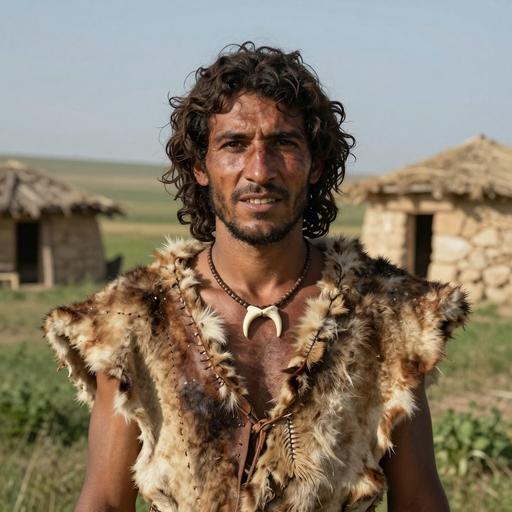
Portrait reconstruction of ZBC
Ancient Individual

A man buried in Turkey in the Pleistocene era

ZBC
13629 BCE - 13308 BCE
Male
Epipaleolithic Turkey
Turkey
Scroll to begin
Chapter I

Identity

The biological and cultural markers that define this ancient individual

Sample ID

ZBC

Date Range

13629 BCE - 13308 BCE

Biological Sex

Male

mtDNA Haplogroup

K2b

Y-DNA Haplogroup

C-V20

Cultural Period

Epipaleolithic Turkey

Chapter II

Place

Where this individual was discovered

Country Turkey
Locality Pınarbaşı
Coordinates 37.4833, 33.0333
Chapter III

Time

When this individual lived in the broader context of human history

ZBC 13629 BCE - 13308 BCE
Chapter IV

Story

The narrative of this ancient life

The Epipaleolithic period in Turkey represents a fascinating transitional stage in prehistory, occurring roughly between 20,000 and 10,000 BCE, bridging the Paleolithic and Neolithic eras. This period is characterized by gradual environmental, technological, and socio-cultural changes, as human societies adapted to the post-glacial environment. The Epipaleolithic in Turkey is distinguished by its unique blend of hunter-gatherer traditions with developing sedentary behaviors and early forms of agriculture and animal domestication.

Environmental Context

During the Epipaleolithic era, Turkey experienced significant climatic variations as the Pleistocene epoch ended and the Holocene began. The retreat of glaciers and the warming climate led to the expansion of forests and grasslands, drastically altering the landscapes that human groups inhabited. This environmental shift had a significant impact on the subsistence strategies of Epipaleolithic groups, encouraging them to exploit a wider range of resources.

Technology and Economy

Epipaleolithic communities are notable for their microlithic toolkit, a hallmark of this era. Microliths—small, often geometrically shaped stone tools—were used as components of composite tools, such as sickles, arrows, and harpoons. These tools reflect an adaptation to diverse ecological niches and more efficient exploitation of both plant and animal resources.

In this period, there is evidence for a broad-spectrum economy, meaning that humans exploited various food sources. The diet included small and large game, fish, birds, and an increased reliance on plant resources. The use of grinding stones indicates that wild cereals and legumes were processed, suggesting a shift towards more sedentary lifestyles and foreshadowing the advent of agriculture.

Settlements and Social Organization

The Epipaleolithic period in Turkey saw the establishment of semi-permanent settlements, as evidenced by a number of archaeological sites throughout the region. These sites, such as Göbekli Tepe and Hallan Çemi, suggest that groups were beginning to settle in more stable communities, some of which may have functioned as ritual centers.

Social structures likely became more complex during the Epipaleolithic, with increased organization and cooperation required for constructing communal structures and potentially managing shared resources. This period hints at emerging social hierarchies and possibly the early stages of territoriality.

Rituals and Symbolism

The presence of Göbekli Tepe, one of the most significant archaeological discoveries associated with this period, highlights the central role of ritual and symbolism in Epipaleolithic societies. This site, with its monumental T-shaped pillars decorated with intricate carvings of animals and abstract symbols, suggests a sophisticated belief system and a shared cultural or religious framework.

The depictions found at Göbekli Tepe and similar sites imply a rich symbolic life and the importance of art in social and religious contexts. These communities likely engaged in complex rituals, possibly related to ancestor worship or cosmic order, illustrating an evolving understanding of the world.

Conclusion

The Epipaleolithic period in Turkey marks a transformative phase in human history, characterized by adaptation to changing environments, innovation in technology, and shifts towards more complex social structures. As we uncover more archaeological evidence, our understanding of this critical juncture continues to deepen, offering insights into the origins of agriculture, social organization, and religious practices. The innovations and cultural developments of Epipaleolithic Turkey laid foundational elements for the subsequent Neolithic era and the rise of the first farming communities in the region.

Chapter V

Genetics

The genetic ancestry of this ancient individual

Ancient Genetic Admixture

This analysis compares the DNA profile of ZBC with ancient reference populations, showing the genetic composition in terms of prehistoric ancestral groups.

Neolithic Farmers 72.3%
European Hunter-Gatherers 19.9%
Western Steppe Pastoralists 7.8%

Modern Genetic Admixture

This analysis compares the DNA profile with present-day reference populations, showing what percentage of genetic makeup resembles modern populations from different regions.

Europe 87.5%
Southern European 87.5%
Italian 41.7%
Sardinian 27.0%
Iberian 18.4%
Asia 9.3%
Northern West Asian 6.2%
Cypriot 6.2%
Arab, Egyptian & Levantine 3.1%
Arabian 3.1%
Africa 3.2%
North African 3.2%
North African 3.2%

Closest Modern Populations

These are the modern populations showing the closest statistical alignment to A man buried in Turkey in the Pleistocene era, ranked by genetic distance. Lower distance values indicate closer statistical similarity.

1
Sardinian
3.6559
2
French Corsica
6.7306
3
Belmonte Jew
6.8343
4
Italian Lazio
7.6031
5
Italian Umbria
7.8820
6
Sicilian West
7.9170
7
Italian Campania
8.1715
8
Sicilian East
8.2064
9
Italian Lombardy
8.2474
10
Italian Calabria
8.2579
Chapter VI

Context

Other ancient individuals connected to this sample

Sources

References

Scientific publications and genetic data

Scientific Publication

Late Pleistocene human genome suggests a local origin for the first farmers of central Anatolia

Authors Feldman M, Fernández-Domínguez E, Reynolds L
Abstract

Anatolia was home to some of the earliest farming communities. It has been long debated whether a migration of farming groups introduced agriculture to central Anatolia. Here, we report the first genome-wide data from a 15,000-year-old Anatolian hunter-gatherer and from seven Anatolian and Levantine early farmers. We find high genetic continuity (~80-90%) between the hunter-gatherers and early farmers of Anatolia and detect two distinct incoming ancestries: an early Iranian/Caucasus related one and a later one linked to the ancient Levant. Finally, we observe a genetic link between southern Europe and the Near East predating 15,000 years ago. Our results suggest a limited role of human migration in the emergence of agriculture in central Anatolia.

G25 Coordinates

The G25 coordinates for sample ZBC can be used for detailed admixture analysis in our G25 Studio tool.

ZBC,0.11030028,0.15964142,0.00955932,-0.0589955,0.04975592,-0.02832632,-0.00357276,0.00380842,0.04162794,0.06598822,-0.00132102,0.01080082,-0.01792252,-0.01293416,-0.01316964,0.00680248,0.01292094,0.00073076,0.00102498,-0.00234646,0.00076202,0.00544316,-0.01191274,-0.01815636,0.00354531
Analyze in G25 Studio
Use code for 40% off Expires Feb 26