Menu
Store
Blog
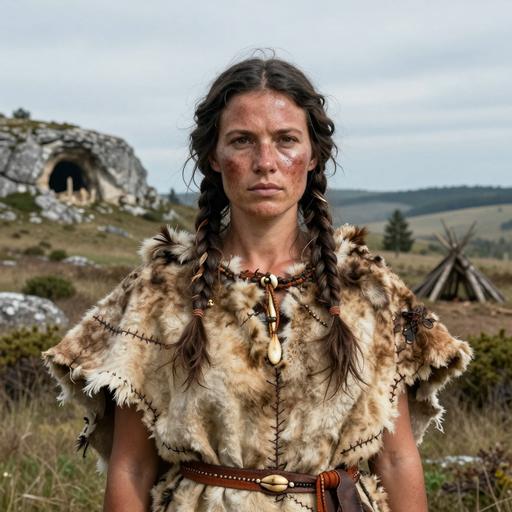
Portrait reconstruction of ZKU002
Ancient Individual

A woman buried in Czech Republic in the Paleolithic era

ZKU002
33749 BCE - 30151 BCE
Female
Upper Paleolithic to Hunter-Gatherer in Bohemia
Czech Republic
Scroll to begin
Chapter I

Identity

The biological and cultural markers that define this ancient individual

Sample ID

ZKU002

Date Range

33749 BCE - 30151 BCE

Biological Sex

Female

mtDNA Haplogroup

N

Cultural Period

Upper Paleolithic to Hunter-Gatherer in Bohemia

Chapter II

Place

Where this individual was discovered

Country Czech Republic
Locality Bohemia. Koněprusy Caves. Zlatý kůň
Coordinates 49.9160, 14.0660
Chapter III

Time

When this individual lived in the broader context of human history

ZKU002 33749 BCE - 30151 BCE
Chapter IV

Story

The narrative of this ancient life

The Upper Paleolithic era represents a significant period in the prehistory of Europe, marked by the emergence and development of modern Homo sapiens and a rich cultural and technological evolution. In the region of Bohemia, which is now part of modern-day Czechia, this period was characterized by a vibrant hunter-gatherer culture that adapted to the diverse and changing environment of Central Europe.

Timeline and Environment

The Upper Paleolithic period in Europe dates approximately from 50,000 to 10,000 years ago. During this time, the climate underwent significant fluctuations, transitioning from cold glacial conditions to the more temperate climates of the Holocene. Bohemia, situated in the heart of Europe, offered a varied landscape of forests, rivers, and open plains, providing a rich ecosystem that supported a variety of flora and fauna. This made it an ideal region for prehistoric hunter-gatherers to thrive.

Cultural and Technological Developments

The Upper Paleolithic saw the development of sophisticated stone tool technologies. In Bohemia, like other parts of Europe, the Aurignacian, Gravettian, and Magdalenian cultures are evident through archaeological findings:

  • Aurignacian Culture (c. 43,000-26,000 years ago): The Aurignacian is known for its production of sharp, fine blades and tools made from flint and other types of stone. This culture also brought innovations in art, evident in cave paintings and carved figurines, although direct evidence of such art in Bohemia is limited compared to regions like France and Spain.

  • Gravettian Culture (c. 30,000-22,000 years ago): This period is marked by the Gravettian culture, notable for its small, pointed blades suited for hunting. The Gravettian people also developed advanced techniques for making clothing and shelters, crucial for survival in colder climates. Venus figurines, representing fertility and social roles, are a symbolic artistic expression from this era.

  • Magdalenian Culture (c. 17,000-12,000 years ago): As the climate warmed towards the end of the Paleolithic, the Magdalenian culture emerged. This culture is known for its elaborate bone and antler tools, as well as advancements in weaponry, including harpoons and spear-throwers. Artistic expression flourished, although the examples from Bohemia are not as pronounced as in Western Europe.

Subsistence and Lifestyle

Hunter-gatherers in Upper Paleolithic Bohemia lived primarily off the land, utilizing resources from the surrounding forests and plains. Their diet included a wide range of plants, seeds, fruits, and animals, from small game to large mammals such as mammoths, reindeer, and bison. Seasonal migration and settlements were common, allowing these groups to follow animal herds and take advantage of different seasonal resources.

Their social structure was likely complex and dynamic, with small, mobile groups forming the basic social units. These groups were probably based on kinship and could come together with other groups during certain times of the year for cooperative activities like large-scale hunts or social and ceremonial events.

Archaeological Evidence

Archaeological discoveries in Bohemia have uncovered a wealth of artifacts that shed light on the lives of these early hunter-gatherers. Sites such as Dolní Věstonice provide critical insights into the technological, social, and artistic practices of these prehistoric communities. These sites reveal a rich collection of tools, ornaments, and evidence of permanent and semi-permanent dwellings that indicate a complex and organized society.

Conclusion

The Upper Paleolithic era in Bohemia presents a fascinating glimpse into the lives of early European hunter-gatherers. These communities demonstrated remarkable adaptability and resilience, developing diverse and innovative strategies to survive and thrive in the challenging climatic conditions of prehistoric Europe. Their legacy is preserved in the archaeological record, offering valuable insights into the origins and evolution of human culture and society.

Chapter V

Genetics

The genetic ancestry of this ancient individual

Ancient Genetic Admixture

This analysis compares the DNA profile of ZKU002 with ancient reference populations, showing the genetic composition in terms of prehistoric ancestral groups.

Ancient Asians 34.6%
Neolithic Farmers 30.3%
Ancient Africans 15.8%
Ancient Oceanians 10.4%
Western Steppe Pastoralists 6.8%
Ancient Native Americans 2.1%

Modern Genetic Admixture

This analysis compares the DNA profile with present-day reference populations, showing what percentage of genetic makeup resembles modern populations from different regions.

Asia 59.5%
Central Asian, Northern Indian & Pakistani 41.7%
Indian 41.3%
Japanese & Korean 6.1%
Japanese 6.1%
Chinese & Southeast Asian 4.8%
Tibetan 2.2%
Indonesian Khmer Thai Myanma 1.9%
Chinese 0.7%
Arab, Egyptian & Levantine 2.9%
Arabian 2.9%
Northern Asian 2.9%
Siberian 1.9%
Mongolian 1.0%
Northern West Asian 1.2%
Mesopotamian 1.1%
Africa 27.8%
West African 7.9%
Senegambian & Guinean 6.0%
Ghanaian, Liberian, Sierra Leonean 1.9%
North African 7.8%
North African 6.4%
Egyptian 1.5%
Northern East African 6.5%
Ethiopian 6.5%
Congolese & Southern East African 3.3%
South East African 3.3%
African Hunter-Gatherer 2.2%
Oceania 9.4%
Melanesian 9.4%
Papuan 9.4%
Europe 3.3%
Southern European 1.9%
Iberian 1.9%
Northwestern European 1.5%
Northwestern European 1.2%

Closest Modern Populations

These are the modern populations showing the closest statistical alignment to A woman buried in Czech Republic in the Paleolithic era, ranked by genetic distance. Lower distance values indicate closer statistical similarity.

1
Iranian Bandari Zanji
16.8137
2
Nepali Indo Aryan B
17.0318
3
Bahun O
17.1781
4
Nepali Indo Aryan C
17.2383
5
Cochin Jew B
17.2579
6
Rajput Garhwal
17.3766
7
Balti
17.4087
8
Rajput Mondal
17.4899
9
Brahmin Uttarakhand
17.6867
10
Bengali Bangladesh Southeast
17.7441
Chapter VI

Context

Other ancient individuals connected to this sample

Sources

References

Scientific publications and genetic data

Scientific Publication

A genome sequence from a modern human skull over 45,000 years old from Zlatý kůň in Czechia

Authors Prüfer K, Posth C, Yu H
Abstract

Modern humans expanded into Eurasia more than 40,000 years ago following their dispersal out of Africa. These Eurasians carried ~2-3% Neanderthal ancestry in their genomes, originating from admixture with Neanderthals that took place sometime between 50,000 and 60,000 years ago, probably in the Middle East. In Europe, the modern human expansion preceded the disappearance of Neanderthals from the fossil record by 3,000-5,000 years. The genetic makeup of the first Europeans who colonized the continent more than 40,000 years ago remains poorly understood since few specimens have been studied. Here, we analyse a genome generated from the skull of a female individual from Zlatý kůň, Czechia. We found that she belonged to a population that appears to have contributed genetically neither to later Europeans nor to Asians. Her genome carries ~3% Neanderthal ancestry, similar to those of other Upper Palaeolithic hunter-gatherers. However, the lengths of the Neanderthal segments are longer than those observed in the currently oldest modern human genome of the ~45,000-year-old Ust'-Ishim individual from Siberia, suggesting that this individual from Zlatý kůň is one of the earliest Eurasian inhabitants following the expansion out of Africa.

G25 Coordinates

The G25 coordinates for sample ZKU002 can be used for detailed admixture analysis in our G25 Studio tool.

ZKU002,-0.07919762,-0.06184332,-0.08582702,0.05054972,0.00023036,-0.01843758,0.01102532,-0.0083049,0.0365428,-0.003953,-0.00066848,0.00792902,0.00267816,0.00249374,0.00399376,-0.00236612,-0.00074656,-0.00302108,-0.0003427,0.00148518,-0.0002571,0.00295854,0.00109706,0.0007423,0.00040581
Analyze in G25 Studio
Use code for 40% off Expires Mar 01