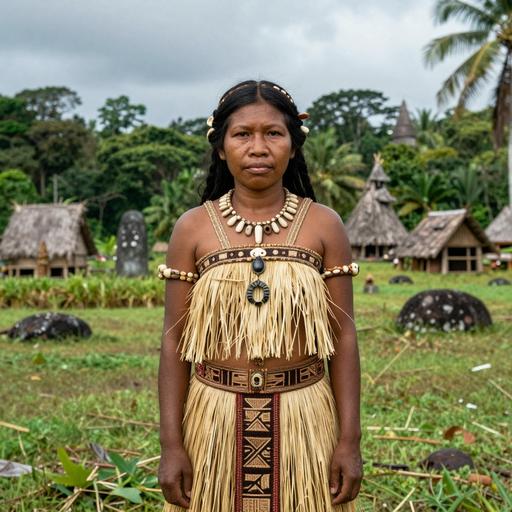
The Early Bronze Age in Indonesia, particularly focusing on regions such as Morotai and the cultural sphere known as AruManara, marks a significant period in the archipelago's archaeological and cultural history. This era is characterized by the arrival and development of Austronesian-speaking peoples, whose movements and influences shaped the trajectory of cultural evolution in the region.
Geographical Context
Morotai is an island located in the northern part of the Maluku Islands in Eastern Indonesia. The Aru Islands, meanwhile, lie in the Arafura Sea, further southeast. These regions are integral parts of the vast maritime landscape that defines Indonesia, and they lie along the migration routes of prehistoric peoples moving through Southeast Asia and into Oceania.
Cultural and Technological Developments
The Early Bronze Age in Indonesia, particularly within these regions, is demarcated by the introduction and localized development of metalworking. This era witnessed the gradual transition from Neolithic stone tools to more sophisticated metal tools and ornaments. Although bronze does not seem to have been as ubiquitous in Indonesia as in mainland Southeast Asia or the Chinese heartland, its presence signals emerging social complexities and expanding trade networks.
Metalworking: This period saw local experimentation with metal, primarily bronze and later some iron. Metal objects, although rare compared to stone or organic material artifacts, include tools like axes, and various ornaments, suggesting both functional and ceremonial uses.
Ceramics and Pottery: Pottery technology advanced significantly during this period, with more refined shapes and decorative motifs. These ceramics often featured intricate designs, underscoring the artistic and cultural advancements of the era.
Trade and Exchange Networks: Trade routes expanded significantly during this era, facilitated by advancements in seafaring technology. The Austronesian people were adept navigators and traders, connecting the Indonesian archipelago with mainland Southeast Asia, the Philippines, and beyond to Melanesia and Polynesia.
Settlement Patterns: Communities in Morotai and Aru during the Early Bronze Age were typically coastal, leveraging the rich marine resources of the region. Settlements often shifted according to seasonal changes and resource availability, pointing to a semi-nomadic lifestyle with strategic permanent bases.
Social Structure and Culture: The era suggests increasing social stratification, possibly exacerbated by the control and distribution of metal resources. Austronesian culture is noted for its complex kinship systems, oral traditions, and localized belief systems, many of which laid the foundational cultural frameworks that persisted into historical times.
Linguistic and Genetic Influence
Linguistically, the Austronesian expansion significantly influenced the languages of the Indonesian archipelago. The Early Bronze Age was crucial in establishing Austronesian as the dominant language family in the region, a status it maintains today with over 300 active languages within Indonesia alone.
Genetically, this era saw a blend of indigenous populations with incoming Austronesian settlers. This genetic mixing laid the groundwork for the contemporary demographic of Indonesia, which is marked by considerable diversity and complexity.
Archaeological Evidence
Archaeological sites from this period, such as habitation sites, burial grounds, and ceremonial complexes, offer valuable insights into the social and ritual life of these early Austronesian communities. Burial practices, for instance, often involved megalithic structures, signaling both social hierarchy and spiritual beliefs.
Conclusion
The Early Bronze Age in regions like Morotai and Aru encapsulates a transformative era within the Indonesian archipelago, marked by technological innovation, expanding cultural horizons, and increasingly complex social structures. The Austronesian-speaking peoples of this time laid critical foundations for the diverse and dynamic societies that would later form historic Indonesian civilizations. The legacy of their navigation, agriculture, metallurgy, and artistic expression continues to resonate throughout the Indonesian cultural landscape today.