Menu
Store
Blog
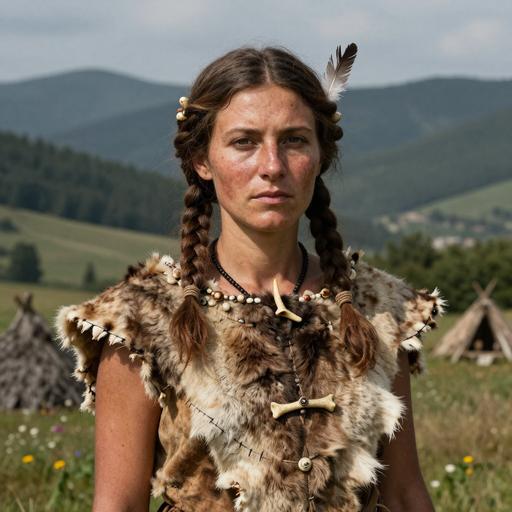
Portrait reconstruction of BK-1653
Ancient Individual

A woman buried in Bulgaria in the Pleistocene era

BK-1653
33333 BCE - 32667 BCE
Female
Late Pleistocene Bacho Kiro Cave, Bulgaria
Bulgaria
Scroll to begin
Chapter I

Identity

The biological and cultural markers that define this ancient individual

Sample ID

BK-1653

Date Range

33333 BCE - 32667 BCE

Biological Sex

Female

mtDNA Haplogroup

Not available

Cultural Period

Late Pleistocene Bacho Kiro Cave, Bulgaria

Chapter II

Place

Where this individual was discovered

Country Bulgaria
Locality Balkan Mountains. Bacho Kiro Cave
Coordinates 42.9480, 24.4302
Chapter III

Time

When this individual lived in the broader context of human history

BK-1653 33333 BCE - 32667 BCE
Chapter IV

Story

The narrative of this ancient life

The Late Pleistocene era, spanning from about 126,000 to 11,700 years ago, was a significant period in human evolution and prehistory. The Bacho Kiro Cave in Bulgaria provides a window into the Paleolithic culture during this era, offering crucial insights into the behavior, technology, and interactions of some of the earliest Homo sapiens in Europe.

Geographic and Environmental Context

Bacho Kiro Cave is located in the northern slopes of the Balkan Mountains, in the central part of Bulgaria. During the Late Pleistocene, this region exhibited a varied climate, marked by glacial and interglacial periods. These fluctuations led to changes in flora and fauna, influencing the availability of resources and the lifestyle of the cave's inhabitants.

Archaeological Significance

The site is one of the oldest known locations in Europe where evidence of Homo sapiens presence has been discovered. Radiometric dating technique, particularly radiocarbon dating, has placed the artifacts and human remains found within Bacho Kiro Cave to approximately 45,000 to 47,000 years ago, making it a critical site for understanding the spread of modern humans into Europe.

Cultural and Technological Aspects

The archaeological finds at Bacho Kiro include tools and artifacts associated with the Initial Upper Paleolithic (IUP) culture. This culture is characterized by:

  • Lithic Technology: The stone tools found at the site include bladelets, points, and scrapers, crafted mainly from local materials. The technology signifies a transition from the Middle Paleolithic Mousterian tools associated with Neanderthals to more advanced Upper Paleolithic techniques.

  • Organic Artifacts: The presence of personal ornaments made from teeth and pendants suggests a developed sense of aesthetics and possibly symbolic behavior. These artifacts are some of the earliest known evidence of such cultural expressions in Europe.

  • Hunting and Subsistence: The cave has yielded numerous animal bones, which indicate a varied diet consisting of large mammals such as horses, red deer, and possibly bovines. Cut marks on bones suggest sophisticated butchering techniques and a strategic approach to hunting.

Human Remains and Genetic Studies

The discovery of modern human remains at Bacho Kiro has been pivotal for genetic research. DNA analyses conducted on these remains have shown that the individuals had a closer genetic affinity with an early Upper Paleolithic population in the Near East than with the later European hunter-gatherers. The genetic data suggest interactions between Neanderthals and these early Homo sapiens, evidenced by traces of Neanderthal ancestry in the DNA.

Interactions with Neanderthals

The timeline of Bacho Kiro Cave coincides with the presence of Neanderthals in Europe, although the specific nature of interactions at this site remains a subject of research. However, the overlap in habitation periods, along with the advanced technologies and cultural artifacts found, points to possible shared knowledge or cultural exchanges.

Implications for Human Migration

Bacho Kiro Cave plays a critical role in the understanding of the early migration patterns of modern humans into Europe. It supports the hypothesis that modern humans spread into Europe earlier than previously thought and shows the complexity of interactions with local Neanderthal populations. The findings suggest a rapid adaptation to diverse environments and the development of unique cultural identities.

Conclusion

The Late Pleistocene findings at Bacho Kiro Cave offer indispensable insights into the early Upper Paleolithic period in Europe. This site not only provides evidence of the technological and cultural capabilities of early Homo sapiens but also underscores the significant biocultural exchanges that might have occurred between them and the Neanderthals. The ongoing research at Bacho Kiro continues to contribute to the broader narrative of human evolution, migration, and interaction during a pivotal epoch in prehistory.

Chapter V

Context

Other ancient individuals connected to this sample

Sources

References

Scientific publications and genetic data

Scientific Publication

Initial Upper Palaeolithic humans in Europe had recent Neanderthal ancestry

Authors Hajdinjak M, Mafessoni F, Skov L
Abstract

Modern humans appeared in Europe by at least 45,000 years ago1-5, but the extent of their interactions with Neanderthals, who disappeared by about 40,000 years ago6, and their relationship to the broader expansion of modern humans outside Africa are poorly understood. Here we present genome-wide data from three individuals dated to between 45,930 and 42,580 years ago from Bacho Kiro Cave, Bulgaria1,2. They are the earliest Late Pleistocene modern humans known to have been recovered in Europe so far, and were found in association with an Initial Upper Palaeolithic artefact assemblage. Unlike two previously studied individuals of similar ages from Romania7 and Siberia8 who did not contribute detectably to later populations, these individuals are more closely related to present-day and ancient populations in East Asia and the Americas than to later west Eurasian populations. This indicates that they belonged to a modern human migration into Europe that was not previously known from the genetic record, and provides evidence that there was at least some continuity between the earliest modern humans in Europe and later people in Eurasia. Moreover, we find that all three individuals had Neanderthal ancestors a few generations back in their family history, confirming that the first European modern humans mixed with Neanderthals and suggesting that such mixing could have been common.

Use code for 40% off Expires Mar 01