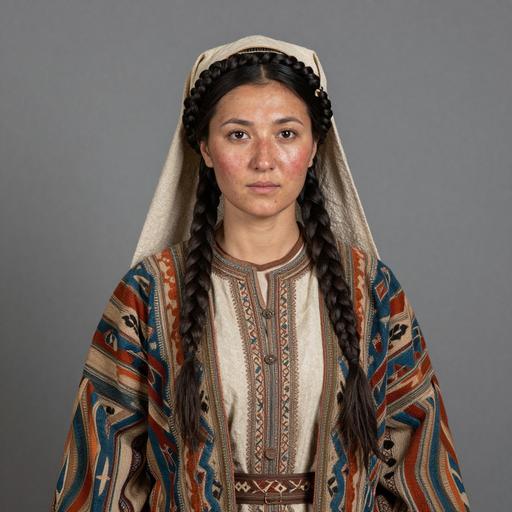
The Black Death era in medieval Kyrgyzstan, particularly in the Chuy Valley near the village of Kara-Djigach, represents a fascinating yet challenging period within the greater expanse of Central Asian history. This era, dating approximately to the mid-14th century, encapsulates a unique intersection of cultural practices, nomadic lifestyle, and the profound impact of the Bubonic Plague on Turkic nomadic societies.
Historical Context and The Black Death's Arrival
The mid-14th century was a time of significant upheaval across Europe and Asia due to the Black Death, a devastating pandemic caused by the bacterium Yersinia pestis. While Europe is often highlighted as the epicenter of the pandemic, its reach extended deeply into Asia, including regions like Kyrgyzstan. The Silk Road, a vital trade network that connected East Asia with the Middle East and Europe, facilitated the spread of the plague. Central Asia, being a crossroads for many trade routes, was particularly susceptible.
Turkic Nomadic Lifestyle
During this period, many inhabitants of what is now Kyrgyzstan were Turkic nomads. These groups were characterized by their mobility, living in yurts, and a pastoral lifestyle that revolved around the herding of animals such as horses, sheep, and goats. Social structures were typically clan-based, with extended families forming the basic unit of these clans.
The nomadic lifestyle, while fostering resilience through adaptability and resourcefulness, also posed a unique set of challenges during the outbreak of the Black Death. Their movement patterns, although allowing avoidance of conflict and severe localized disease, likely facilitated wider dissemination of the plague across different regions.
Cultural Practices
Turkic nomadic culture was rich with traditions that were orally passed down through generations. The role of oral epics, poetry, and music was integral, with the “Manas” epic being one of the most significant narratives, reflective of the values, history, and cosmology of the people. The society placed high importance on hospitality, bravery, and honor, traits that resonated through their tales and daily interactions.
Religion also played a significant role, with Tengriism—a shamanistic and animistic belief system—being prevalent. This involved the worship of Tengri, the sky deity, and respect for spirits of nature which, in times of crisis such as a plague, saw an increase in spiritual and shamanistic activities aimed at appeasing these forces and seeking protection and healing.
The Impact of the Pandemic
The arrival of the Black Death likely had a profound and multifaceted impact on these societies. The mortality rate would have been catastrophic, affecting not only population numbers but also the social and economic fabric. Nomadic societies, with their dependency on herd animals, might have faced a direct threat if the disease impacted animal populations, in addition to humans, compounding the societal strain.
Culturally, the impact would have been significant as well. Traditional practices may have been disrupted, while oral histories were threatened as entire familial lines could be decimated. This would have starkly affected the demographic and possibly led to shifts in social structures or alliances among surviving groups.
Archaeological and Historical Evidence
Evidence of the Black Death’s impact in regions like the Chuy Valley is supported by various archaeological findings. In places like Kara-Djigach, burial sites have been studied, providing insights into the mortality rates and demographic changes during the period. Artifacts found in these areas also help piece together the lifestyle and cultural practices during this tumultuous time.
Conclusion
The Black Death period in medieval Kyrgyzstan represents not only a chapter of adversity and transformation but also a testament to the resilience and adaptability of Turkic nomadic cultures. Although deeply challenged by the plague, these societies managed to uphold many of their cultural traditions and significantly influence the historical and cultural landscape of Central Asia.