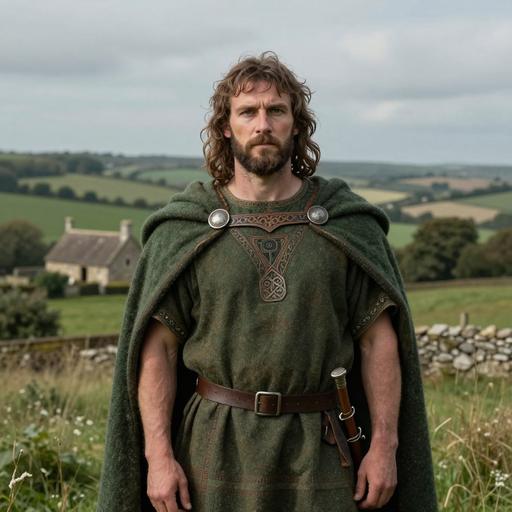
The transition from the Iron Age to the Early Roman period in England is a fascinating era marked by significant cultural, social, and technological changes. This period spans roughly from the Iron Age starting around 800 BCE until the Roman conquest in 43 CE, extending into the early Roman occupation.
Iron Age England (circa 800 BCE – 43 CE)
Geography and Environment
Iron Age England was characterized by a landscape rich in dense forests, open grasslands, and numerous waterways. The climate was temperate, similar to modern times, which supported agriculture, hunting, and gathering.
Society and Culture
The Iron Age saw the development of numerous tribal societies, each with distinct identities but often sharing cultural similarities. The Celts were the dominant group during this period, known for their advanced metallurgy, particularly in ironworking, which led to improved tools and weapons.
- Tribal Systems: Society was organized into tribes, each ruled by chieftains or kings. Notable tribes included the Iceni, Trinovantes, and Catuvellauni. The tribal social structure was hierarchical, with a warrior aristocracy, craftsmen, farmers, and slaves.
- Druids and Religion: The spiritual life was dominated by the Druids, who were religious leaders, educators, and legal authorities. Celtic religion was polytheistic, worshipping a pantheon of gods and goddesses associated with natural elements and warfare.
- Art and Craftsmanship: Artisans excelled in metalwork, producing intricate designs with motifs of spirals, interlaced patterns, and mythological creatures. These were evident in jewelry, weapons, and everyday objects.
Economy and Technology
- Agriculture and Trade: The Iron Age economy was predominantly agrarian, with farming techniques that included crop rotation and animal husbandry. Trade networks were well-established, both locally and with continental Europe, exchanging goods like salt, metals, and pottery.
- Settlements and Fortifications: People lived in roundhouses within small villages or large hillforts, which provided both a defensive stronghold and a center for trade and governance.
Early Roman England (43 CE Onwards)
Roman Conquest and Impact
The Roman invasion, beginning in 43 CE under Emperor Claudius, marked a significant turning point. It brought about profound changes, yet many Celtic traditions persisted alongside the new Roman culture.
- Military and Administration: The Romans established a sophisticated military presence and administrative systems. They built roads, fortresses, and towns (e.g., Londinium, present-day London), which facilitated movement and control.
- Urbanization and Architecture: Roman influence introduced urban planning and architectural styles, seen in the construction of villas, baths, and amphitheaters. Towns became centers of commerce and governance.
Cultural Integration and Continuity
- Language and Writing: Latin became the language of administration and trade, though Celtic languages continued among the native populations. The Romans introduced writing, primarily for record-keeping and inscriptions.
- Religion and Syncretism: While Roman deities were worshipped, there was a significant degree of religious syncretism, with some Celtic gods being incorporated into Roman practice. The construction of temples and altars reflects this blend of traditions.
Economy and Society
- Economic Advancements: Roman rule brought economic development, such as increased trade and the introduction of coinage, which facilitated more complex economic transactions.
- Diverse Society: The societal structure became more diverse, with the integration of Romans, native Celts, and other people from across the Empire. This multicultural society fostered new ideas and practices.
Legacy of the Era
The transition from Iron Age to Roman England is marked by the blending of Celtic and Roman cultures. While Roman rule brought technological and administrative advances, many Iron Age traditions persisted, laying the groundwork for future English cultural and social developments. The archaeological remnants of this era, from hillforts to Roman towns, offer a rich tapestry that continues to inform our understanding of early English history.