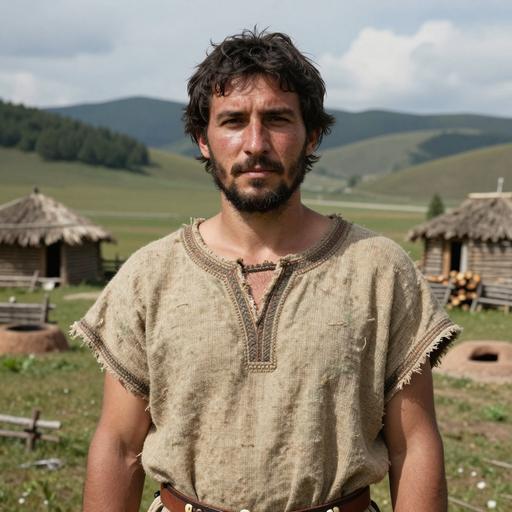
I2056 - A man buried in Russia in the Late Neolithic era

Download PDF creates a visual, rasterized copy. Use Print for selectable text and better assistive-technology support.

Menu
Currency
Main
Store
Blog

Loading Report

Preparing your ancestry journey

Connecting to ancient matches...

Preparing your report

Skip to main content
Portrait reconstruction of A man buried in Russia in the Late Neolithic era
Ancient Individual

A man buried in Russia in the Late Neolithic era

A man buried in Russia during the Eneolithic Caucasus, Russia

A fragment of the ancient world, preserved across millennia in strands of DNA.

I2056
4607 BCE - 4450 BCE
Male
Russia
Scroll to begin
Chapter I

Identity

The biological and cultural markers that define this ancient individual

Sample ID

I2056

Date Range

4607 BCE - 4450 BCE

Cultural Period

Eneolithic Caucasus, Russia

Biological Sex

Male

mtDNA Haplogroup

R1a

Y-DNA Haplogroup

J2a

Social Role

Farmer (AI estimate, era-typical)

Chapter II

Place

Where this individual was discovered

Country Russia
Locality Unakozovskaya
Coordinates 44.4513, 40.1029
Chapter III

Time

When this individual lived in the broader context of human history

I2056 4607 BCE - 4450 BCE
Chapter IV

Story

The narrative of this ancient life

The Eneolithic period in the North Caucasus falls within a regional phase where copper working and changing ceramic traditions became more visible alongside established stone-tool economies. The archaeological record reflects gradual intensification and localized variation across valleys and upland zones.

Region & Environment

The North Caucasus offers steep uplands, fertile lower reaches, and river networks that supported travel and resource access. Differences in altitude would have encouraged seasonal strategies, shifting activities between grazing areas and more productive valley landscapes.

Historical Context

In the Eneolithic, copper use—often in limited or selective ways—coexisted with predominantly stone-based technologies. This period represents a bridge between Neolithic lifeways and later Bronze Age regionalization, with increased attention to craft production and long-distance connections that are visible in artifact styles.

Populations & Lifeways

Populations likely engaged in mixed subsistence, combining herding and hunting with plant processing and cultivation where conditions allowed. Settlement use probably included both longer-term occupation and shorter-lived sites connected to seasonal routines and resource availability.

Archaeology & Material Culture

Chalcolithic horizons in the North Caucasus are often recognized through distinctive pottery traditions and the presence of copper items or copper-working traces. Assemblages also show varied stone tools and woodworking-related implements, reflecting everyday production needs.

Culture & Society

Social organization is typically inferred from the consistency of ceramic styles and the distribution of key artifact types. Differences between micro-regions suggest that communities maintained local traditions while participating in broader chalcolithic cultural frameworks.

Legacy & Transition

The Eneolithic set the stage for subsequent Bronze Age transformations by expanding metallurgical knowledge and reinforcing patterned ceramic and tool traditions. Over time, these developments contributed to later shifts in burial practices, interregional contact, and the organization of craft and exchange.

Chapter V

Genetics

These comparisons show genetic similarity, not identity or origin. The populations listed are those whose genomes show statistical alignment to this ancient individual.

Similarity reflects shared history, not shared identity. These are analytical comparisons, not claims about who this person was.

Modern Genetic Admixture

This analysis compares the DNA profile with present-day reference populations, showing statistical similarity to modern reference populations from different regions. The excavation site records where this individual was found, not a fixed modern genetic identity.

Asia 100.0%
Northern West Asian 99.5%
Mesopotamian 52.0%
Caucasian 40.9%
Anatolian 4.4%
Cypriot 2.2%

Closest Modern Populations

These are the modern populations showing the closest statistical alignment to A man buried in Russia in the Late Neolithic era, ranked by genetic distance. Lower distance values indicate closer statistical similarity. Cross-region similarity can reflect shared ancestry, population movement, continuity, or later admixture.

1
Abkhasian
1.9469
2
Georgian Svaneti
2.1311
3
Abkhasian Gudauta
2.7251
4
Georgian Megr
2.9362
5
Georgian Lechkhumi
3.0781
6
Georgian West
3.2908
7
Ossetian
3.3163
8
Georgian Imer
3.3680
9
Georgian Ratcha
3.5177
10
Georgian Ajar
3.6996
Context

Related Samples

This individual exists within a broader network of ancient samples. No ancient genome stands alone.

Sample ID Culture/Period Date Location Action
ARM001 Early Bronze Age Armenia 3625 BCE South Caucasus mountains. Kaps, Armenia View
ARM002 Early Bronze Age Armenia 3356 BCE South Caucasus mountains. Kaps, Armenia View
AY2001 The Maikop Culture 3514 BCE Kaspi steppe. Aygurskij 2, Russia View
AY2003 The Maikop Culture 3630 BCE Kaspi steppe. Aygurskij 2, Russia View
BU2001 North Caucasus Culture, Russia 2866 BCE Piedmont. Belij Ugol 2, Russia View
GW1001 North Caucasus Culture, Russia 2883 BCE Piedmont. Gorjačevodskij 1, Russia View
I1722 Eneolithic Caucasus, Russia 4539 BCE Unakozovskaya, Russia View
I2051 Late Bronze Age Dolmen Culture, Caucasus, Russia 1450 BCE North Caucasus. Marchenkova Gora, Russia View
I2055 Eneolithic Caucasus, Russia 4676 BCE Unakozovskaya, Russia View
I2056 Eneolithic Caucasus, Russia 4607 BCE Unakozovskaya, Russia View
I6266 Maikop-Novosvobodnaya Culture, Caucasus, Russia 3504 BCE Klady. Dlinnaya Polyana, Russia View
I6267 Maikop-Novosvobodnaya Culture, Caucasus, Russia 3625 BCE Klady. Dlinnaya Polyana, Russia View
I6268 Maikop-Novosvobodnaya Culture, Caucasus, Russia 3516 BCE Klady. Dlinnaya Polyana, Russia View
I6272 Maikop-Novosvobodnaya Culture, Caucasus, Russia 3318 BCE Klady. Dlinnaya Polyana, Russia View
IV3002 The Maikop Culture 3617 BCE North Caucasus steppe. Ipatovo 3, Russia View
KBD001 Middle Bronze Age North Caucasus, Russia 2197 BCE North Caucasus mountains. Kabardinka, Russia View
KBD002 Middle Bronze Age North Caucasus, Russia 2192 BCE North Caucasus mountains. Kabardinka, Russia View
KDC001 Middle Bronze Age North Caucasus, Russia 1950 BCE Piedmont/mountains. Kudachurt, Russia View
KDC002 Middle Bronze Age North Caucasus, Russia 1900 BCE Piedmont/mountains. Kudachurt, Russia View
LYG001 North Caucasus Culture, Russia 2866 BCE Piedmont. Lysogarskaya, Russia View
MK3003 Catacomb Culture, Russian Steppe 2580 BCE Piedmont. Mar'inskaja 3, Russia View
MK5001 Late Maikop Culture, Caucasus, Russia 3400 BCE Piedmont. Mar'inskaja 5, Russia View
MK5004 Late Maikop Culture, Caucasus, Russia 3400 BCE Piedmont. Mar'inskaja 5, Russia View
MK5008 Late Maikop Culture, Caucasus, Russia 3369 BCE Piedmont. Mar'inskaja 5, Russia View
MK5009 North Caucasus Culture, Russia 2879 BCE Piedmont. Mar'inskaja 5, Russia View
NV3001 Lola Culture, Russian Steppe 2127 BCE North Caucasus steppe. Nevinnommiskij 3, Russia View
OSS001 Maikop Culture, Caucasus, Russia 3704 BCE Piedmont. Ossetia, Russia View
PG2001 Eneolithic Russian Steppe 4994 BCE Piedmont. Progress 2, Russia View
PG2002 North Caucasus Culture, Russia 2476 BCE Piedmont. Progress 2, Russia View
PG2004 Eneolithic Russian Steppe 4240 BCE Piedmont. Progress 2, Russia View
RK1001 Early Bronze Age Yamnaya Culture, Caucasus, Russia 2881 BCE Kuban steppe. Rasshevatskij 1, Russia View
RK1003 North Caucasus Culture, Russia 2899 BCE Kuban steppe. Rasshevatskij 1, Russia View
RK1007 Early Bronze Age Yamnaya Culture, Caucasus, Russia 3331 BCE Kuban steppe. Rasshevatskij 1, Russia View
RK4001 Catacomb Culture, Russian Steppe 2451 BCE Kuban steppe. Rasshevatskij 4, Russia View
RK4002 Catacomb Culture, Russian Steppe 2662 BCE Kuban steppe. Rasshevatskij 4, Russia View
SA6001 The Maikop Culture 3520 BCE Kaspi steppe. Šarachalsun 6, Russia View
I11133 Late Maikop Culture, Russia 3332 BCE Sinjucha. Kuban steppe, Russia View
SA6003 Catacomb Culture, Russian Steppe 2470 BCE Kaspi steppe. Šarachalsun 6, Russia View
SA6004 The Maikop Culture 3359 BCE Kaspi steppe. Šarachalsun 6, Russia View
SA6010 Russian Yamnaya 2886 BCE Kaspi steppe. Šarachalsun 6, Russia View
SA6013 The Maikop Culture 3360 BCE Kaspi steppe. Šarachalsun 6, Russia View
I11131 Late Maikop Culture, Russia 3349 BCE Sinjucha. Kuban steppe, Russia View
I11132 Late Maikop Culture, Russia 3350 BCE Sinjucha. Kuban steppe, Russia View
VEK006 Kura-Araxes Culture, Caucasus, Russia 3000 BCE Caspian sea shore. Velikent, Russia View
VEK007 Kura-Araxes Culture, Caucasus, Russia 3000 BCE Caspian sea shore. Velikent, Russia View
VJ1001 Eneolithic Russian Steppe 4337 BCE Piedmont. Vonjucka 1, Russia View
ZO2002 Early Bronze Age Yamnaya Culture, Caucasus, Russia 3300 BCE North Caucasus steppe. Zolotarjëvka 2, Russia View
OSS002 The Maikop Culture 3932 BCE Ossetia'. Piedmont, Russia View
MK5005 The Maikop Culture 3650 BCE Mar'inskaja 5. Piedmont, Russia View
I1723 North Caucasus Culture, Russia 2877 BCE Goryachevadskiy, Russia View
I1720 Maikop Culture, Caucasus, Russia 3700 BCE Baksanyonok, Russia View
SA6002 Late Maikop Culture, Russia 3332 BCE Sinyukha (Republic of Adygea, Krasnogvardeysky District), Russia View
SIJ002 Late Maikop Culture, Russia 3349 BCE Sinyukha (Republic of Adygea, Krasnogvardeysky District), Russia View
SIJ003 Late Maikop Culture, Russia 3350 BCE Sinyukha (Republic of Adygea, Krasnogvardeysky District), Russia View
ARM002 3356 BCE South Caucasus mountains. Kaps, Armenia View
VEK007 3000 BCE Caspian sea shore. Velikent, Russia View
I1720 3700 BCE Baksanyonok, Russia View
I1723 2877 BCE Goryachevadskiy, Russia View
Sample ID Culture/Period Date Location Action
I1722 Eneolithic Caucasus, Russia 4539 BCE Unakozovskaya, Russia View
I2055 Eneolithic Caucasus, Russia 4676 BCE Unakozovskaya, Russia View
I2056 Eneolithic Caucasus, Russia 4607 BCE Unakozovskaya, Russia View
NCK002 4898 BCE Nalchik (Kabardino-Balkarian Republic, Nalchik Municipality), Russia View
Sources

References

Scientific publications and genetic data that inform this profile.

Scientific Publication

Ancient human genome-wide data from a 3000-year interval in the Caucasus corresponds with eco-geographic regions

Authors Wang CC, Reinhold S, Kalmykov A, Wissgott A, Brandt G et al.
Abstract

Archaeogenetic studies have described the formation of Eurasian 'steppe ancestry' as a mixture of Eastern and Caucasus hunter-gatherers. However, it remains unclear when and where this ancestry arose and whether it was related to a horizon of cultural innovations in the 4th millennium BCE that subsequently facilitated the advance of pastoral societies in Eurasia. Here we generated genome-wide SNP data from 45 prehistoric individuals along a 3000-year temporal transect in the North Caucasus. We observe a genetic separation between the groups of the Caucasus and those of the adjacent steppe. The northern Caucasus groups are genetically similar to contemporaneous populations south of it, suggesting human movement across the mountain range during the Bronze Age. The steppe groups from Yamnaya and subsequent pastoralist cultures show evidence for previously undetected farmer-related ancestry from different contact zones, while Steppe Maykop individuals harbour additional Upper Palaeolithic Siberian and Native American related ancestry.

G25 Coordinates

These coordinates represent a position in genetic space, a tool for comparison, not a conclusion. You can use these to perform custom admixture analysis in G25 Studio.

I2056,0.10696514,0.11203278,-0.0500457,-0.03917184,-0.04629456,-0.00897854,0.01165882,-0.00539246,-0.06348802,-0.02771746,-0.00362446,0.0078962,-0.02020116,0.00615708,0.0090602,-0.01940808,0.01908828,-0.00702026,-0.00952826,0.0170395,0.01208564,-0.00057528,0.0074703,-0.00972528,-0.00578205
Continue in G25 Studio
Use code for 35% off Expires Aug 03