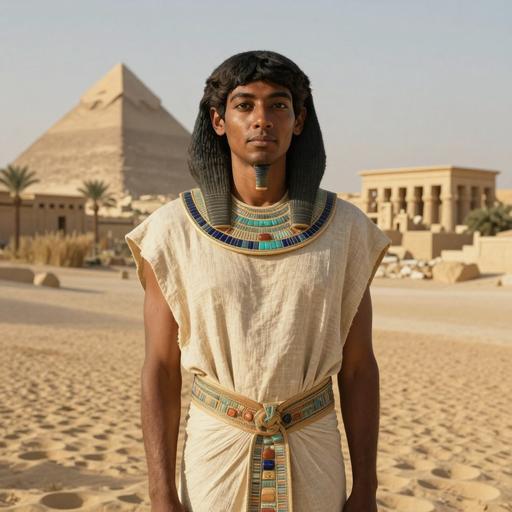
The Third Intermediate Period of Egypt (circa 1070–664 BCE) is a fascinating era marked by political fragmentation, cultural diversity, and significant external influences. Following the decline of the New Kingdom, this era witnessed the decentralization of power, leading to the division of Egypt into multiple, often competing, political entities.
Political Fragmentation and Dynastic Changes
21st Dynasty (circa 1070–945 BCE):
- The Third Intermediate Period began with the 21st Dynasty, predominantly based in Tanis in the Nile Delta. The dynasty is often described as a time of internal weakness but maintained connections and control over parts of Upper Egypt through alliances with the High Priests of Amun based in Thebes.
- Notably, the Pharaohs at Tanis are less visible through monumental architecture when compared to their New Kingdom predecessors, suggesting a shift in resources or priorities.
22nd Dynasty (circa 945–715 BCE):
- Founded by Shoshenq I, of Libyan descent, this dynasty introduced Libyan cultural influences into Egyptian society. Shoshenq I is also mentioned in biblical texts, and his reign marked renewed military campaigns into the Levant, achieving temporary regional influence.
- Despite initial strength, the 22nd Dynasty eventually gave way to further political fragmentation and saw the rise of local rulers and other dynasties like the 23rd and 24th Dynasties, particularly in the delta.
23rd and 24th Dynasties (circa 828–712 BCE):
- These were smaller, contemporaneous dynasties primarily concentrated in the central and western Delta regions. They often ruled over only a few localities, reflecting the ongoing decentralization.
25th Dynasty (circa 747–656 BCE):
- Originating from Nubia, this dynasty marked a significant shift as Nubian kings took control over all of Egypt, aiming to revive its past glories. Known as the Kushite or Nubian Dynasty, it actively engaged in monumental building projects and promoted a renaissance of Egyptian art and culture.
- The Nubians, led by kings like Piye and Taharqa, faced challenges from Assyria, which sought expansion into Egyptian territory. Eventually, Assyrian invasions led to the fall of Thebes in 663 BCE, signaling the end of the dynasty.
Cultural and Religious Developments
Cultural Exchange: The period was characterized by a blend of Egyptian, Libyan, and Nubian cultures, evidenced by art, language, and religion. This cultural amalgamation led to rich and diverse artistic expressions, although often with less monumental craftsmanship than seen previously.
Religion: Religious practices continued to center on Egyptian deities, particularly the worship of Amun, which remained influential in Thebes. The role of the High Priests of Amun was politically significant, especially in Upper Egypt, providing a semi-theocratic governance model over parts of the region.
Art and Literacy: While large-scale building projects were fewer, smaller-scale art objects, such as statuettes and jewelry, displayed intricate craftsmanship. The administration and literary works also persisted, though records indicate that the complexity and centralization seen in preceding periods were diminished.
External Pressures and Final Transition
Foreign Engagements: Throughout the Third Intermediate Period, Egypt faced pressures from neighboring powers, such as the formation of an Israelite state, the rise of Phoenician cities, and increasingly aggressive Assyria to the northeast.
Transition to the Late Period: The Assyrian invasions destabilized the Nubian control, which ushered in the Late Period of Egyptian history, beginning with the 26th Dynasty, also known as the Saite Period. A native Egyptian dynasty reborn, it temporarily restored stability and centralized power after the Assyrian withdrawal.
The Third Intermediate Period, therefore, stands as a complex and dynamic epoch of transition, marked by political decentralization and enriched cultural interactions, ultimately paving the way for renewed consolidation in the Late Period.