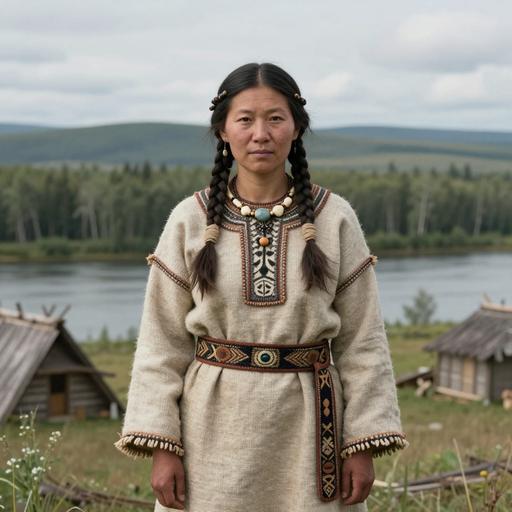
The Early Bronze Age along the Lena River in Siberia represents a fascinating period of cultural and technological development within a challenging environment. This era, spanning roughly from 3000 to 2000 BCE, is marked by distinctive adaptations to the harsh Siberian climate and landscape, shaped by both the environmental conditions and interactions among diverse groups.
Geographic Context
The Lena River is one of the longest rivers in the world, coursing through the vast expanses of Siberia. It rises in the Baikal Mountains in southern Siberia and flows northeast for about 4,400 kilometers before emptying into the Arctic Ocean. This geographic setting provided a unique combination of riverine resources, forested landscapes, and tundra, influencing the subsistence strategies of Early Bronze Age communities.
Climate and Environment
During the Early Bronze Age, the climate in Siberia was cold with long, harsh winters and short summers. The landscape, dominated by the taiga and tundra, was rich in flora and fauna adapted to these conditions. The Lena River, with its seasonal fluctuations and abundant fish, alongside the surrounding forests providing game, constituted a crucial resource base for human settlements.
Cultural Characteristics
Settlement Patterns:
- Communities were typically small and semi-nomadic, moving seasonally to exploit different resources.
- Settlements were often located along the riverbanks, utilizing the Lena River for transportation and sustenance.
Subsistence Strategies:
- Fishing was a primary food source, with species such as sturgeon and pike being common catches.
- Hunting of land animals like reindeer, elk, and smaller forest creatures supplemented their diet.
- There is also evidence of gathering wild berries, nuts, and edible plants.
Technological Developments:
- The use of bronze tools and weapons began to emerge, although stone tools remained prevalent due to the scarcity of metal resources in the region.
- Pottery found from this period displays simple yet functional designs, often decorated with geometric patterns.
Social Structure:
- Societies were likely organized into kinship-based groups or clans.
- There is little evidence of hierarchical structures or centralized leadership during this time.
Spiritual and Ritual Practices:
- Animistic beliefs likely dominated, with a strong emphasis on nature and animal spirits.
- Archaeological finds suggest ritualistic practices, possibly connected to hunting and fishing rites.
Trade and Interaction:
- Despite the remote location, there is evidence of trade and cultural exchange with neighboring regions, fostering a degree of cultural diffusion.
- Artifacts such as ornamented pottery and tools indicate stylistic influences from southern Siberia and beyond.
Craftsmanship and Artistry:
- The era saw the nascent development of metallurgy with limited bronze working.
- Bone, antler, and ivory were commonly used for toolmaking and artistic expression, often intricately carved.
Archaeological Discoveries
Archaeological sites along the Lena River have uncovered numerous burial sites, dwelling remnants, and hearths. These findings provide insights into the daily life, subsistence strategies, and cultural practices of Early Bronze Age communities. Burial sites often include grave goods such as pottery, tools, and personal ornaments, suggesting beliefs in an afterlife and the importance of social identity.
Conclusion
The Early Bronze Age along the Lena River in Siberia represents a period of adaptation and innovation. Communities in this region developed distinct cultural and technological practices in response to their environment, laying the groundwork for subsequent cultural developments. This era underscores the resilience and ingenuity of human societies facing the challenges of life in one of the world's most extreme environments.