Menu
Currency
Main
Store
Blog

Loading Report

Preparing your ancestry journey

Connecting to ancient matches...

Preparing your report

Skip to main content
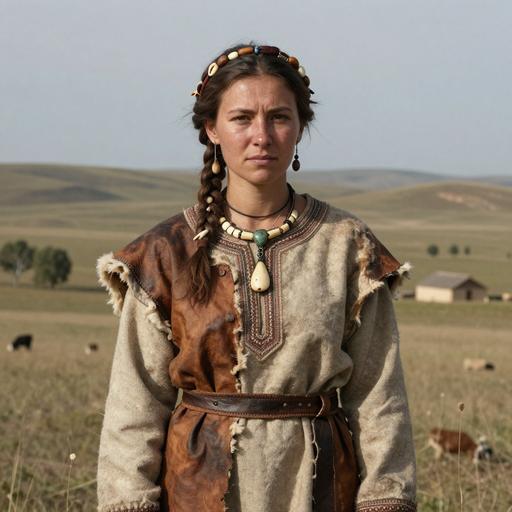
Portrait reconstruction of A woman buried in Russia in the Bronze Age era
Ancient Individual

A woman buried in Russia in the Bronze Age era

A woman buried in Russia during the Srubnaya-Alakul Culture, Russia

A fragment of the ancient world, preserved across millennia in strands of DNA.

kzb009
1866 BCE - 1616 BCE
Female
Russia
Scroll to begin
Chapter I

Identity

The biological and cultural markers that define this ancient individual

Sample ID

kzb009

Date Range

1866 BCE - 1616 BCE

Cultural Period

Srubnaya-Alakul Culture, Russia

Biological Sex

Female

mtDNA Haplogroup

U4b1a1a1

Y-DNA Haplogroup

N/A (Female)

Chapter II

Place

Where this individual was discovered

Country Russia
Locality Republic of Bashkorstan. Near Usmanovo village. Kazburun 1
Coordinates 54.0700, 55.5440
Chapter III

Time

When this individual lived in the broader context of human history

kzb009 1866 BCE - 1616 BCE
Chapter IV

Story

The narrative of this ancient life

The Srubnaya-Alakul culture, also referred to more broadly as the Srubnaya culture or Timber-Grave culture, is an important archaeological culture that flourished during the Middle to Late Bronze Age, roughly between the 18th and 12th centuries BCE, predominantly in the Pontic-Caspian steppe region. This culture is considered part of the broader continuum of Indo-European cultures that emerged after the decline of the Yamnaya culture. Here’s a detailed exploration of the Srubnaya-Alakul culture:

Geographical Extent

The Srubnaya culture covered a vast area spanning parts of what are now southern Russia, eastern Ukraine, and western Kazakhstan. The culture spread across the Pontic-Caspian steppe, a region characterized by its vast grasslands and river valleys. This geographic setting influenced the subsistence and lifestyle of the Srubnaya people.

Origins and Development

The Srubnaya culture emerged out of preceding Bronze Age traditions, including the Catacomb and Yamnaya cultures, both of which are associated with early Indo-European-speaking populations. It evolved during a time of significant cultural interactions and population movements across the Eurasian steppe.

Burial Practices

The Srubnaya culture is particularly noted for its distinctive burial tradition, which contributed to its name—\Srubnaya" translates to "timber-grave" in Russian. The dead were buried in wooden chambers or timber-lined pits, often covered with earth mounds, known as kurgans. These graves were typically oriented towards the east, reflecting a certain ritualistic or symbolic significance.

Economy and Subsistence

The Srubnaya people were primarily pastoralists, relying extensively on animal husbandry. Cattle, sheep, and horses were central to their economy. The domestication and use of horses likely played a crucial role not only in their subsistence practices but also in their mobility and possibly in their expansion across the steppe. There is also evidence of agriculture, including the cultivation of barley and wheat, which suggests a mixed economy.

Material Culture

Archaeological findings from Srubnaya sites reveal a material culture characterized by a variety of tools and artifacts. Pottery from this culture is typically plain and is often found in burial contexts. The presence of metal objects, including bronze weapons and tools, indicates a developed metallurgical tradition, which involved casting and forging techniques.

Social Structure

The social structure of the Srubnaya-Alakul culture, inferred from burial practices and settlement patterns, suggests a society with social stratification. Differences in the wealth and complexity of graves indicate varying social statuses. The control of livestock and land likely influenced social hierarchy.

Cultural Interactions

The Srubnaya culture was part of a broader network of cultures across the Eurasian steppe, suggesting extensive cultural interactions and exchanges. Its relationship with neighboring cultures, such as the Andronovo and the Abashevo cultures, reflects a dynamic period of cultural and technological exchange. These interactions may have facilitated the spread of Indo-European languages and cultural practices.

Legacy

The Srubnaya culture is considered a vital link in the chain of Indo-European cultures and played a significant role in the prehistoric movements across the Eurasian landscapes. Its traditions and practices contributed to the cultural and genetic landscape of later steppe cultures and, ultimately, to the early history of Slavic and Indo-Iranian peoples.

Conclusion

The Srubnaya-Alakul culture represents a critical period in the history of the Eurasian steppe, embodying the transition and transformation of early Indo-European societies. Its contributions to the development of social structures, economic practices, and cultural traditions underscore its importance in the complex narrative of prehistoric Europe and Asia."

Chapter V

Genetics

These comparisons show genetic similarity, not identity or origin. The populations listed are those whose genomes show statistical alignment to this ancient individual.

Similarity reflects shared history, not shared identity. These are analytical comparisons, not claims about who this person was.

Modern Genetic Admixture

This analysis compares the DNA profile with present-day reference populations, showing what percentage of genetic makeup resembles modern populations from different regions.

Europe 77.3%
Northwestern European 46.7%
English 32.6%
Scandinavian 7.5%
Finnish 6.6%
Eastern European 30.6%
Asia 21.5%
Northern West Asian 17.6%
Caucasian 17.6%
Central Asian, Northern Indian & Pakistani 3.9%
Pakistan 2.1%
Indian 1.8%
America 1.1%
America 1.1%
Native American 1.1%

Closest Modern Populations

These are the modern populations showing the closest statistical alignment to A woman buried in Russia in the Bronze Age era, ranked by genetic distance. Lower distance values indicate closer statistical similarity.

1
Moksha
5.7142
2
Mordovian
6.0185
3
Erzya
6.1526
4
Afrikaner
6.1776
5
Hungarian
6.2337
6
Moldovan O
6.3283
7
Finnish Southwest
6.3295
8
Russian Kostroma
6.3479
9
Tatar Mishar
6.3860
10
German Hamburg
6.4743
Context

Related Samples

This individual exists within a broader network of ancient samples. No ancient genome stands alone.

Sample ID Culture/Period Date Location Action
kzb002 Srubnaya-Alakul Culture, Russia 1879 BCE Republic of Bashkorstan. Near Usmanovo village. Kazburun 1, Russia View
scy006 Scythian Culture, Ukraine 800 BCE Cherkasy Region. Gorodische District. Starosillya, Ukraine View
scy009 Scythian Culture, Ukraine 766 BCE Cherkasy Region. Gorodische District. Starosillya, Ukraine View
scy010 Scythian Culture, Ukraine 789 BCE Cherkasy Region. Gorodische District. Starosillya, Ukraine View
scy011 Scythian Culture, Ukraine 356 BCE Cherkasy Region. Mankivsky District. Nesterivka, Ukraine View
mur003 Srubnaya-Alakul Culture, Russia 1881 BCE Republic of Bashkorstan. Near Usmanovo Village. Muradym 8, Russia View
kzb007 Srubnaya-Alakul Culture, Russia 1873 BCE Republic of Bashkorstan. Near Usmanovo village. Kazburun 1, Russia View
mur004 Srubnaya-Alakul Culture, Russia 1888 BCE Republic of Bashkorstan. Near Usmanovo Village. Muradym 8, Russia View
kzb008 Srubnaya-Alakul Culture, Russia 1887 BCE Republic of Bashkorstan. Near Usmanovo village. Kazburun 1, Russia View
tem003 Late Sarmatian Culture, Russia 131 CE Republic of Bashkortostan. Baymak Distict. Temyaysovo-1 burial ground, Russia View
kzb006 Srubnaya-Alakul Culture, Russia 1868 BCE Republic of Bashkorstan. Near Usmanovo village. Kazburun 1, Russia View
chy002 Late Sarmatian Culture, Russia 81 CE Orenburg Regio. Southern Urals. Cherniy Yar, Russia View
kzb005 Srubnaya-Alakul Culture, Russia 1882 BCE Republic of Bashkorstan. Near Usmanovo village. Kazburun 1, Russia View
kzb009 Srubnaya-Alakul Culture, Russia 1866 BCE Republic of Bashkorstan. Near Usmanovo village. Kazburun 1, Russia View
tem002 Late Sarmatian Culture, Russia 121 CE Republic of Bashkortostan. Baymak Distict. Temyaysovo-1 burial ground, Russia View
chy001 Late Sarmatian Culture, Russia 27 CE Orenburg Regio. Southern Urals. Cherniy Yar, Russia View
kzb001 Srubnaya-Alakul Culture, Russia 1740 BCE Republic of Bashkorstan. Near Usmanovo village. Kazburun 1, Russia View
tem001 Late Sarmatian Culture, Russia 129 CE Republic of Bashkortostan. Baymak Distict. Temyaysovo-1 burial ground, Russia View
kzb003 Srubnaya-Alakul Culture, Russia 1870 BCE Republic of Bashkorstan. Near Usmanovo village. Kazburun 1, Russia View
mur001 Srubnaya-Alakul Culture, Russia 1740 BCE Republic of Bashkorstan. Near Usmanovo Village. Muradym 8, Russia View
mur002 Srubnaya-Alakul Culture, Russia 1680 BCE Republic of Bashkorstan. Near Usmanovo Village. Muradym 8, Russia View
kzb004 Srubnaya-Alakul Culture, Russia 1872 BCE Republic of Bashkorstan. Near Usmanovo village. Kazburun 1, Russia View
scy303 Scythian Period Glinoe, Moldova 386 BCE Slobodzeya District. Glinoe, Moldova View
scy301 Scythian Period Glinoe, Moldova 390 BCE Slobodzeya District. Glinoe, Moldova View
scy192 Scythian Period Glinoe, Moldova 400 BCE Slobodzeya District. Glinoe, Moldova View
cim359 Cimmerian Period Moldova 1011 BCE Rybnitsa District. Mokra, Moldova View
scy300 Scythian Period Glinoe, Moldova 395 BCE Slobodzeya District. Glinoe, Moldova View
scy311 Scythian Period Glinoe, Moldova 391 BCE Slobodzeya District. Glinoe, Moldova View
scy197 Scythian Period Glinoe, Moldova 400 BCE Slobodzeya District. Glinoe, Moldova View
cim357 Cimmerian Period Moldova 916 BCE Slobodzeya District. Glinoe Sad, Moldova View
scy305 Scythian Period Glinoe, Moldova 396 BCE Slobodzeya District. Glinoe, Moldova View
cim358 Cimmerian Period Moldova 971 BCE Slobodzeya District. Glinoe Sad, Moldova View
scy304 Scythian Period Glinoe, Moldova 367 BCE Slobodzeya District. Glinoe, Moldova View
scy193 Scythian Period Glinoe, Moldova 400 BCE Slobodzeya District. Glinoe, Moldova View
scy332 Scythian Period Glinoe, Moldova 250 CE Slobodzeya District. Glinoe, Moldova View
chy001 27 CE Orenburg Regio. Southern Urals. Cherniy Yar, Russia View
chy002 81 CE Orenburg Regio. Southern Urals. Cherniy Yar, Russia View
cim357 916 BCE Slobodzeya District. Glinoe Sad, Moldova View
cim358 971 BCE Slobodzeya District. Glinoe Sad, Moldova View
cim359 1011 BCE Rybnitsa District. Mokra, Moldova View
kzb001 1740 BCE Republic of Bashkorstan. Near Usmanovo village. Kazburun 1, Russia View
kzb003 1870 BCE Republic of Bashkorstan. Near Usmanovo village. Kazburun 1, Russia View
kzb004 1872 BCE Republic of Bashkorstan. Near Usmanovo village. Kazburun 1, Russia View
kzb005 1882 BCE Republic of Bashkorstan. Near Usmanovo village. Kazburun 1, Russia View
kzb006 1868 BCE Republic of Bashkorstan. Near Usmanovo village. Kazburun 1, Russia View
kzb007 1873 BCE Republic of Bashkorstan. Near Usmanovo village. Kazburun 1, Russia View
kzb008 1887 BCE Republic of Bashkorstan. Near Usmanovo village. Kazburun 1, Russia View
kzb009 1866 BCE Republic of Bashkorstan. Near Usmanovo village. Kazburun 1, Russia View
mur001 1740 BCE Republic of Bashkorstan. Near Usmanovo Village. Muradym 8, Russia View
mur002 1680 BCE Republic of Bashkorstan. Near Usmanovo Village. Muradym 8, Russia View
mur003 1881 BCE Republic of Bashkorstan. Near Usmanovo Village. Muradym 8, Russia View
mur004 1888 BCE Republic of Bashkorstan. Near Usmanovo Village. Muradym 8, Russia View
scy009 766 BCE Cherkasy Region. Gorodische District. Starosillya, Ukraine View
scy010 789 BCE Cherkasy Region. Gorodische District. Starosillya, Ukraine View
scy011 356 BCE Cherkasy Region. Mankivsky District. Nesterivka, Ukraine View
scy192 400 BCE Slobodzeya District. Glinoe, Moldova View
scy193 400 BCE Slobodzeya District. Glinoe, Moldova View
scy197 400 BCE Slobodzeya District. Glinoe, Moldova View
scy300 395 BCE Slobodzeya District. Glinoe, Moldova View
scy301 390 BCE Slobodzeya District. Glinoe, Moldova View
scy303 386 BCE Slobodzeya District. Glinoe, Moldova View
scy304 367 BCE Slobodzeya District. Glinoe, Moldova View
scy305 396 BCE Slobodzeya District. Glinoe, Moldova View
scy311 391 BCE Slobodzeya District. Glinoe, Moldova View
scy332 250 CE Slobodzeya District. Glinoe, Moldova View
tem001 129 CE Republic of Bashkortostan. Baymak Distict. Temyaysovo-1 burial ground, Russia View
tem002 121 CE Republic of Bashkortostan. Baymak Distict. Temyaysovo-1 burial ground, Russia View
tem003 131 CE Republic of Bashkortostan. Baymak Distict. Temyaysovo-1 burial ground, Russia View
Sample ID Culture/Period Date Location Action
kzb002 Srubnaya-Alakul Culture, Russia 1879 BCE Republic of Bashkorstan. Near Usmanovo village. Kazburun 1, Russia View
mur003 Srubnaya-Alakul Culture, Russia 1881 BCE Republic of Bashkorstan. Near Usmanovo Village. Muradym 8, Russia View
kzb007 Srubnaya-Alakul Culture, Russia 1873 BCE Republic of Bashkorstan. Near Usmanovo village. Kazburun 1, Russia View
mur004 Srubnaya-Alakul Culture, Russia 1888 BCE Republic of Bashkorstan. Near Usmanovo Village. Muradym 8, Russia View
kzb008 Srubnaya-Alakul Culture, Russia 1887 BCE Republic of Bashkorstan. Near Usmanovo village. Kazburun 1, Russia View
kzb006 Srubnaya-Alakul Culture, Russia 1868 BCE Republic of Bashkorstan. Near Usmanovo village. Kazburun 1, Russia View
kzb005 Srubnaya-Alakul Culture, Russia 1882 BCE Republic of Bashkorstan. Near Usmanovo village. Kazburun 1, Russia View
kzb009 Srubnaya-Alakul Culture, Russia 1866 BCE Republic of Bashkorstan. Near Usmanovo village. Kazburun 1, Russia View
kzb001 Srubnaya-Alakul Culture, Russia 1740 BCE Republic of Bashkorstan. Near Usmanovo village. Kazburun 1, Russia View
kzb003 Srubnaya-Alakul Culture, Russia 1870 BCE Republic of Bashkorstan. Near Usmanovo village. Kazburun 1, Russia View
mur001 Srubnaya-Alakul Culture, Russia 1740 BCE Republic of Bashkorstan. Near Usmanovo Village. Muradym 8, Russia View
mur002 Srubnaya-Alakul Culture, Russia 1680 BCE Republic of Bashkorstan. Near Usmanovo Village. Muradym 8, Russia View
kzb004 Srubnaya-Alakul Culture, Russia 1872 BCE Republic of Bashkorstan. Near Usmanovo village. Kazburun 1, Russia View
Sources

References

Scientific publications and genetic data that inform this profile.

Scientific Publication

Ancient genomes suggest the eastern Pontic-Caspian steppe as the source of western Iron Age nomads

Authors Krzewińska M, Kılınç GM, Juras A, Koptekin D, Chyleński M et al.
Abstract

For millennia, the Pontic-Caspian steppe was a connector between the Eurasian steppe and Europe. In this scene, multidirectional and sequential movements of different populations may have occurred, including those of the Eurasian steppe nomads. We sequenced 35 genomes (low to medium coverage) of Bronze Age individuals (Srubnaya-Alakulskaya) and Iron Age nomads (Cimmerians, Scythians, and Sarmatians) that represent four distinct cultural entities corresponding to the chronological sequence of cultural complexes in the region. Our results suggest that, despite genetic links among these peoples, no group can be considered a direct ancestor of the subsequent group. The nomadic populations were heterogeneous and carried genetic affinities with populations from several other regions including the Far East and the southern Urals. We found evidence of a stable shared genetic signature, making the eastern Pontic-Caspian steppe a likely source of western nomadic groups.

G25 Coordinates

These coordinates represent a position in genetic space, a tool for comparison, not a conclusion. You can use these to perform custom admixture analysis in G25 Studio.

kzb009,0.12009994,0.08746428,0.04681668,0.04633502,0.01110216,0.01651128,0.0030108,0.0038112,-0.0092466,-0.01729448,0.0007416,-0.00175778,-0.00240974,-0.00473374,0.00839052,-0.0049557,-0.01573956,0.00183328,-0.00376136,-0.00665314,-0.00072472,0.00422654,-0.00389486,0.01139048,0.00018128
Continue in G25 Studio
Use code for 25% off Expires Jul 12