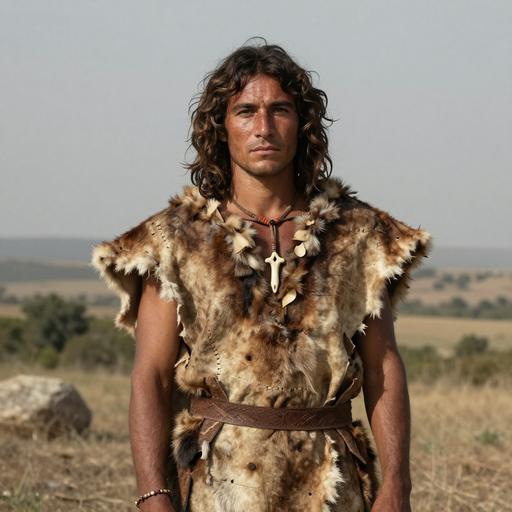
The Late Paleolithic era, roughly spanning from 40,000 to 10,000 years ago, marks a significant period in human prehistory characterized by the development of advanced stone tools, art, and cultural complexity. In the Southern Provence region of what is now modern-day France, this period is particularly fascinating due to its unique environmental, geographical, and cultural aspects, which provide a glimpse into the lives and social structures of pre-agricultural European communities.
Geography and Environment
Southern Provence during the Late Paleolithic was a region of diverse landscapes, punctuated by the Mediterranean coastline, rugged hills, and fertile plains. Its mild climate, compared to the harsher glacial conditions prevalent in northern Europe during this time, made it a hospitable environment for human habitation. Rich in resources, the area offered abundant game, including deer and wild boar, as well as a variety of plant foods, such as nuts, berries, and tubers. Numerous rivers and the proximity to the sea also allowed for fishing, providing an additional food source.
Technological and Tool Development
In this era, the inhabitants of Southern Provence developed sophisticated lithic technologies, evidencing an evolution from the early Paleolithic hand axes to more complex tools. The era saw the widespread adoption of blade technology, with tools such as finely crafted blades and burins. The production of microliths—small, sharp bladelets that could be hafted onto wooden shafts to create composite tools—represents a hallmark of this period’s innovation.
The Aurignacian culture, dominant in this era, was noted for its bone tools and the introduction of personal ornaments. People fashioned tools like awls, needles, and even early harpoons from bone and antlers, indicating advanced skills in working with multiple materials.
Art and Symbolism
One of the most distinctive features of the Late Paleolithic in Southern Provence is the emergence of art, particularly cave paintings and carvings. Iconic sites such as the Chauvet Cave, discovered in 1994, showcase some of the earliest and most sophisticated examples of Paleolithic art. These artworks include depictions of animals such as horses, lions, and mammoths, painted with remarkable realism and dynamism. The presence of abstract symbols and human figures points to an evolving ability for symbolic thought and communication.
These artistic endeavors are believed to be an integral part of ritualistic behaviors and may have played a role in religious or shamanistic practices. Such art indicates a developing cognitive complexity and a cultural emphasis on storytelling, myth-making, and the transmission of knowledge.
Social Structure and Culture
Communities were likely organized into small, mobile groups or bands, with social structures that were complex and adaptive. Evidence suggests that these groups operated within a framework of seasonal migration, following the availability of game and plant resources. The organization of these societies is inferred from archaeological finds such as living sites that show evidence of repeated occupation and carefully organized spaces indicating communal activities.
Trade and exchange networks are thought to have existed, with materials such as flint and shells being transported over considerable distances. This suggests interaction with neighboring groups, potentially for exchange of goods, ideas, and cultural practices.
The Late Paleolithic society of Southern Provence can be seen as having a rich spiritual and mythological culture. Burial sites from this period occasionally reveal grave goods, indicating a belief in an afterlife or spiritual realm. The inclusion of items such as beads, tools, and ochre in burials suggests a ritualistic significance and possibly a developed sense of personal and communal identity.
Conclusion
The Late Paleolithic culture of Southern Provence was marked by significant advancements in technology, art, and social organization. The natural environment fostered a society that balanced mobility with the establishment of semi-permanent settlements and nurtured the growth of complex rituals and symbolic expressions. This culture provides a window into the adaptive strategies and creative expression of early modern humans during a time of profound change and development in human history.