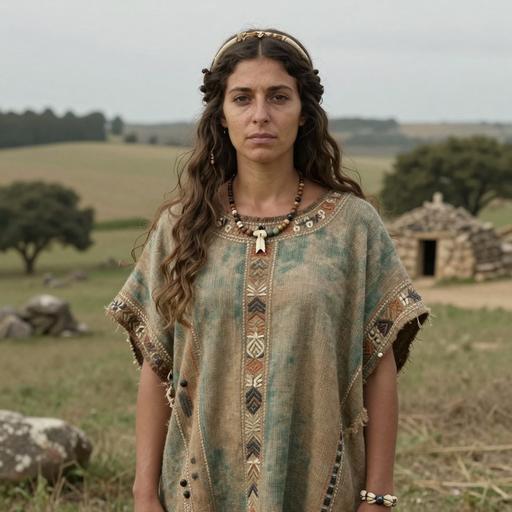
The Middle Neolithic period in Portugal, part of the broader Western European Neolithic, marks a fascinating and significant era in prehistoric human development, roughly dated between 4500 and 3500 BCE. This period is characterized by substantial cultural, technological, and social transformations that laid crucial foundations for subsequent civilizations in the Iberian Peninsula.
Geographical Context
Middle Neolithic Portugal encompasses various regions with diverse geographic features, from the fertile valleys to rugged coastlines and the rolling plains of central Iberia. These landscapes greatly influenced the subsistence strategies and settlement patterns of Neolithic communities, providing a rich environment for agricultural and pastoral activities.
Subsistence and Economy
The Middle Neolithic saw the consolidation of agrarian economies, where communities increasingly relied on agriculture alongside hunting and gathering. Evidence points to the cultivation of cereals, like wheat and barley, and legumes, coupled with the domestication of animals, such as cattle, sheep, and goats. This transition fostered more stable, sedentary lifestyles, allowing for permanent or semi-permanent settlements.
Settlement Patterns
Settlements during this period were typically small and clustered, often located near water sources or fertile land. These communities built structures from locally available materials—using wood, stone, and clay—for dwellings and communal buildings. The architecture was relatively modest, and there is evidence of circular or oval-shaped huts, some of which were semi-subterranean for insulation purposes.
Material Culture and Technology
The Middle Neolithic in Portugal is noted for its technological advancements, particularly in pottery and tool-making. Pottery from this era exhibits increasingly sophisticated designs and techniques, with decorations that may have served both functional and stylistic purposes. Flint and stone tools were prevalent, reflecting advancements in crafting techniques necessary for agriculture, hunting, and domestic life.
Social Organization and Culture
Social structures during the Middle Neolithic were likely complex and organized around kinship groups or clans. Evidence from burial practices suggests social stratification, with certain individuals and families possibly enjoying elevated status. The construction of megalithic structures, such as dolmens and menhirs, indicates communal efforts and shared beliefs, possibly linked to religious or ceremonial practices.
Rituals and Beliefs
The Middle Neolithic is marked by the proliferation of megalithic monuments across Portugal, pointing to a rich spiritual and ritual life. These stone structures, whose precise purpose remains the subject of scholarly debate, likely functioned as burial sites or ceremonial centers. The alignment of certain megaliths with astronomical events hints at sophisticated, albeit enigmatic, cosmological understanding.
Art and Symbolism
Artistic expression in Middle Neolithic Portugal is evident in pottery designs, carved stone idols, and rock art. These artifacts often bear geometric motifs and stylized figures, reflecting both everyday life and deeper symbolic meanings. The art likely played a role in expressing group identity and spiritual beliefs.
Trade and Interaction
Trade and cultural exchange were significant features of the Middle Neolithic, facilitated by natural waterways and paths connecting Iberia with broader Neolithic Europe. Valuable materials, such as obsidian and specific types of flint, were exchanged, contributing to cultural diffusion and technological advancements.
Challenges and Adaptations
Communities in Middle Neolithic Portugal faced various challenges, including environmental changes and resource management issues. Evidence of adaptive strategies includes advancements in agricultural techniques and landscape management, demonstrating the resilience and ingenuity of these early societies.
In summary, the Middle Neolithic period in Portugal is a pivotal era characterized by noteworthy developments in agriculture, social organization, technology, and culture. The echoes of this transformative period laid critical groundwork for the Bronze Age and beyond, influencing the trajectory of human civilization on the Iberian Peninsula.