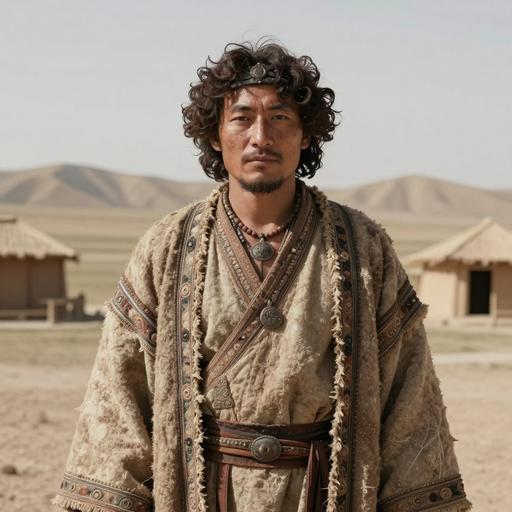
The Iron Age in Xinjiang, a region in the far northwest of what is now modern-day China, represents a fascinating convergence of diverse cultures, languages, and technologies. During this period, approximately spanning from around the late 2nd millennium BCE to the early centuries CE, Xinjiang was a crossroads of ancient civilizations, where East met West along what later became known as the Silk Road.
Geographic Context
Xinjiang's geographic landscape is notably diverse, encompassing vast deserts like the Taklamakan, towering mountain ranges including the Tianshan, and fertile river valleys. This variety of environments influenced the lifestyles and cultural practices of its inhabitants, fostering both nomadic and sedentary communities.
Cultural and Ethnic Diversity
Iron Age Xinjiang was home to a mosaic of cultures and ethnic groups. Evidence from archaeological findings, language studies, and historical texts suggests that Indo-European-speaking peoples, including the Tocharians, Saka (Scythians), and Yuezhi, lived alongside Indo-Iranian and proto-Turkic groups. With a multitude of languages and cultural practices, Xinjiang became a melting pot, where differing traditions and innovations were exchanged.
Social and Economic Structure
The societies in Iron Age Xinjiang were both pastoral and agrarian. The more nomadic tribes practiced animal husbandry, moving seasonally with their herds of sheep, goats, and horses. These nomads also engaged in trade, contributing to the cultural and material exchange that characterized the region.
Agricultural communities, located in the river valleys and oases, cultivated crops like barley, wheat, and millet. These settlements facilitated trade, not only between local cultures but with distant lands as Xinjiang lay on the burgeoning Silk Road network.
Technological Advancements
The transition to the Iron Age brought significant technological advancements to Xinjiang. The introduction of iron tools and weapons revolutionized agriculture and warfare. Communities that adopted iron technology had a competitive advantage, leading to shifts in social and political structures.
Horse domestication and the development of chariots and cavalry units were significant military advancements. These innovations improved mobility, trade, and communication across the vast region, knitting together disparate cultures.
Art and Material Culture
Archaeological sites in Xinjiang, such as those in the Tarim Basin, have yielded rich material evidence of the region's vibrant Iron Age culture. The textiles, particularly the well-preserved mummies clad in colorful wool garments, reveal advanced weaving techniques and intricate designs. Pottery, metallurgy, and other artifacts indicate significant artistic and cultural exchanges between indigenous peoples and those from neighboring regions, including Central Asia, Persia, and South Asia.
Religion and Beliefs
The religious landscape of Iron Age Xinjiang was as diverse as its cultural tapestry. Influences from animism, shamanism, and early forms of Zoroastrianism are evident, alongside local belief systems. Ritual artifacts and burial practices, such as those found at the Xiaohe Cemetery, provide insight into the spiritual lives of these ancient peoples.
Interaction with the Chinese Civilizations
Although Xinjiang was somewhat distant from the major Han Chinese centers of power during the Iron Age, there was sporadic contact. The Han Dynasty, particularly during the reign of Emperor Wu in the 2nd century BCE, initiated military campaigns and established the Protectorate of the Western Regions to exert influence and control over parts of Xinjiang. This interaction led to increased cultural and economic exchange, laying the groundwork for the region's pivotal role in the Silk Road trade routes.
Conclusion
The Iron Age in Xinjiang was a dynamic era characterized by the convergence of diverse cultures and technological innovations. As a key junction on early trade routes, the region played an essential role in facilitating cultural exchange between the East and West. The legacy of this period is still evident today, resonating in the cultural and genetic landscape of contemporary Xinjiang.