Menu
Currency
Main
Store
Blog

Loading Report

Preparing your ancestry journey

Connecting to ancient matches...

Preparing your report

Skip to main content
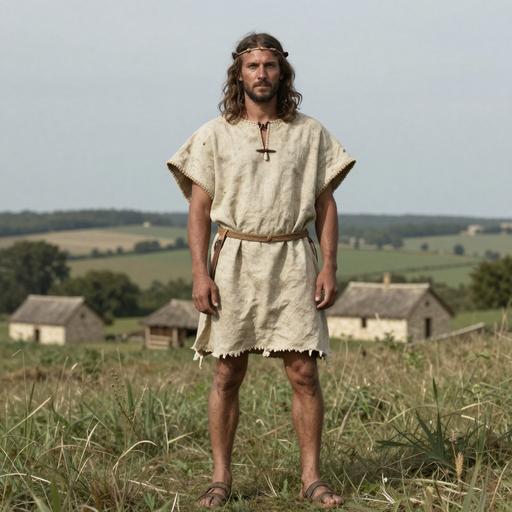
Portrait reconstruction of A man buried in France in the Early Neolithic era
Ancient Individual

A man buried in France in the Early Neolithic era

A man buried in France during the Early Neolithic Hauts-de-France, France

A fragment of the ancient world, preserved across millennia in strands of DNA.

MDV248
5206 BCE - 4853 BCE
Male
France
Scroll to begin
Chapter I

Identity

The biological and cultural markers that define this ancient individual

Sample ID

MDV248

Date Range

5206 BCE - 4853 BCE

Cultural Period

Early Neolithic Hauts-de-France, France

Biological Sex

Male

mtDNA Haplogroup

K1a2

Y-DNA Haplogroup

H2a1

Chapter II

Place

Where this individual was discovered

Country France
Locality Hauts-de-France (North). Menneville. Derrière le village
Coordinates 49.4191, 4.0077
Chapter III

Time

When this individual lived in the broader context of human history

MDV248 5206 BCE - 4853 BCE
Chapter IV

Story

The narrative of this ancient life

The Early Neolithic period in the region known today as Hauts-de-France in northern France is a significant chapter in the broader tapestry of Western European Neolithic culture. This era marks a crucial transition from hunter-gatherer societies of the Mesolithic to settled agricultural communities. The profound changes during this period—approximately 6,000 to 4,500 BC—laid the foundations for significant developments in human society, including agriculture, sedentism, and new social configurations.

Geographical and Environmental Context

Hauts-de-France is characterized by a diverse landscape featuring fertile plains, forests, and river valleys, making it an ideal environment for early agriculture. The region's river systems, such as the Somme and the Oise, provided water resources and fertile alluvial soils conducive to farming. The climate during the Early Neolithic was relatively stable, with warmer temperatures compared to the preceding millennia, which further supported the growth of agriculture.

Arrival of Farming and Domestication

The Neolithic era in Hauts-de-France, and Western Europe more broadly, is primarily defined by the introduction and development of agriculture. This period saw the domestication of plants such as emmer wheat, barley, and legumes, as well as the introduction of domesticated animals including cattle, sheep, goats, and pigs. These domesticated species were crucial for the sustenance of increasingly sedentary communities.

The spread of agriculture into the region is attributed to migratory movements from the Near East via the Danube River and Mediterranean coastal pathways, bringing with them knowledge of farming techniques and domesticated species. This agricultural knowledge facilitated a shift from reliance on foraging to the controlled production of food.

Settlements and Architecture

With the advent of agriculture, permanent settlements began to form. The Early Neolithic communities in Hauts-de-France were characterized by small villages with structures built predominantly from wood, wattle, and daub. Excavations have revealed rectangular longhouses, which served as multi-functional living spaces accommodating families and their livestock.

These settlements were often located strategically near water sources and fertile land while being elevated enough to avoid flooding. Such positioning indicates a sophisticated understanding of the local environment and resource management.

Material Culture and Tools

The Early Neolithic era was marked by significant advancements in tool production, particularly in the use of polished stone tools. Axes, chisels, and adzes were crafted from durable materials such as flint, extracted from local sources such as the abundant flint deposits found in northern France. These tools were essential for clearing forests, woodworking, and various other agricultural activities.

Pottery also emerged during this period, reflecting both utilitarian and cultural dimensions. Early Neolithic pottery in Hauts-de-France featured simple shapes and functional designs, evolving over time to include decorative elements that offer insights into aesthetic preferences and social identity.

Social Structures and Beliefs

The transition to sedentary farming communities brought changes to social structures. Settlements were likely organized around extended family units or small kin groups, with evidence suggesting some degree of social stratification or leadership roles determined by agricultural success, craft specialization, or control over resources.

Burial practices and funerary sites from this period provide insights into the spiritual and cultural life of Early Neolithic people. Megalithic structures, such as dolmens and passage graves, began to appear, indicating complex ritual practices and beliefs in an afterlife. These structures required communal effort, pointing to well-organized societies capable of large-scale projects.

Interaction and Exchange

While the Early Neolithic communities were largely self-sufficient, there is evidence of interaction and trade with neighboring regions. The exchange of raw materials, such as obsidian and high-quality flint, and cultural practices suggests a network of communication and exchange that facilitated the spread of innovations and ideas.

Conclusion

The Early Neolithic period in Hauts-de-France represents a transformative era that set the stage for the development of complex societies. The transition from foraging to farming, the establishment of permanent settlements, the evolution of material culture, and the rise of new social structures were integral to shaping the region's subsequent cultural and historical trajectory. The archaeological remnants from this time provide a window into the lives of early agricultural communities in northern France, illustrating their adaptability, ingenuity, and the profound impact of agriculture on human society.

Context

Related Samples

This individual exists within a broader network of ancient samples. No ancient genome stands alone.

Sample ID Culture/Period Date Location Action
ATT26 Iron Age II Hauts-de-France, France 400 BCE Hauts-de-France (North). Attichy-Bitry. Le Buissonnet, France View
BERG02-2 Middle Neolithic Grand Est, France 4041 BCE Grand-Est (East). Bergheim. Saulager, France View
BERG157-2 Middle Neolithic Grand Est, France 4300 BCE Grand-Est (East). Bergheim. Saulager, France View
BERG157-7 Middle Neolithic Grand Est, France 4319 BCE Grand-Est (East). Bergheim. Saulager, France View
BES1248 Iron Age II Occitanie, France 600 BCE Occitanie (South). Bessan. La Monédière, France View
BFM265 Iron Age II Hauts-de-France, France 300 BCE Hauts-de-France (North). Bucy-le-Long. le fond du Marais, France View
BIS130 Early Bronze Age in Grand Est, France 2000 BCE Grand-Est (East). Bischwihr. Muehlacker, France View
BIS385 Early Bronze Age in Grand Est, France 2000 BCE Grand-Est (East). Bischwihr. Muehlacker, France View
BLP10 Middle Neolithic Hauts-de-France, France 4239 BCE Hauts-de-France (North). Beaurieux. la Plaine, France View
BUCH2 Middle Neolithic Grand Est, France 4400 BCE Grand-Est (East). Buchères. PLA D39, France View
CBV95 Late Neolithic Hauts-de-France, France 2575 BCE Hauts-de-France (North). Ciry Salsogne. La Bouche-à-Vesle, France View
COL11 Iron Age II Grand Est, France 360 BCE Grand-Est (East). Colmar. Jardin des Aubépines, France View
COL153A Iron Age II Grand Est, France 360 BCE Grand-Est (East). Colmar. Jardin des Aubépines, France View
COL153i Iron Age II Grand Est, France 360 BCE Grand-Est (East). Colmar. Jardin des Aubépines, France View
CRE20D Middle Neolithic Occitanie, France 4400 BCE Occitanie (South). Béziers. Le Crès, France View
ERS1164 Iron Age II Grand Est, France 400 BCE Grand-Est (East). Erstein. Erstein Untergasse, France View
ERS86 Iron Age II Grand Est, France 400 BCE Grand-Est (East). Erstein. Erstein Untergasse, France View
ERS88 Iron Age II Grand Est, France 400 BCE Grand-Est (East). Erstein. Erstein Untergasse, France View
Es97-1 Middle Neolithic Hauts-de-France, France 4900 BCE Hauts-de-France (North). Escalles. Mont d'Hubert, France View
EUG11 Early Bronze Age Occitanie, France 2028 BCE Occitanie (South). Laure. Dolmen de Saint-Eugène, France View
Jeb8 Iron Age I Grand Est, France 600 BCE Grand-Est (East). Sainte-Croix-en-Plaine. Jebsen Boden, France View
MDV248 Early Neolithic Hauts-de-France, France 5206 BCE Hauts-de-France (North). Menneville. Derrière le village, France View
Mor6 Early Neolithic Grand Est, France 5209 BCE Grand-Est (East). Morschwiller-le-Bas. ZAC des collines I IKEA. Hungeheuer Hoelzle, France View
NIED Late Bronze Age Grand Est, France 950 BCE Grand-Est (East). Niederergheim. Innere Allmende, France View
NOR2B6 Iron Age I Grand Est, France 800 BCE Grand-Est (East). Nordhouse. Nordhouse, France View
NOR3-15 Iron Age I Grand Est, France 800 BCE Grand-Est (East). Nordhouse. Nordhouse, France View
NOR3-6 Iron Age I Grand Est, France 650 BCE Grand-Est (East). Nordhouse. Nordhouse, France View
NOR4 Iron Age I Grand Est, France 650 BCE Grand-Est (East). Nordhouse. Nordhouse, France View
OBE3626-1 Early Bronze Age in Grand Est, France 1930 BCE Grand-Est (East). Obernai. PAEI, France View
OBE3722 Early Bronze Age in Grand Est, France 1950 BCE Grand-Est (East). Obernai. PAEI, France View
PECH5 Iron Age II Occitanie, France 600 BCE Occitanie (South). Sigean. Pech Maho, France View
PECH8 Iron Age II Occitanie, France 600 BCE Occitanie (South). Sigean. Pech Maho, France View
PEI10 Late Neolithic Occitanie, France 2895 BCE Occitanie (South). Villedubert. Dolmen des Peirières, France View
PEI2 Late Neolithic Occitanie, France 2950 BCE Occitanie (South). Villedubert. Dolmen des Peirières, France View
PER503 Mesolithic Nouvelle-Aquitaine, France 7200 BCE Nouvelle-Aquitaine (South-West). Agris. Les Perrats, France View
PER3023 Mesolithic Nouvelle-Aquitaine, France 7200 BCE Nouvelle-Aquitaine (South-West). Agris. Les Perrats, France View
PER3123 Mesolithic Nouvelle-Aquitaine, France 7200 BCE Nouvelle-Aquitaine (South-West). Agris. Les Perrats, France View
PEY163 Iron Age II Occitanie, France 400 BCE Occitanie (South). Agde. Le Peyrou, France View
PEY53 Iron Age II Occitanie, France 400 BCE Occitanie (South). Agde. Le Peyrou, France View
PIR3037AB Early Bronze Age Occitanie, France 2196 BCE Occitanie (South). Valros. Rec de Ligno, France View
PIR3116B Early Bronze Age Occitanie, France 2340 BCE Occitanie (South). Valros. Rec de Ligno, France View
Pir4 Middle Neolithic Occitanie, France 4448 BCE Occitanie (South). Valros. Le Pirou, France View
Pir6 Middle Bronze Age Occitanie, France 1744 BCE Occitanie (South). Valros. Le Pirou, France View
PSS4170 Early Bronze Age in Grand Est, France 2197 BCE Grand-Est (East). Pont-sur-Seine. Pont-sur-Seine, France View
PSS4693 Middle Neolithic Grand Est, France 3605 BCE Grand-Est (East). Pont-sur-Seine. Ferme de l'Ile, France View
PT2 Iron Age II Occitanie, France 500 BCE Occitanie (South). Gailhan. Oppidum du Plan de la Tour, France View
QUIN234 Early to Middle Bronze Age Occitanie, France 2100 BCE Occitanie (South). Castelnaudary. Quinquiris, France View
QUIN58 Early to Middle Bronze Age Occitanie, France 2100 BCE Occitanie (South). Castelnaudary. Quinquiris, France View
RIX15 Early Bronze Age in Grand Est, France 1700 BCE Grand-Est (East). Rixheim. Zac du Petit Prince, France View
RIX2 Early Bronze Age in Grand Est, France 1700 BCE Grand-Est (East). Rixheim. Zac du Petit Prince, France View
RIX4 Early Bronze Age in Grand Est, France 1879 BCE Grand-Est (East). Rixheim. Zac du Petit Prince, France View
ROS102 Middle Neolithic Grand Est, France 4800 BCE Grand-Est (East). Rosheim. Rosheim "Mittelfeld" "Rosenmeer, France View
ROS45 Middle Neolithic Grand Est, France 4789 BCE Grand-Est (East). Rosheim. Rosheim "Mittelfeld" "Rosenmeer, France View
ROS78 Middle Neolithic Grand Est, France 4800 BCE Grand-Est (East). Rosheim. Rosheim "Mittelfeld" "Rosenmeer, France View
ROS82 Middle Neolithic Grand Est, France 4780 BCE Grand-Est (East). Rosheim. Rosheim "Mittelfeld" "Rosenmeer, France View
Schw72-15 Early Neolithic Grand Est, France 5250 BCE Grand-Est (East). Schwindratzheim. Lotissement Les Terrasses de la Zorn, France View
Schw432 Early Neolithic Grand Est, France 5210 BCE Grand-Est (East). Schwindratzheim. Lotissement Les Terrasses de la Zorn, France View
WET370 Middle Neolithic Grand Est, France 3641 BCE Grand-Est (East). Wettolsheim. Wettolsheim, France View
Sample ID Culture/Period Date Location Action
MDV248 Early Neolithic Hauts-de-France, France 5206 BCE Hauts-de-France (North). Menneville. Derrière le village, France View
Sources

References

Scientific publications and genetic data that inform this profile.

Scientific Publication

Ancient genomes from present-day France unveil 7,000 years of its demographic history

Authors Brunel S, Bennett EA, Cardin L, Garraud D, Barrand Emam H et al.
Abstract

Genomic studies conducted on ancient individuals across Europe have revealed how migrations have contributed to its present genetic landscape, but the territory of present-day France has yet to be connected to the broader European picture. We generated a large dataset comprising the complete mitochondrial genomes, Y-chromosome markers, and genotypes of a number of nuclear loci of interest of 243 individuals sampled across present-day France over a period spanning 7,000 y, complemented with a partially overlapping dataset of 58 low-coverage genomes. This panel provides a high-resolution transect of the dynamics of maternal and paternal lineages in France as well as of autosomal genotypes. Parental lineages and genomic data both revealed demographic patterns in France for the Neolithic and Bronze Age transitions consistent with neighboring regions, first with a migration wave of Anatolian farmers followed by varying degrees of admixture with autochthonous hunter-gatherers, and then substantial gene flow from individuals deriving part of their ancestry from the Pontic steppe at the onset of the Bronze Age. Our data have also highlighted the persistence of Magdalenian-associated ancestry in hunter-gatherer populations outside of Spain and thus provide arguments for an expansion of these populations at the end of the Paleolithic Period more northerly than what has been described so far. Finally, no major demographic changes were detected during the transition between the Bronze and Iron Ages.

Use code for 25% off Expires Jul 13