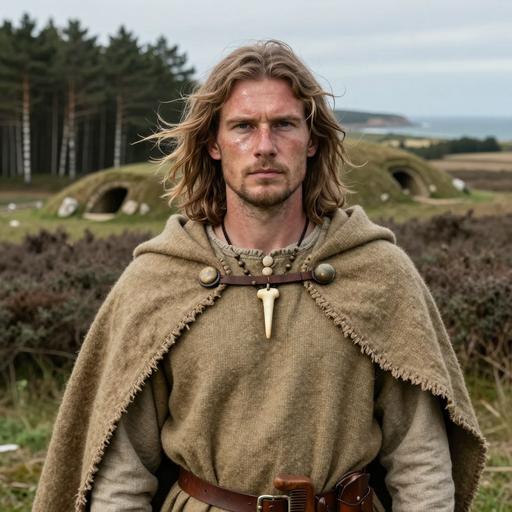
The Single Grave Culture, which flourished during the Late Neolithic period, is an intriguing cultural phenomenon that left a significant mark on regions like Djursland in Denmark. This culture existed approximately between 2800 and 2350 BCE and played a pivotal role in shaping the prehistoric landscape of Northern Europe, particularly evident in Denmark.
Geographic and Temporal Context
Djursland, located on the Jutland Peninsula, serves as a focal point for understanding the broader expanse of the Single Grave Culture across Denmark. This culture is a part of the larger Corded Ware culture complex, which extended across vast regions of Europe. The period marks a transitional phase from the Neolithic to the Early Bronze Age, characterized by shifts in burial practices, settlement patterns, and material culture.
Burial Practices
One of the defining features of the Single Grave Culture is, as the name suggests, its distinctive burial practices. Unlike the communal burials of earlier Neolithic periods, this culture is noted for its individual graves. These graves are typically identified by single inhumations under a barrow, often with accompanying grave goods. The barrows, or burial mounds, were constructed from earth or stones, providing a visible testament to the memorialization of the deceased.
Material Culture
The material culture of the Single Grave Culture in Djursland includes various artifacts that provide insights into their daily life, social structure, and beliefs. Pottery from this period is usually characterized by corded decoration, which is a distinctive feature throughout the Corded Ware cultures. Additionally, stone battle axes are commonly found within graves, suggesting both a martial aspect to their society and possibly a symbol of status or identity.
Economy and Subsistence
The economy during this period was predominantly agrarian but included aspects of hunting and gathering. Settlements were likely small and possibly semi-nomadic, with an emphasis on livestock herding, particularly cattle and sheep. The shift toward individual burial practices might also reflect changes in social organization, possibly moving towards more patriarchal systems with hereditary leadership.
Social Structure and Cultural Interactions
While there is evidence of localized cultural practices, the Single Grave Culture also indicates a broader interaction sphere across Northern Europe. The similarities in grave goods and burial practices link this culture to other Corded Ware groups across Europe, implying a network of trade, communication, and shared beliefs. This may have facilitated the dissemination of ideas and technologies, influencing the social and cultural dynamics of the region.
Influence on Later Periods
The practices and societal changes initiated during the Single Grave Culture period laid the groundwork for the transformations observed in the subsequent Nordic Bronze Age. The emphasis on individual burial rites, for example, can be seen as a precursor to the more elaborate funerary customs that developed later. Moreover, the introduction and spread of metallurgy, which characterize the Bronze Age, were likely facilitated by the trade networks and social structures that evolved during this time.
Archaeological Significance
In Djursland, as in other parts of Denmark, archaeological excavations have unearthed numerous burial sites, providing valuable insights into the Single Grave Culture. These findings have been instrumental in reconstructing the lifestyle, beliefs, and social structures of these prehistoric communities. The cultural artifacts and burial mounds continue to be of great interest to archaeologists and historians, offering a window into a transformative period in Northern European prehistory.
In conclusion, the Single Grave Culture in Djursland represents a period of significant cultural evolution, characterized by distinct burial practices, material culture, and social structures. Its impact on the region's archaeological and historical landscape provides essential insights into the prehistoric era's complexity and its transition towards the socio-economic structures that defined the Nordic Bronze Age.