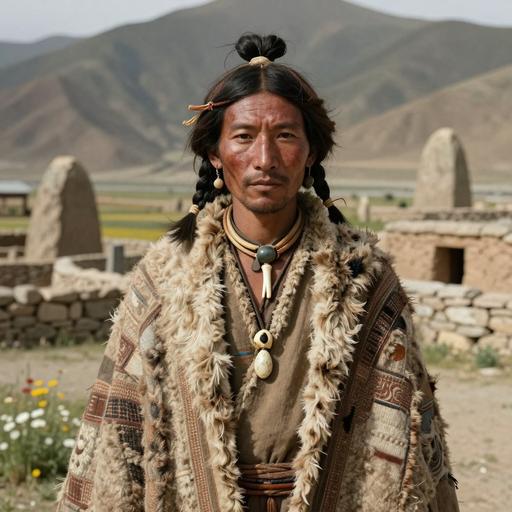
The Samdzong 1500 BP (Before Present) culture is an archaeological and anthropological construct derived from the study of ancient burial sites in the Upper Mustang region of Nepal, specifically in the Samdzong area. This culture, emerging around 1500 years ago (approximately the 5th century CE), provides invaluable insights into ancient trans-Himalayan societies, their socio-cultural practices, religious affiliations, and interactions with neighboring regions.
Geographical and Environmental Context
The Samdzong culture is situated in the Upper Mustang region of Nepal, which lies in the trans-Himalayan region bordering Tibet. This area is part of the greater Tibetan Plateau, characterized by its arid, cold desert environment with steep valleys and high mountainous terrain. Such an environment has influenced the cultural and economic practices of the people, including pastoralism, trade, and limited agriculture due to the harsh climate.
Archaeological Findings
Archaeological excavations in Samdzong have unveiled a collection of rock-cut caves used as burial sites, believed to be associated with this culture. These caves are often carved into cliff faces, indicating complex burial rituals and social stratification. Key discoveries include:
Mortuary Practices: The dead were placed in wooden coffins and often accompanied by grave goods, which suggest a belief in an afterlife and the significance of the deceased's social status or occupation.
Artifacts: Items such as ceramics, textiles, metal objects (especially bronze and iron), and jewelry have been found. These artifacts indicate advanced craftsmanship and a network of trade, likely with neighboring regions such as the Indian subcontinent and Central Asia.
Human Remains: The analysis of skeletal remains provides information on diet, health, and genetic links to other populations. Cranial modifications observed in some burials suggest cultural practices unique to this group.
Cultural and Social Structure
The Samdzong 1500 BP culture appears to be a complex society with defined social stratification, inferred from the differential treatment of individuals in burial contexts. This era typifies a blend of indigenous practices and influences from Tibetan and broader Central Asian cultures.
Religion and Beliefs: The presence of artifacts and the nature of the burials indicate some form of spiritual belief system. While specific religious practices are not entirely clear, the burial goods and mortuary structures suggest rituals aimed at ensuring well-being in the afterlife, possibly influenced by Bon or early Buddhist practices.
Economy: As a remote high-altitude culture, the Samdzong people likely relied on a mixed economy. Pastoralism (herding of yaks, sheep, and goats) was central, supplemented by trade and small-scale agriculture. The discovery of textiles and metal objects suggests domestic production alongside trade imports.
Trade and Connectivity: The Mustang region served as a critical junction along ancient trade routes connecting South Asia, Central Asia, and the Tibetan plateau. The cultural artifacts point towards significant trade relations, evidenced by the presence of non-local materials such as silk, displaying contact with regions as far as China and India.
Interaction with Neighboring Regions
The Samdzong culture was not isolated but interacted with surrounding cultures, including other Tibetan groups and perhaps even more distant civilizations. This interaction is evidenced by material culture showing stylistic similarities to Tibetan and Central Asian artifacts, indicating a diffusion of artistic and technological influences.
Conclusion
The Samdzong 1500 BP culture represents a compelling example of early Himalayan societies, characterized by unique adaptations to a challenging environment and a dynamic interaction with broader Asian cultural spheres. While much is yet to be understood, ongoing archaeological and genetic research continues to shed light on the nature and significance of this ancient cultural group, contributing to our understanding of human adaptability and cultural development in the Himalayas.