Menu
Currency
Main
Store
Blog

Loading Report

Preparing your ancestry journey

Connecting to ancient matches...

Preparing your report

Skip to main content
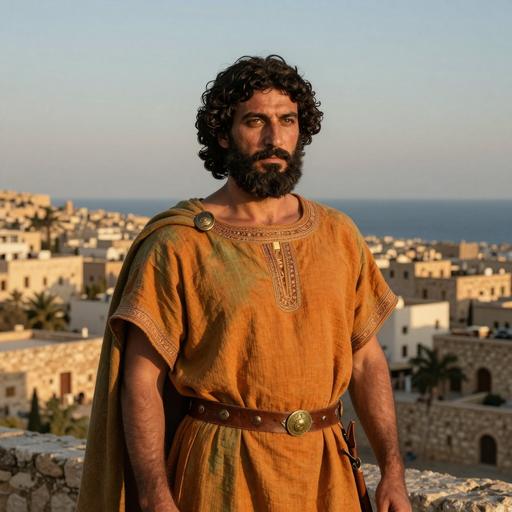
Portrait reconstruction of A man buried in Lebanon in the Iron Age era
Ancient Individual

A man buried in Lebanon in the Iron Age era

A man buried in Lebanon during the Iron Age II Lebanon

A fragment of the ancient world, preserved across millennia in strands of DNA.

SFI-55
1000 BCE - 539 BCE
Male
Lebanon
Scroll to begin
Chapter I

Identity

The biological and cultural markers that define this ancient individual

Sample ID

SFI-55

Date Range

1000 BCE - 539 BCE

Cultural Period

Iron Age II Lebanon

Biological Sex

Male

mtDNA Haplogroup

H2a

Y-DNA Haplogroup

J-Z1842

Chapter II

Place

Where this individual was discovered

Country Lebanon
Locality Beirut
Coordinates 33.8967, 35.5094
Chapter III

Time

When this individual lived in the broader context of human history

SFI-55 1000 BCE - 539 BCE
Chapter IV

Story

The narrative of this ancient life

Iron Age II Lebanon, particularly the Phoenician culture, represents a fascinating and transformative period in ancient Near Eastern history, spanning approximately from 1000 to 539 BCE. This era marks a significant phase in the development of Phoenician society, which played a crucial role in the broader historical narrative of the Mediterranean region. Here's an extensive and detailed description of this era and culture:

Historical Context

The Iron Age II in Lebanon is characterized by the rise and flourishing of the city-states along the Eastern Mediterranean coast, which are collectively known as Phoenicia. These city-states, including notable centers such as Tyre, Sidon, Byblos, and Arwad, were strategically located along key maritime trade routes. This enabled them to emerge not only as pivotal trade hubs but also as centers of cultural and technological exchange.

Political Structure

Phoenician society during Iron Age II was organized around independent city-states, each governed by its own king or ruling elite. The political landscape of Phoenicia was not unified under a single monarchy; rather, each city-state maintained its autonomy, engaging in both cooperation and competition with its neighbors. This decentralized political structure facilitated dynamic interactions with surrounding empires and local powers, including the Assyrians, Babylonians, and Persians.

Economy and Trade

The economic foundations of Phoenician city-states rested heavily on maritime commerce. The Phoenicians were renowned for their skills in shipbuilding and navigation, making them dominant seafarers of the ancient world. They established extensive trade networks that extended across the Mediterranean, reaching as far west as the Iberian Peninsula and as far north as the British Isles. Key commodities in Phoenician trade included purple dye (extracted from murex snails), glass, timber from the famous Lebanese cedar trees, and luxury goods crafted from metals and ivory.

Cultural and Technological Contributions

Phoenicia is perhaps most celebrated for its alphabetic writing system, which was a significant advancement over cuneiform and hieroglyphic scripts. This alphabet, comprising a set of symbols representing sounds rather than entire words or syllables, was simpler and more versatile, influencing later writing systems used by Greeks, Romans, and eventually modern Western alphabets.

In terms of culture, Phoenician society was a sophisticated blend of indigenous and neighboring influences. Their religion centered around a pantheon of gods and goddesses, with prominent deities including Baal, Astarte, and Melqart. Temples and religious rituals played a vital role in daily life, reflecting a deep connection between the political and the divine.

Art and Architecture

Phoenician art and architecture were heavily influenced by their interactions with other cultures through trade. Their artistic creations often featured intricate metalwork, ivory carvings, and elegant pottery, showcasing a blend of Egyptian, Mesopotamian, and local motifs. Architecture in Phoenician cities included grand palaces, temples, and formidable fortifications, exemplifying both their aesthetic sensibilities and their technological prowess.

Decline and Legacy

The decline of the Phoenician city-states began with the rise of powerful empires like the Assyrians, Babylonians, and eventually, the Achaemenid Persians. Conquests by these empires gradually eroded the independence of Phoenician cities. However, the legacy of the Phoenicians continued to endure, particularly through their alphabet, which laid the foundation for several modern writing systems, and their cultural syncretism that influenced subsequent Mediterranean civilizations.

In summary, Iron Age II Lebanon represents a pivotal era in the history of Phoenicia, marked by remarkable achievements in trade, technology, and culture. The Phoenicians' contributions to writing, maritime navigation, and cultural exchange left an indelible mark on the ancient world, cementing their place as one of the most influential civilizations of the Mediterranean basin.

Context

Related Samples

This individual exists within a broader network of ancient samples. No ancient genome stands alone.

Sample ID Culture/Period Date Location Action
SFI-24 Early Roman Lebanon 52 BCE Beirut, Lebanon View
SFI-33 Early Roman Lebanon 31 CE Beirut, Lebanon View
SFI-15 Early Roman Lebanon 170 BCE Beirut, Lebanon View
SFI-11 Early Roman Lebanon 151 BCE Beirut, Lebanon View
SFI-20 Hellenistic Lebanon 175 BCE Beirut, Lebanon View
SFI-5 Hellenistic Lebanon 354 BCE Beirut, Lebanon View
SFI-12 Hellenistic Lebanon 347 BCE Beirut, Lebanon View
SFI-56 Iron Age II Lebanon 1000 BCE Beirut, Lebanon View
SFI-55 Iron Age II Lebanon 1000 BCE Beirut, Lebanon View
SFI-43 Iron Age III Lebanon 749 BCE Beirut, Lebanon View
SFI-44 Iron Age III Lebanon 539 BCE Beirut, Lebanon View
SFI-34 Iron Age III Lebanon 540 BCE Beirut, Lebanon View
SFI-47 Iron Age III Lebanon 540 BCE Beirut, Lebanon View
SFI-50 Iron Age III Lebanon 540 BCE Beirut, Lebanon View
SFI-36 Iron Age III Lebanon 540 BCE Beirut, Lebanon View
SFI-39 Iron Age III Lebanon 540 BCE Beirut, Lebanon View
SFI-45 Iron Age III Lebanon 540 BCE Beirut, Lebanon View
SFI-42 Iron Age III Lebanon 542 BCE Beirut, Lebanon View
SFI-35 Iron Age III Lebanon 540 BCE Beirut, Lebanon View
SFI-11 151 BCE Beirut, Lebanon View
SFI-12 347 BCE Beirut, Lebanon View
SFI-15 170 BCE Beirut, Lebanon View
SFI-20 175 BCE Beirut, Lebanon View
SFI-24 52 BCE Beirut, Lebanon View
SFI-33 31 CE Beirut, Lebanon View
SFI-34 540 BCE Beirut, Lebanon View
SFI-35 540 BCE Beirut, Lebanon View
SFI-36 540 BCE Beirut, Lebanon View
SFI-39 540 BCE Beirut, Lebanon View
SFI-42 542 BCE Beirut, Lebanon View
SFI-43 749 BCE Beirut, Lebanon View
SFI-44 539 BCE Beirut, Lebanon View
SFI-45 540 BCE Beirut, Lebanon View
SFI-47 540 BCE Beirut, Lebanon View
SFI-5 354 BCE Beirut, Lebanon View
SFI-50 540 BCE Beirut, Lebanon View
SFI-55 1000 BCE Beirut, Lebanon View
SFI-56 1000 BCE Beirut, Lebanon View
Sample ID Culture/Period Date Location Action
SFI-56 Iron Age II Lebanon 1000 BCE Beirut, Lebanon View
SFI-55 Iron Age II Lebanon 1000 BCE Beirut, Lebanon View
Sources

References

Scientific publications and genetic data that inform this profile.

Scientific Publication

A Genetic History of the Near East from an aDNA Time Course Sampling Eight Points in the Past 4,000 Years

Authors Haber M, Nassar J, Almarri MA, Saupe T, Saag L et al.
Abstract

The Iron and Classical Ages in the Near East were marked by population expansions carrying cultural transformations that shaped human history, but the genetic impact of these events on the people who lived through them is little-known. Here, we sequenced the whole genomes of 19 individuals who each lived during one of four time periods between 800 BCE and 200 CE in Beirut on the Eastern Mediterranean coast at the center of the ancient world's great civilizations. We combined these data with published data to traverse eight archaeological periods and observed any genetic changes as they arose. During the Iron Age (∼1000 BCE), people with Anatolian and South-East European ancestry admixed with people in the Near East. The region was then conquered by the Persians (539 BCE), who facilitated movement exemplified in Beirut by an ancient family with Egyptian-Lebanese admixed members. But the genetic impact at a population level does not appear until the time of Alexander the Great (beginning 330 BCE), when a fusion of Asian and Near Easterner ancestry can be seen, paralleling the cultural fusion that appears in the archaeological records from this period. The Romans then conquered the region (31 BCE) but had little genetic impact over their 600 years of rule. Finally, during the Ottoman rule (beginning 1516 CE), Caucasus-related ancestry penetrated the Near East. Thus, in the past 4,000 years, three limited admixture events detectably impacted the population, complementing the historical records of this culturally complex region dominated by the elite with genetic insights from the general population.

Use code for 25% off Expires Jul 12