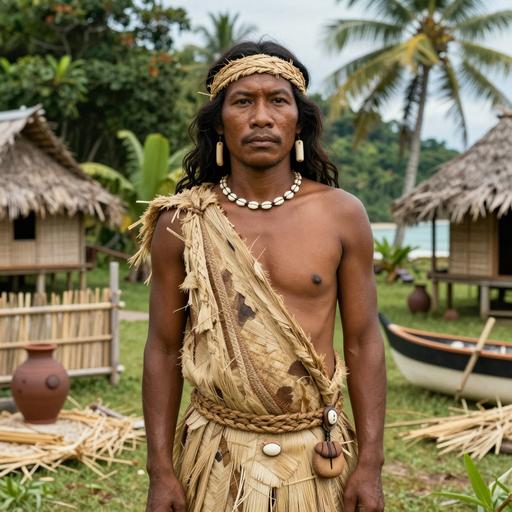
The Neolithic to Early Bronze Age period in Tanjung Pinang, Morotai, Indonesia, represents a fascinating chapter in Austronesian history, showcasing significant cultural, technological, and societal developments. This era marks a phase of transition and adaptation as these communities harnessed evolving skills and resources, laying the foundation for future Austronesian expansion throughout Southeast Asia and the Pacific.
Geographic and Environmental Context
Morotai is part of the Maluku Islands in eastern Indonesia, an area characterized by its rich biodiversity, fertile lands, and access to diverse marine resources. During the Neolithic to Early Bronze Age, the environment played a significant role in shaping the lifestyles of its inhabitants, offering plentiful natural resources from both terrestrial and marine ecosystems. The island’s strategic location in the Pacific Ocean also positioned it as a crucial point of interaction among various Austronesian communities.
Cultural Characteristics
The Austronesian peoples are known for their seafaring prowess, which greatly influenced their cultural practices, including trade, migration, and communication across vast oceanic distances. In Tanjung Pinang, Morotai, evidence suggests a blend of these maritime traditions with localized adaptations, which include:
Subsistence Strategies: The inhabitants engaged in diverse fishing techniques, foraging, and rudimentary agriculture. They utilized tools crafted from locally sourced stone, bone, and shell for these activities. The introduction and cultivation of staple crops like taro, yam, and banana also marked this era, alongside hunting and gathering.
Settlements and Social Structure: Settlements were typically coastal or near rivers, which facilitated fishing and trade. These communities were likely organized in kin-based groups with social hierarchies informed by maritime skill and knowledge. The advent of pottery technology also indicates developing sedentary lifestyle components, with pottery styles reflecting both utilitarian and artistic expressions.
Technological Advancements: The transition from Neolithic to the Bronze Age was marked by significant technological changes. Stone tool technology over time showed increased sophistication with polished axes and adzes. The eventual introduction of bronze, while attenuated in this particular region, represented new possibilities for tool and weapon production, gradually changing the material culture landscape.
Artistic and Ritualistic Practices: Artwork and ritual play a crucial role in understanding Austronesian societies. The presence of decorative motifs on pottery, along with potential megalithic structures and ceremonial sites, suggests a rich cultural and spiritual life. These artifacts likely held significance in religious or communal rituals, possibly linked to ancestor worship or cosmology.
Linguistic and Migratory Patterns
The Austronesian language family, one of the world's largest, provides insights into the spread of these peoples. Linguistic evidence suggests a spread from Taiwan through maritime Southeast Asia, including Morotai, which served as a nodal point for further migrations into the Pacific islands. The dissemination of Austronesian languages reflects not just linguistic expansion but also the movement of ideas, technologies, and cultural practices.
Interaction and Exchange
The strategic position of Tanjung Pinang in the maritime network enabled significant interactions with neighboring cultures. This included exchanges of goods, such as obsidian and pottery styles, and knowledge, including maritime navigation techniques. Such interactions facilitated cultural syncretism, enhancing the richness of Austronesian culture in Morotai.
Conclusion
The Neolithic to Early Bronze Age period in Tanjung Pinang, Morotai, illustrates a dynamic phase in Austronesian history, marked by adaptation and innovation. The interplay between environmental resources, technological advancements, and socio-cultural developments forged a resilient society capable of navigating, adapting to, and thriving in the diverse landscapes of Southeast Asia. This era set the stage for further Austronesian dispersal and cultural evolution across the vast expanse of the Pacific Ocean.