Menu
Currency
Main
Store
Blog

Loading Report

Preparing your ancestry journey

Connecting to ancient matches...

Preparing your report

Skip to main content
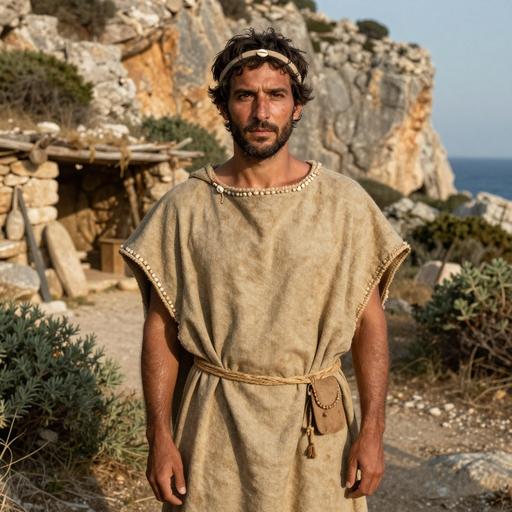
Portrait reconstruction of A man buried in Italy in the Middle Neolithic era
Ancient Individual

A man buried in Italy in the Middle Neolithic era

A man buried in Italy during the Middle Neolithic Sicily

A fragment of the ancient world, preserved across millennia in strands of DNA.

UZZ061
4879 BCE - 4719 BCE
Male
Italy
Scroll to begin
Chapter I

Identity

The biological and cultural markers that define this ancient individual

Sample ID

UZZ061

Date Range

4879 BCE - 4719 BCE

Cultural Period

Middle Neolithic Sicily

Biological Sex

Male

mtDNA Haplogroup

K1a2

Y-DNA Haplogroup

C1a2b1

Social Role

Farmer (AI estimate, era-typical)

Chapter II

Place

Where this individual was discovered

Country Italy
Locality Sicily. Grotta dell’Uzzo
Coordinates 38.1100, 12.7866
Chapter III

Time

When this individual lived in the broader context of human history

UZZ061 4879 BCE - 4719 BCE
Chapter IV

Story

The narrative of this ancient life

The Middle Neolithic period in Sicily, which is part of the broader Mediterranean Neolithic, represents a fascinating era of transformation and cultural development. This era is generally considered to span from around 4800 to 4200 BCE, marking a significant phase in the prehistoric timeline of the region.

Geographical Context

Sicily, the largest island in the Mediterranean Sea, served as a crucial crossroads for various cultures due to its strategic location. The island's diverse landscape, which includes fertile plains, rugged mountains, and extensive coastlines, provided abundant resources and facilitated early human settlement.

Cultural Influences

During the Middle Neolithic, Sicily was influenced by a variety of external cultures due to its proximity to the Italian Peninsula and North Africa. This period is characterized by the diffusion of agricultural practices and technologies, as well as the establishment of more permanent settlements.

Settlements and Architecture

Neolithic communities in Sicily began to develop more complex forms of settlements. Villages were typically established near water sources or fertile lands that were conducive to agriculture. Archaeological evidence suggests that dwellings were constructed using organic materials such as wood, clay, and reeds. These structures were often simple, single-room units with thatched roofing.

Agriculture and Subsistence

Agriculture played a central role in the Middle Neolithic economy. The introduction and cultivation of crops like wheat, barley, and legumes indicate advancements in farming techniques. Additionally, animal domestication, including sheep, goats, and pigs, complemented plant-based subsistence strategies. The surplus production enabled population growth and the diversification of labor.

Ceramics and Material Culture

The material culture of Middle Neolithic Sicily is particularly noted for its pottery. Ceramic production was highly developed, with terracotta vessels often decorated with geometric patterns, incised lines, and sometimes painted motifs. These artifacts not only served practical purposes but also held symbolic and social significance, reflecting the aesthetic expressions of the time.

Social Organization

While detailed records of social structure are scarce, it is believed that Neolithic communities in Sicily were organized around kinship and familial ties. Social stratification likely remained minimal, but roles may have become more specialized as communities grew. Elders or individuals with specialized knowledge, such as those skilled in agriculture or pottery, may have held respected positions within these societies.

Trade and Interaction

Evidence of trade is noticeable through the exchange of raw materials and finished goods, such as obsidian, flint, and pottery, indicating that Middle Neolithic Sicilians engaged in long-distance trade networks. These interactions contributed to the cultural dynamism of the era, facilitating the exchange of ideas, technology, and goods.

Religion and Rituals

Though concrete evidence of religious practices from this period is limited, it is likely that Middle Neolithic communities participated in ritualistic activities centered around agriculture or fertility, as seen in various Mediterranean cultures. The presence of figurines and other symbolic artifacts might suggest the role of ritual and religion in societal cohesion.

Overall, the Middle Neolithic period in Sicily represents a key stage in the island's prehistory characterized by increased settlement complexity, agricultural advancement, and a rich material culture. The integration within Mediterranean networks allowed this era to be one of not just survival but significant cultural and technological flourishing.

Context

Related Samples

This individual exists within a broader network of ancient samples. No ancient genome stands alone.

Sample ID Culture/Period Date Location Action
UZZ5054 Late Mesolithic Sicily, Italy 8798 BCE Sicily. Grotta dell’Uzzo, Italy View
UZZ4446 Late Mesolithic Castelnovian Culture, Sicily, Italy 6633 BCE Sicily. Grotta dell’Uzzo, Italy View
UZZ026 Early Mesolithic Sicily 9040 BCE Sicily. Grotta dell’Uzzo, Italy View
UZZ033 Neolithic Stentinello Culture in Sicily 5380 BCE Sicily. Grotta dell’Uzzo, Italy View
UZZ034 Neolithic Stentinello Culture in Sicily 5376 BCE Sicily. Grotta dell’Uzzo, Italy View
UZZ040 Late Mesolithic Castelnovian Culture, Sicily, Italy 6416 BCE Sicily. Grotta dell’Uzzo, Italy View
UZZ057 Early Bronze Age Sicily 2196 BCE Sicily. Grotta dell’Uzzo, Italy View
UZZ061 Middle Neolithic Sicily 4879 BCE Sicily. Grotta dell’Uzzo, Italy View
UZZ069 Late Mesolithic Castelnovian Culture, Sicily, Italy 6773 BCE Sicily. Grotta dell’Uzzo, Italy View
UZZ071 Late Mesolithic Sicily, Italy 6008 BCE Sicily. Grotta dell’Uzzo, Italy View
UZZ074 Neolithic Stentinello Culture in Sicily 5327 BCE Sicily. Grotta dell’Uzzo, Italy View
UZZ075 Neolithic Stentinello Culture in Sicily 5327 BCE Sicily. Grotta dell’Uzzo, Italy View
UZZ077 Early Neolithic Sicily 5476 BCE Sicily. Grotta dell’Uzzo, Italy View
UZZ079 Late Mesolithic Castelnovian Culture, Sicily, Italy 6694 BCE Sicily. Grotta dell’Uzzo, Italy View
UZZ080 Late Mesolithic Castelnovian Culture, Sicily, Italy 6694 BCE Sicily. Grotta dell’Uzzo, Italy View
UZZ081 Late Mesolithic Castelnovian Culture, Sicily, Italy 6693 BCE Sicily. Grotta dell’Uzzo, Italy View
UZZ082 Late Mesolithic Castelnovian Culture, Sicily, Italy 6694 BCE Sicily. Grotta dell’Uzzo, Italy View
UZZ087 Neolithic Stentinello Culture in Sicily 5311 BCE Sicily. Grotta dell’Uzzo, Italy View
UZZ088 Late Mesolithic Sicily, Italy 5987 BCE Sicily. Grotta dell’Uzzo, Italy View
UZZ096 Early Mesolithic Sicily 8800 BCE Sicily. Grotta dell’Uzzo, Italy View
UZZ099 Middle Neolithic Sicily 4050 BCE Sicily. Grotta dell’Uzzo, Italy View
Sample ID Culture/Period Date Location Action
I4062 Middle Neolithic Sicily 4984 BCE Sicily. Fossato di Stretto Partana, Italy View
I4065 Middle Neolithic Sicily 4988 BCE Sicily. Fossato di Stretto Partana, Italy View
I4063 Middle Neolithic Sicily 4987 BCE Sicily. Fossato di Stretto Partana, Italy View
I4064 Middle Neolithic Sicily 4841 BCE Sicily. Fossato di Stretto Partana, Italy View
UZZ061 Middle Neolithic Sicily 4879 BCE Sicily. Grotta dell’Uzzo, Italy View
UZZ099 Middle Neolithic Sicily 4050 BCE Sicily. Grotta dell’Uzzo, Italy View
Sources

References

Scientific publications and genetic data that inform this profile.

Scientific Publication

Genomic and dietary discontinuities during the Mesolithic and Neolithic in Sicily

Authors Yu H, van de Loosdrecht MS, Mannino MA, Talamo S, Rohrlach AB et al.
Abstract

Sicily is a key region for understanding the agricultural transition in the Mediterranean because of its central position. Here, we present genomic and stable isotopic data for 19 prehistoric Sicilians covering the Mesolithic to Bronze Age periods (10,700-4,100 yBP). We find that Early Mesolithic hunter-gatherers (HGs) from Sicily are a highly drifted lineage of the Early Holocene western European HGs, whereas Late Mesolithic HGs carry ∼20% ancestry related to northern and (south) eastern European HGs, indicating substantial gene flow. Early Neolithic farmers are genetically most similar to farmers from the Balkans and Greece, with only ∼7% of ancestry from local Mesolithic HGs. The genetic discontinuities during the Mesolithic and Early Neolithic match the changes in material culture and diet. Three outlying individuals dated to ∼8,000 yBP; however, suggest that hunter-gatherers interacted with incoming farmers at Grotta dell'Uzzo, resulting in a mixed economy and diet for a brief interlude at the Mesolithic-Neolithic transition.

Use code for 25% off Expires Jul 15