Mesolithic
10,000 BCE to 4,000 BCE
Hunter-gatherers of Mesolithic Britain and Ireland, before farming reached the islands.
Explore this period
Region & Environment
Mesolithic England was characterized by a dynamic post-glacial environment in which coastlines, river systems, and woodland cover shifted over time. Landscapes ranged from river valleys and wetlands to forested areas and open ground, supporting varied animal populations and plant resources. Environmental variability encouraged flexible strategies rather than permanent, intensive farming.
Historical Context
In England, the Mesolithic follows the end of the Upper Palaeolithic and precedes the spread of farming in the later Neolithic. The archaeological record reflects small-scale, mobile lifeways in which communities adjusted to seasonal availability of resources. Changes in climate and sea level shaped where people lived and what they targeted.
Populations & Lifeways
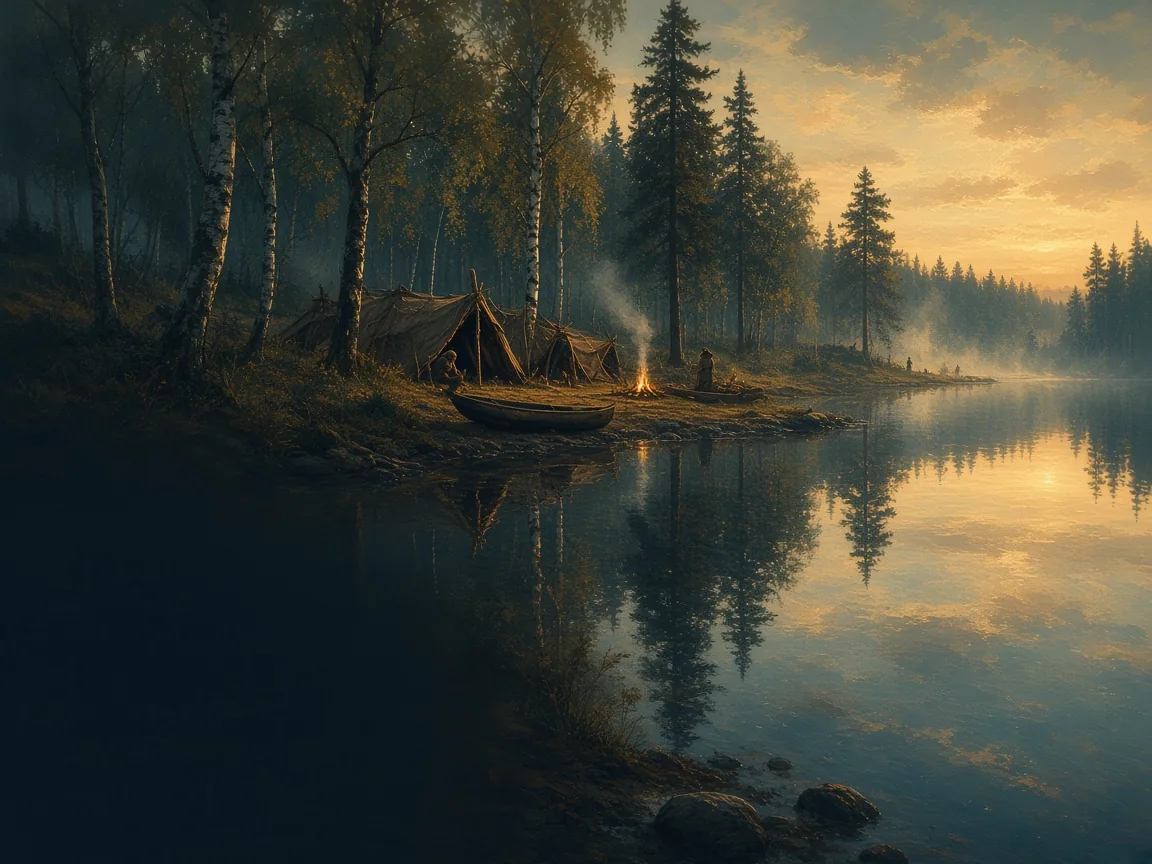
Populations were organized around hunter-gatherer subsistence. People typically moved between habitats on a seasonal basis, exploiting fish in rivers and estuaries, hunting terrestrial game, and collecting edible plants. Settlement evidence most often points to repeated use of particular places—such as lake margins, river crossings, or sheltered coastlines—rather than large urban centers.
Archaeology & Material Culture
Material culture is dominated by stone tools made from locally available materials, including microlithic forms and other worked flint products. Archaeological sites often include hearths and refuse associated with short-term occupation, along with patterned scatters of debitage and tools. Organic materials (wood, plant fiber, leather) were important but are less often preserved than stone.
Culture & Society
Social life is inferred indirectly from settlement patterns and the repetition of tool-making practices across regions. Technology suggests shared knowledge about raw material selection, flintworking traditions, and tasks suited to hunting and fishing. The archaeological record does not provide evidence of farming communities; instead, it indicates networks and learning within a mobile society.
Legacy & Transition
The Mesolithic landscape and its adaptable subsistence strategies provide context for later Neolithic change. As farming and new settlement patterns emerged in Britain, older Mesolithic lifeways gradually disappeared from the archaeological record. The transition involved both environmental opportunities and shifting social-economic priorities rather than a single abrupt event.