mtDNA · Maternal lineage

N1A1A1A1A

mtDNA Haplogroup N1A1A1A1A

A reference profile for one lineage branch. Shared haplogroups do not establish a family relationship or cultural identity.

Reference profile

Branch background

Historical context for mtDNA lineage branch N1A1A1A1A

Origins and Evolution

Haplogroup N1A1A1A1A is a terminal branch nested within the broader N1a phylogeny, itself a distinctive lineage associated with early Neolithic farming expansions from the Near East and Anatolia into Europe. As a downstream subclade of N1A1A1A1, N1A1A1A1A likely coalesced after the initial diversification of N1a lineages that accompanied the first agricultural dispersals; based on the parent clade's time depth and patterns seen in comparable mtDNA subclades, a reasonable estimate for the origin of N1A1A1A1A is on the order of ~5.5 thousand years ago (kya), with an origin in or near Anatolia/the Levant.

Phylogenetically, N1A1A1A1A carries the defining mutations that place it as a child branch of N1A1A1A1 and therefore shares the deeper ancestry of N1a female lineages that are commonly recovered in Early Neolithic contexts. Its rarity in modern populations suggests a pattern of strong founder effects during the Neolithic followed by drift and replacement in many regions of later prehistory.

Subclades

As a relatively terminal and rare branch in current datasets, N1A1A1A1A has few, if any, well-differentiated downstream subclades published in large public phylogenies; most observations to date are treated as instances of the named subclade rather than a cluster of diverse daughter lineages. Future dense sampling of ancient and modern mitogenomes, particularly from Anatolia, the Levant and early Neolithic Europe, could reveal further internal structure.

Geographical Distribution

The highest incidence of N1A1A1A1A is observed in ancient Neolithic contexts tied to Anatolian and early European farming expansions, with scattered low-frequency occurrences in modern populations. Expected geographic patterning includes:

  • Ancient presence in Anatolian Neolithic and early European farmer assemblages (LBK, Cardial-related sites).
  • Low-level persistence in modern Southern Europe (Italy, Greece, Iberian fringe) and coastal North Africa (Maghreb).
  • Sporadic occurrences in the Caucasus, Iran, parts of Central Asia and the Horn of Africa (likely reflecting later movements or ancient gene flow/back-migration).

The overall picture is of a lineage that was more visible in archaeological samples associated with early farming but that became rare through subsequent demographic changes (Neolithic farmer/forager admixture, Bronze Age population turnovers, and later migrations).

Historical and Cultural Significance

Because N1A1A1A1A descends from the N1a pool prominent among early farmers, its presence in archaeological contexts is informative for reconstructing Neolithic demography and migration routes. Recoveries in Linearbandkeramik (LBK) and Cardial contexts support a model in which maternal lineages originating in or near Anatolia moved westwards with pioneering farming communities into Central and Mediterranean Europe. The decline in frequency thereafter mirrors the broader decline of many early farmer maternal lineages in Europe following later population events (Bronze Age movements, steppe-related admixture, and localized drift).

Instances of N1A1A1A1A in North Africa and the Horn of Africa may reflect either direct Neolithic-era maritime or coastal contacts across the Mediterranean/Levantine corridor, or later episodes of gene flow between the Near East and Africa (including back-migration into Africa). Its rare modern presence makes it a useful marker when present for linking individuals or ancient samples to Near Eastern/Anatolian Neolithic ancestry.

Conclusion

N1A1A1A1A is a low-frequency, downstream mtDNA lineage rooted in the Neolithic N1a radiation from the Near East/Anatolia. Its primary significance lies in ancient DNA contexts where it documents maternal ancestry of early farmers who migrated into Europe; in modern populations it persists only rarely, reflecting a history of demographic turnover and genetic drift since the Neolithic. Continued targeted mitogenome sequencing of ancient Anatolian and early European farmer remains, plus increased sampling in the Near East and North Africa, will clarify its finer-scale phylogeography and any internal substructure.

Key Points

  • Origins and Evolution
  • Subclades
  • Geographical Distribution
  • Historical and Cultural Significance
  • Conclusion
Reference profile

Tree & Relationships

Phylogenetic context and subclades

Evolution Path

Follow the recorded parent branches toward N1A1A1A1A. Dates are estimates and can change as reference data is revised.

Steps Haplogroup Age Estimate Archaeology Era Time Passed Immediate Descendants Tested Modern Descendants Ancient Connections
1 N1A1A1A1A Current ~6,000 years ago Chalcolithic 5,500 years 0 4 7
2 N1A1A1A1 ~6,000 years ago Chalcolithic 6,000 years 1 8 0
3 N1A1A1A ~7,000 years ago Neolithic 7,000 years 3 29 84
4 N1A1A1 ~8,000 years ago Neolithic 8,000 years 2 30 0
5 N1A1AA - - - 1 30 0
6 N1A1A ~9,000 years ago Neolithic 9,000 years 2 56 64
7 N1A1 ~12,000 years ago Neolithic 12,000 years 2 660 0
8 N1A1'2 - - - 2 662 0
9 N1A ~13,000 years ago Mesolithic 13,000 years 2 688 6
10 N1 ~45,000 years ago Paleolithic 45,000 years 3 906 21
11 N1'5 - - - 2 955 0
12 N ~60,000 years ago Paleolithic 60,000 years 16 26,150 13
13 L3 ~70,000 years ago Paleolithic 70,000 years 7 30,162 6
14 L3'4 - - - 2 30,212 0
15 L3'4'6 - - - 2 30,216 0
16 L2'3'4'6 - - - 2 31,333 0
17 L2'3'4'5'6'7 - - - 2 31,349 0
18 L1'2'3'4'5'6'7 - - - 2 31,852 0
19 L ~160,000 years ago Paleolithic 160,000 years 2 32,236 5

Subclades (0)

Terminal branch - no recorded subclades

Reference profile

Where in the World

Geographic distribution and modern presence

Recorded origin

Near East / Anatolia

Modern Distribution

The populations where mtDNA haplogroup N1A1A1A1A is found include:

  1. Anatolian and Levantine Near Eastern populations
  2. Ancient Anatolian Neolithic assemblages
  3. Early European Neolithic farmers (e.g., LBK, Cardial-related groups)
  4. Modern Southern European populations (Italy, Greece, Iberian fringe) at low frequencies
  5. Central and Northern European populations in ancient contexts (now rare)
  6. North African coastal populations and the Maghreb at low frequencies
  7. Horn of Africa populations (Ethiopia, Somalia) in specific sublineages or isolated cases
  8. Caucasus and Iranian populations (moderate to low frequencies in targeted studies)
  9. Sporadic occurrences in parts of Central Asia and steppe-adjacent groups
  10. Ancient Cardial and other early farmer assemblages across Mediterranean Europe
Historical context

A branch through time

Estimated formation in a broad historical timeline. Period markers provide context and do not imply a connection with particular cultures.

  1. ~10k years ago

    Neolithic Revolution

    Agriculture begins, settled communities form

  2. ~5.5k years ago

    Haplogroup N1A1A1A1A

    Estimated formation of this mtDNA branch; dates and locations are reference estimates.

    This branch
  3. ~5k years ago

    Bronze Age

    Metalworking, writing, and early civilizations

  4. ~3k years ago

    Iron Age

    Iron tools, expanded trade networks

  5. ~2.5k years ago

    Classical Antiquity

    Greek and Roman civilizations flourish

  6. Present

    Present Day

    Modern era

Reference profile

Archaeological context

Recorded archaeological associations for mtDNA branch N1A1A1A1A

Recorded associations

These labels describe archaeological contexts recorded for reference samples linked to N1A1A1A1A. An association does not establish that all carriers belonged to a culture or followed a particular migration route.

Early Árpád Kazakh Iron Age Magyar Elite Culture Mongolian Bronze Russia_Bashkortostan_EarlyMedieval_Karayakupovo Russia_Bashkortostan_Medieval_LateChiyalik Russia_Chelyabinsk_Karayakupovo_Kushnarenkovo Russia_MBA_Caucasus Russia_Tatarstan_Medieval_EarlyChiyalik Russia_Tyumen_EIA_Sargatka Sargat Culture Serbian Medieval Sukhbaatar Culture
Culture assignments are based on archaeological context of ancient DNA samples and may represent regional associations during specific time periods.
Reference profile

Sample Catalog

7 direct carriers of haplogroup N1A1A1A1A

7 shown · 7 matching samples

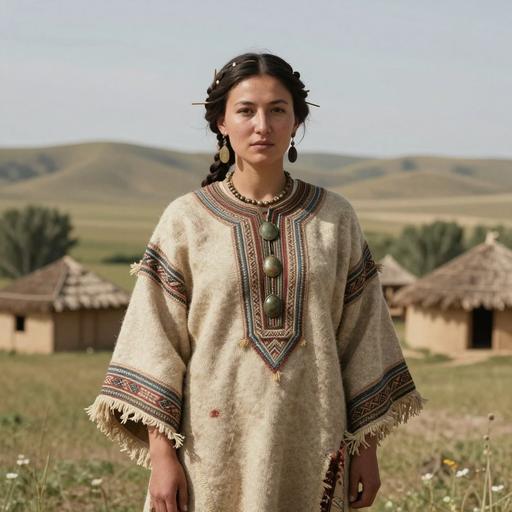
Portraits are AI-generated illustrations. Sample labels and accession IDs identify the reference records.

Portrait Sample Country Era Date Culture mtDNA Match
AI-generated illustrative portrait of IA individual, Southern Urals. Borovoye Hillfort, Kazakhstan (200 BCE-100 CE)
Sample ID: BRV001
Kazakhstan Iron Age Kazakhstan 200 BCE - 100 CE Kazakh Iron Age N1a1a1a1a Direct
AI-generated illustrative portrait of EIA IA Sargatka individual, Western Siberia. Bitiya Burial Ground. Bitiya#228/25. mound 4, Russia (300-100 BCE)
Sample ID: BIY009
Russia Iron Age Sargat Culture, Russia 300-100 BCE Sargat Culture N1a1a1a1a Direct
AI-generated illustrative portrait of Elite individual, Hajdú-Bihar County. Magyarhomorog-Kónyadomb, Hungary (900-1,000 CE)
Sample ID: MH1-23
Hungary Conqueror Elite Hungary 900-1000 CE Magyar Elite Culture N1a1a1a1a Direct
AI-generated illustrative portrait of Elite individual, Hajdú-Bihar County. Magyarhomorog-Kónyadomb, Hungary (900-1,000 CE)
Sample ID: MH1-4
Hungary Conqueror Elite Hungary 900-1000 CE Magyar Elite Culture N1a1a1a1a Direct
AI-generated illustrative portrait of Sukhbaatar Late Medieval individual, Sukhbaatar. Lamt Mountain, Mongolia (1,000-1,500 CE)
Sample ID: DAS001
Mongolia Mongolia Sukhbaatar LateMedieval 1000-1500 CE Sukhbaatar Culture N1a1a1a1a Direct
AI-generated illustrative portrait of Medieval Hungarian individual, Hajdú-Bihar County. Püspökladány-Eperjesvölgy, Hungary (1,000-1,050 CE)
Sample ID: PLE-115
Hungary Hungary EarlyArpadian 1000 CE - 1050 CE Early Árpád N1a1a1a1a Direct
AI-generated illustrative portrait of Medieval Byzantine Slav individual, Viminacium-Svetinja (Braničevo District, Požarevac Municipality, Kostolac), Serbia (1,100-1,300 CE)
Sample ID: I32297
Serbia Medieval Serbian Slavs 1100-1300 CE Serbian Medieval N1a1a1a1a Direct
MATERNAL LINEAGE · ANCIENT DNA

Ancient lineage evidence map

Follow parent clades toward this branch and explore where ancient carriers were found.

Loading ancient observations…

Markers are archaeological find locations. A dashed connector is an uncertain, proposed geographic transition between consecutive branches supported by multiple dated observations; it is not an exact travel route, birthplace or proof of direct descent. Parent-clade samples may belong to other descendant branches. Gaps remain where evidence is insufficient. Sample dates differ from haplogroup formation dates.

Reference profile

Carrier Distribution Map

Geographic distribution of 7 ancient DNA samples (direct and subclade carriers of N1A1A1A1A)

Direct carrier
Time Period Filter
All Time Periods
Showing all samples
Reference profile

Temporal Distribution

Distribution of carriers across archaeological periods

Reference profile

Geographic Distribution

Counts by recorded sample country. These reflect the available reference selection, not population frequencies.

Reference profile

Country × Era Distribution

Compare recorded sample counts across countries and archaeological periods. Select a populated cell to inspect a sample.

Data

Data & Provenance

Source information and data quality

Last Updated 2026-02-16
Confidence Score 50/100
Coverage Low

Data Source

Classification, estimated dates and geographic context reflect the recorded reference data and may change as evidence is revised. Sample coverage is uneven; recorded locations and archaeological associations do not establish personal origin or cultural identity.