Menu
mtDNA Haplogroup • Maternal Lineage

N1A1

mtDNA Haplogroup N1A1

~11,000 years ago
Near East / Anatolia
2 subclades
Scroll to explore
Chapter I

The Story

The journey of mtDNA haplogroup N1A1

Origins and Evolution

mtDNA haplogroup N1A1 is a downstream branch of haplogroup N1A, itself a daughter of macro-haplogroup N. Based on the phylogenetic position of N1A and the archaeological contexts in which N1A lineages appear, N1A1 most likely arose in the Near East or Anatolia during the late glacial or early post-glacial interval and became more visible during the early Neolithic (roughly the 9th–7th millennia cal BP). As a subclade of N1A, N1A1 shares the demographic history of early Near Eastern farming populations that contributed maternally to the first farmers of Europe.

Subclades

N1A1 resolves into further sublineages observed at low frequencies in modern and ancient samples. Different research papers and ancient DNA datasets report subbranches (often labeled N1A1a, N1A1b, etc.) that show geographic structure: some subclades are more typical of Anatolian and Levantine samples, while others are detected in early European Neolithic contexts. Because N1A1 is relatively rare today, the finer structure of its subclades is still being refined as more complete mitochondrial genomes from both modern and ancient samples are published.

Geographical Distribution

Today, N1A1 is uncommon but shows a distribution consistent with a Near Eastern origin and Neolithic expansion into Europe. It is observed in:

  • Anatolia and the Levant (moderate frequency among historical and some modern samples),
  • Early European Neolithic farmer assemblages (notably LBK and related early farming groups),
  • Low frequencies across modern Southern and Central Europe, and
  • Sporadic occurrences in North Africa, the Horn of Africa, and parts of Central and South Asia where Near Eastern gene flow occurred.

Ancient DNA has been particularly informative: N1A1 and closely related N1A sublineages are overrepresented in early Neolithic skeletal series compared with present-day populations, pointing to a substantial decline in frequency following later migrations and population turnovers.

Historical and Cultural Significance

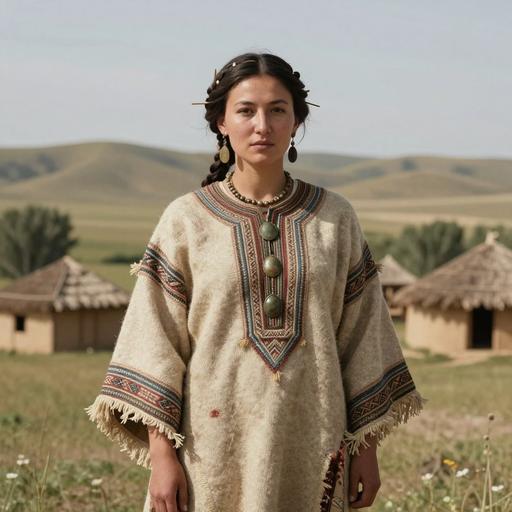
The primary historical significance of N1A1 lies in its association with early farming communities that spread agriculture from Anatolia into Europe. Ancient samples carrying N1A lineages (including N1A1 sublineages) have been recovered from Linearbandkeramik (LBK) sites and other early Neolithic contexts, where maternal lineages from the Near East combined with local and incoming genetic inputs to shape early European mitochondrial diversity. Because N1A1 frequencies drop in later prehistoric and modern samples, its presence in archaeological contexts is often used as a molecular indicator of early Neolithic demography and migration.

Conclusion

N1A1 is a Near Eastern-derived mtDNA subclade that played a visible role in the maternal gene pool of early Neolithic farmers who colonized parts of Europe. It is now rare in modern populations, but ancient DNA from the Neolithic has been crucial for reconstructing its past distribution and for understanding the maternal contribution of Near Eastern populations to early European farming communities. Continued sampling of complete mitogenomes in both ancient and modern contexts will refine the internal branching and geographic history of N1A1.

Key Points

  • Origins and Evolution
  • Subclades
  • Geographical Distribution
  • Historical and Cultural Significance
  • Conclusion

Chapter II

Tree & Relationships

Phylogenetic context and subclades

Evolution Path

This haplogroup's evolutionary journey from its earliest ancestor to the present.

Steps Haplogroup Age Estimate Archaeology Era Time Passed Immediate Descendants Tested Modern Descendants Ancient Connections
1 N1A1 Current ~11,000 years ago 🌾 Neolithic 11,000 years 2 80 0
2 N1A ~13,000 years ago 🏹 Mesolithic 13,000 years 3 100 6
3 N1 ~55,000 years ago 🦴 Paleolithic 55,000 years 2 276 21
4 N ~60,000 years ago 🦴 Paleolithic 60,000 years 15 15,452 13
5 L3 ~70,000 years ago 🦴 Paleolithic 70,000 years 11 17,621 6
6 L ~160,000 years ago 🦴 Paleolithic 160,000 years 7 18,987 5

Siblings (2)

Other branches from the same parent haplogroup

Chapter III

Where in the World

Geographic distribution and modern presence


Place of Origin

Near East / Anatolia

Modern Distribution

The populations where mtDNA haplogroup N1A1 is found include:

  1. Anatolian and Levantine Near Eastern populations
  2. Early European Neolithic farmers (e.g., LBK and related groups)
  3. Modern Southern European populations (Italy, Greece, Iberian fringe) at low frequencies
  4. Central and Northern European populations (historically among early farmers, now rare)
  5. North African coastal populations and the Maghreb at low frequencies
  6. Horn of Africa populations (Ethiopia, Somalia) in specific sublineages
  7. Caucasus and Iranian populations (moderate to low frequencies)
  8. South Asian groups in limited contexts (low frequency)
  9. Central Asian and some steppe-adjacent groups (sporadic occurrences)
  10. Ancient Anatolian Neolithic and Cardial/Cardial-related early farmer assemblages
CHAPTER IV

When in Time

Your haplogroup in the context of human history

~11k years ago

Haplogroup N1A1

Your mtDNA haplogroup emerged in Near East / Anatolia

Near East / Anatolia
~10k years ago

Neolithic Revolution

Agriculture begins, settled communities form

~5k years ago

Bronze Age

Metalworking, writing, and early civilizations

~3k years ago

Iron Age

Iron tools, expanded trade networks

~2k years ago

Classical Antiquity

Greek and Roman civilizations flourish

Present

Present Day

Modern era

Your Haplogroup
Historical Era
Chapter IV-B

Linked Cultures

Ancient cultures associated with mtDNA haplogroup N1A1

Cultural Heritage

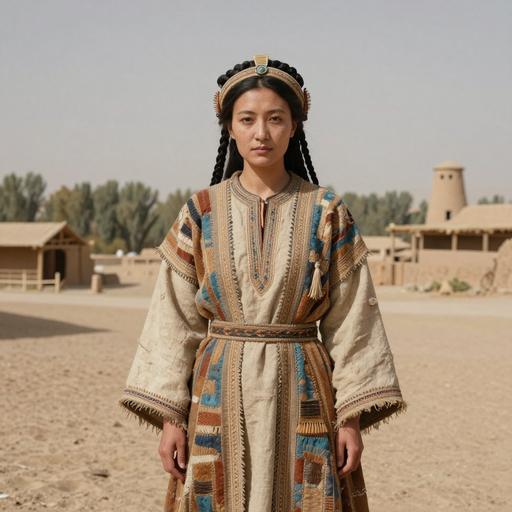
These ancient cultures have been linked to haplogroup N1A1 based on matching ancient DNA samples from archaeological excavations. The presence of this haplogroup in these cultures provides insights into the migrations and population movements of populations carrying this haplogroup.

Alföld Linear Pottery Anatolian Chalcolithic Baalberge Culture Baja PPNB Cardial Culture Catacomb Culture Czech Neolithic Early Bronze Age Russian Linear Pottery Culture PPNA Anatolia PPNB Culture Shanidar Culture Starčevo Culture
Culture assignments are based on archaeological context of ancient DNA samples and may represent regional associations during specific time periods.
Chapter V

Sample Catalog

100 subclade carriers of haplogroup N1A1 (no exact N1A1 samples sequenced yet)

50 / 50 samples
Portrait Sample Country Era Date Culture mtDNA Match
Portrait of ancient individual I16584 from Turkey, dated 100 BCE - 200 CE
I16584
Turkey Roman Period 2 Turkey 100 BCE - 200 CE Middle Roman Anatolia N1a1b1 Downstream
Portrait of ancient individual BRV001 from Kazakhstan, dated 200 BCE - 100 CE
BRV001
Kazakhstan Iron Age Kazakhstan 200 BCE - 100 CE Kazakh Iron Age N1a1a1a1a Downstream
Portrait of ancient individual PCA0111 from Poland, dated 200 CE - 400 CE
PCA0111
Poland Wielbark Culture 200 CE - 400 CE Wielbark N1a1a1a2 Downstream
Portrait of ancient individual BIY009 from Russia, dated 300 BCE - 100 BCE
BIY009
Russia Iron Age Sargat Culture, Russia 300 BCE - 100 BCE Sargat Culture N1a1a1a1a Downstream
Portrait of ancient individual I12907 from Netherlands, dated 356 BCE - 57 BCE
I12907
Netherlands Middle to Late Iron Age Netherlands 356 BCE - 57 BCE Dutch Iron Age N1a1a1a3 Downstream
Portrait of ancient individual CLR31 from France, dated 400 BCE - 300 BCE
CLR31
France Iron Age Culture of Aude 400 BCE - 300 BCE Aude N1a1a1 Downstream
Portrait of ancient individual SZ27 from Hungary, dated 419 CE - 543 CE
SZ27
Hungary Langobard Period Hungary 419 CE - 543 CE Langobard Culture N1a1a1a1 Downstream
Portrait of ancient individual I19863 from United Kingdom, dated 460 BCE - 382 BCE
I19863
United Kingdom Early Iron Age England 460 BCE - 382 BCE Early British Iron Age N1a1a1a2 Downstream
Portrait of ancient individual I10944 from Italy, dated 480 BCE
I10944
Italy Sicilian Greek (Himeran) 480 BCE Himeran Greek N1a1a1a Downstream
Portrait of ancient individual C3674 from China, dated 541 BCE - 61 BCE
C3674
China Iron Age Zhagunluke, Xinjiang, China 541 BCE - 61 BCE Zhagunluke Culture N1a1a1a1 Downstream
Chapter VI

Carrier Distribution Map

Geographic distribution of 100 ancient DNA samples (direct and subclade carriers of N1A1)

Subclade carrier
Time Period Filter
All Time Periods
Showing all samples
Chapter VII

Temporal Distribution

Distribution of carriers across archaeological periods

Chapter VIII

Geographic Distribution

Distribution by country of origin (direct and subclade carriers shown by default)

Chapter IX

Country × Era Distribution

Cross-tabulation of carrier countries and archaeological periods (direct and subclade carriers shown by default)

Data

Data & Provenance

Source information and data quality

Last Updated 2026-02-16
Confidence Score 50/100
Coverage Low
Data Source

We use the latest phylotree for MTDNA haplogroup classification and data.