Menu
Store
Blog
Northeastern Albania (Kukës District)

Çinamak Iron Age Echo

A solitary Iron Age voice from northeast Albania, where archaeology meets ancient DNA

658 CE - 403 BCE
Scroll to begin
Chapter I

The Story

Understanding the Çinamak Iron Age Echo culture

Single-sample ancient DNA from Çinamak (Kukës District) dated 658–403 BCE offers a tentative glimpse into Iron Age Albania. Archaeological context links to regional Illyrian-era traditions; genetic data (mtDNA H+) are preliminary but suggest maternal continuity with broader European lineages.

Time Period

658–403 BCE

Region

Northeastern Albania (Kukës District)

Common Y-DNA

No Y-DNA reported (single sample)

Common mtDNA

H+ (n=1)

Chapter II

Timeline

Key moments in the history of this culture

658 BCE

Çinamak burial (radiocarbon start)

A human burial from Çinamak, Kukës District, dated within 658–403 BCE and later sampled for ancient DNA, offering a tentative genetic glimpse into Iron Age Albania.

Chapter III

Origins & Emergence

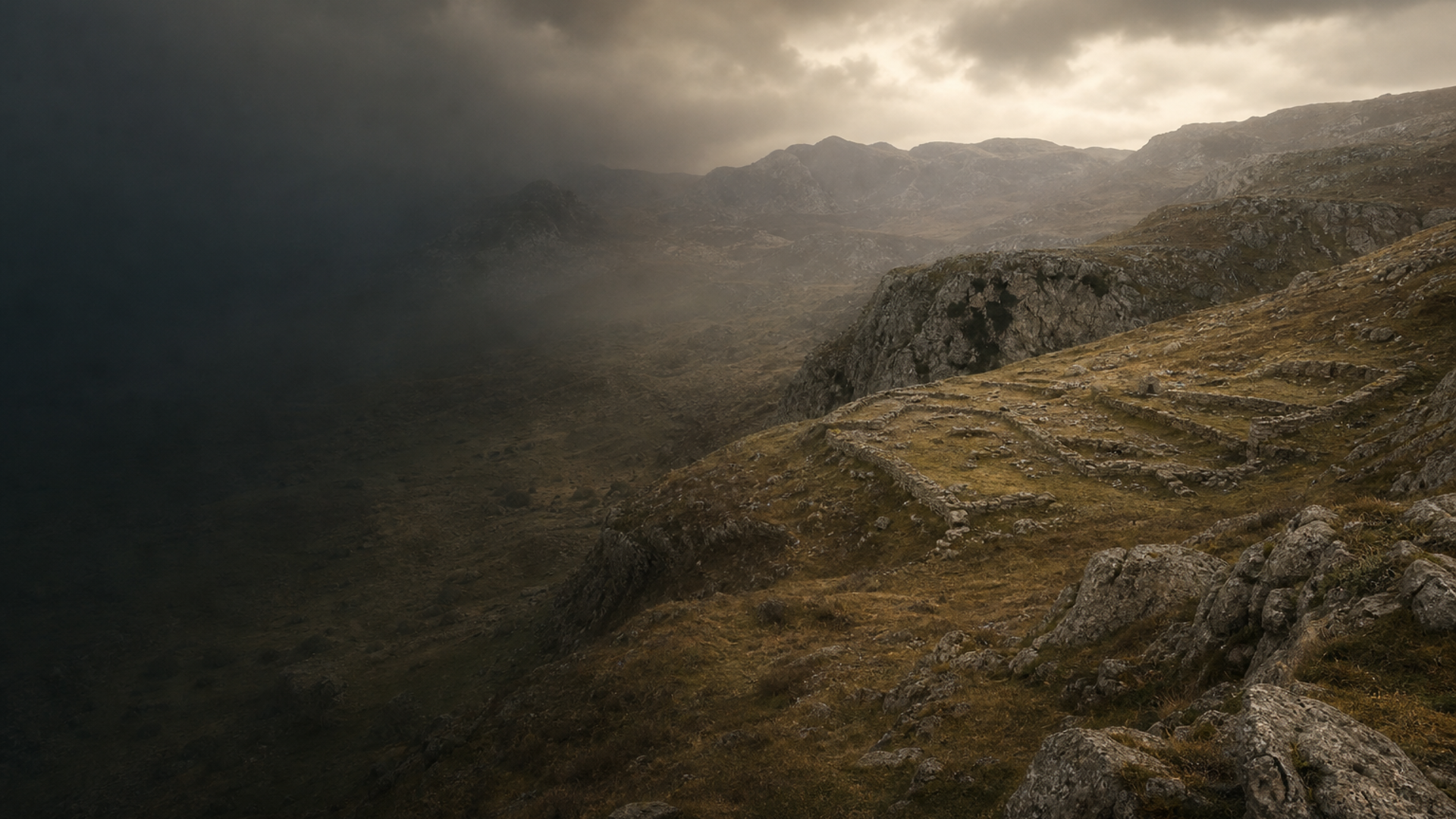
The Çinamak individual emerges from a landscape of upland valleys and steep ridgelines in northeastern Albania (Kukës District) during the later Iron Age. Archaeological data indicates occupation and funerary activity in the broader region during the first millennium BCE, often associated in literature with Illyrian cultural expressions. Limited material culture from nearby sites—ceramic forms, metalwork fragments, and burial practices—suggest a lifetime shaped by cross-Balkan exchanges and local traditions.

This individual’s date range (658–403 BCE) places them in the heart of regional Iron Age transformations: increased mobility, emergent hilltop settlements, and intensified trade networks linking the Adriatic to inland routes. While the single sample cannot establish population-wide origins, the site name and context evoke a community negotiating local continuity and trans-regional contact. Archaeological evidence indicates both long-standing local lineages and the absorption of external influences, but the paucity of samples from Çinamak itself makes any broader reconstruction provisional.

Key uncertainties

  • Limited direct excavation data at Çinamak means cultural attributions rest on regional parallels.
  • A single radiocarbon-associated individual offers a narrow window; broader patterns require larger sample sizes.
  • Dated 658–403 BCE; situated in Kukës District, northeast Albania
  • Material culture aligns with Iron Age Balkan/Illyrian traditions
  • Conclusions are provisional due to limited site data
Chapter IV

Daily Life & Society

Archaeology paints the Iron Age Balkans as a mosaic of small communities, hillforts, and valley settlements where everyday life revolved around mixed farming, pastoralism, and localized craft production. In the Kukës area, people would have tended cereals, pulses, and herds of sheep and goats; seasonal grazing across uplands created rhythms of movement that left traces in tool assemblages and landscape modifications.

Ceramic fragments and metal finds from regional contemporaries suggest households skilled in pottery, ironworking, and ornament craft. Trade—both local barter and longer-distance exchange—brought Mediterranean goods and ideas into contact with indigenous forms. Burial practices in the region vary, but the presence of inhumations and grave goods at nearby Iron Age sites indicates social differentiation: some individuals were interred with personal adornments or weapons, hinting at status, mobility, or craft specialization.

Visually, imagine a dusk-lit clearing above a river valley: smoke from hearths against a backdrop of climbing shepherds, children learning weaving techniques, and artisans hammering bronze and iron into tools and trinkets. Archaeological data indicates daily life was pragmatic but infused with the symbolic languages of identity and exchange—bowls, pins, and brooches serving as both utilitarian objects and markers of belonging.

Key uncertainties

  • Direct household data from Çinamak are sparse; regional analogies inform most reconstructions.

  • Mixed farming and pastoralism dominated subsistence
  • Craftspeople and traders connected Çinamak to wider Balkan networks
Chapter V

Genetic Profile

Genetic information from Çinamak comes from a single sampled individual dated to 658–403 BCE; this solitary data point limits population-level inference. The mitochondrial genome is assigned to haplogroup H+ (n=1), a broad maternal lineage widespread across Europe since the Neolithic and Bronze Age. Haplogroup H and its subclades are common in modern European and Mediterranean populations, so the presence of H+ in this Iron Age individual is consistent with long-term maternal continuity in the region.

No Y-chromosome haplogroup is reported for this sample, and autosomal analyses—if available—have not been published for broader comparative use. Consequently, we cannot robustly assess ancestry clines, steppe-related admixture, or local continuity versus influx based on this specimen alone. Archaeological data indicates cultural connectivity with neighboring Balkan groups; genetically, similar Iron Age contexts in the Balkans often show a mix of local Neolithic-derived ancestry with varying degrees of Bronze Age and steppe-related components, but whether Çinamak follows that pattern remains tentative.

Because the sample count is one (<10), conclusions must be framed as preliminary. Further sampling from Kukës District and adjacent sites is essential to transform this cinematic single voice into a chorus that reveals demographic trends, sex-biased migration, and familial structures.

Key genetic notes

  • mtDNA: H+ (n=1)
  • Y-DNA: not reported; autosomal affinities unresolved
  • Interpretations remain provisional pending more samples.
  • mtDNA H+ recorded in the single individual
  • Single-sample status makes population conclusions preliminary
Chapter VI

Legacy & Modern Connections

The Çinamak individual offers a lyrical but tentative bridge between Iron Age lifeways in northeastern Albania and the genetic tapestry of modern Europe. Maternal continuity signaled by haplogroup H+ echoes patterns seen across the Balkans: long-standing lineages that persist, mingle, and reconfigure through centuries of migration and cultural change. Archaeological continuity in funerary customs and material forms suggests cultural threads that may have woven into later Illyrian, Roman, and medieval histories of the region.

For modern inhabitants of Albania and the wider Balkans, such ancient DNA samples illuminate one ancestral strand among many—not a singular origin story but a chapter in a complex narrative. Limited evidence from Çinamak invites more fieldwork and genomic sampling; only then can we trace the full arc from Iron Age hearths to present-day genomes with confidence. Until that broader dataset exists, the Çinamak find remains a haunting, beautiful whisper from the past: evocative, instructive, and decidedly provisional.

  • mtDNA H+ aligns with widespread maternal lineages in Europe
  • Single-sample evidence underscores need for more regional sampling
AI Powered

AI Assistant

Ask questions about the Çinamak Iron Age Echo culture

AI Assistant by DNAGENICS

Unlock this feature
Ask questions about the Çinamak Iron Age Echo culture. Our AI assistant can explain genetic findings, historical context, archaeological evidence, and modern connections.
Sample AI Analysis

The Çinamak Iron Age Echo culture represents a fascinating chapter in human history...

Genetic analysis reveals connections to earlier populations while showing evidence of unique adaptations and cultural innovations. The ancient DNA samples provide insights into migration patterns, social structures, and the biological relationships between ancient populations.

This is a preview of the AI analysis. Unlock the full AI Assistant to explore detailed insights about:

  • Genetic composition and ancestry
  • Migration patterns and origins
  • Daily life and cultural practices
  • Modern genetic legacy
Use code for 30% off Expires May 12