Menu
Store
Blog
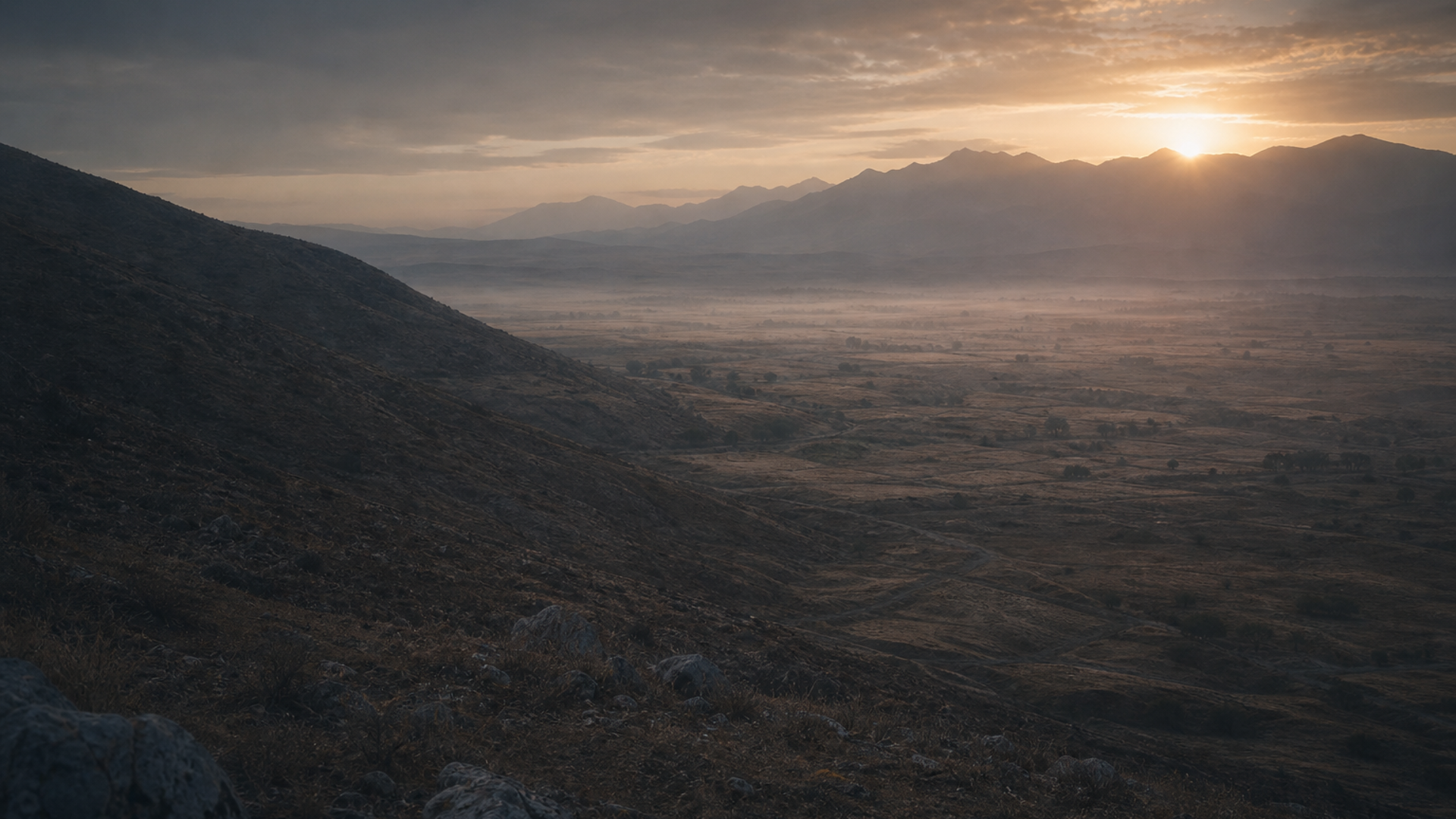
Korça Basin, Southeast Albania

Podgorie Neolithic — Korça Basin Dawn

A single Early Neolithic genome offers a first glimpse of farming in southeastern Albania.

6223 CE - 6067 BCE
Scroll to begin
Chapter I

The Story

Understanding the Podgorie Neolithic — Korça Basin Dawn culture

Archaeological data from Podgorie (Korça Basin) and a lone Early Neolithic genome (6223–6067 BCE) illuminate the arrival of farming in southeastern Albania. Limited evidence suggests links to wider Anatolian-Balkan Neolithic movements; conclusions remain preliminary (n=1).

Time Period

6223–6067 BCE (sample date)

Region

Korça Basin, Southeast Albania

Common Y-DNA

None reported (sample n=1)

Common mtDNA

N (sample n=1)

Chapter II

Timeline

Key moments in the history of this culture

6200 BCE

Early Neolithic occupation at Podgorie

Radiocarbon and genomic data place an Early Neolithic individual at Podgorie in the Korça Basin, marking early farming presence in southeastern Albania.

Chapter III

Origins & Emergence

Podgorie sits in the Korça Basin of southeastern Albania, a landscape of river terraces and low mountains where early farmers first took root. Radiocarbon-calibrated archaeogenetic data place the sampled individual between 6223 and 6067 BCE, firmly within the Albanian Early Neolithic timeframe. Archaeological data indicates the region was part of the broader wave of Neolithic expansion that crossed the Aegean littoral and spread into the western Balkans during the seventh millennium BCE.

Material traces in nearby valleys—domesticated cereal impressions, fragments of early pottery, and simple stone tools—paint a picture of small, dispersed farmsteads rather than dense urban centers. Limited evidence suggests these communities cultivated wheat and barley, kept domestic animals, and adapted long-standing foraging traditions to a mixed farming economy.

In genetic terms, the Korça Basin occupation likely reflects population movements and cultural transmission from Anatolia and the Aegean into the interior Balkans. However, with only one securely dated genome from Podgorie, any model of migration, admixture, or demographic replacement must remain tentative. Archaeological layers at Podgorie and comparative sites across Albania are essential to corroborate and refine this emerging narrative.

  • Sample dated 6223–6067 BCE from Podgorie, Korça Basin
  • Region part of wider Early Neolithic spread from Anatolia/Aegean
  • Conclusions are preliminary due to single-sample evidence
Chapter IV

Daily Life & Society

The world of Early Neolithic Podgorie would have been intimate and tactile—households clustered near watercourses, where soil and riverine resources supported early cultivation. Archaeological indicators from the Korça Basin and adjacent valleys suggest low-density villages with hearth-centered dwellings, simple ceramics, and stone implements for harvesting and processing plants.

Domestic life likely revolved around seasonal rhythms: sowing and reaping, tending goats and sheep, and repairing tools and pottery. Archaeobotanical traces in the broader Albanian Early Neolithic point to cultivated wheat and barley; animal bones elsewhere in the Balkans show early herding of sheep, goats, and cattle. Craft specializations were modest but meaningful—ceramic surfaces, polished stone axes, and bone tools speak to practical knowledge transmitted across households and along river corridors.


Social organization at this early stage was probably egalitarian and household-focused, with kin networks linking neighboring settlements. Ritual and symbolic behavior may have been present but is sparsely documented at Podgorie; isolated finds and burial treatments hint at beliefs and social identities that await fuller excavation and study. Overall, archaeological data indicate a community adapting foraging traditions into stable farming lifeways in a dynamic frontier landscape.

  • Small farmsteads with hearth-focused houses and simple ceramics
  • Economy centered on mixed farming: cereals and early herding
Chapter V

Genetic Profile

The genetic evidence from Podgorie is currently limited to a single Early Neolithic individual dated 6223–6067 BCE. This individual carries mitochondrial haplogroup N. Haplogroup N is an ancient mtDNA lineage that sits ancestral to many Eurasian maternal branches; its presence in an Early Neolithic context in Albania is notable but must be interpreted cautiously.

With only one mitochondrial genome and no reported Y-DNA from this sample, population-level inferences are provisional. Nevertheless, the genetic signature is broadly compatible with patterns observed across the early farming populations of the Balkans: migrants bearing Anatolian-related farmer ancestry expanded along coastal and riverine routes into southeastern Europe. Archaeogenetic studies from neighboring regions have repeatedly shown a strong Anatolian Neolithic component mixing with local hunter-gatherers; the Podgorie mtDNA aligns with a scenario of maternal lineages moving with or being incorporated into early farming communities.

Important caveats: sample size here is n=1. If additional individuals from Podgorie or the Korça Basin show similar haplogroups and genome-wide ancestry, that would strengthen interpretations of demographic processes. For now, archaeological and genetic data together provide a tantalizing but preliminary view of how early farmers lived and moved through southeastern Albania.

  • mtDNA haplogroup N identified in the lone Early Neolithic individual
  • No Y-DNA reported; conclusions are tentative (sample n=1)
Chapter VI

Legacy & Modern Connections

The Podgorie individual anchors a human story of movement, adaptation, and cultural innovation in what is today Albania. Even a single genome bridges millennia: it links present-day inhabitants of the Balkans to the Anatolian-rooted farming communities that reshaped Europe's ecology and social landscape during the seventh millennium BCE.

Because the evidence remains sparse, we must avoid overclaiming direct ancestry lines to modern populations. Archaeological and genetic continuity can be complex—later migrations, admixture events, and local demographic turnovers all contribute to the genetic tapestry of the region. Still, Podgorie contributes an essential data point: it confirms that Early Neolithic lifeways and at least some maternal lineages associated with early farmers reached the Korça Basin. Continued excavation and ancient DNA sampling across Albania will reveal how those early threads wove into the long-term genetic and cultural heritage of the Balkans.

  • Provides early DNA evidence linking Korça Basin to Neolithic expansions
  • Highlights need for more samples to trace continuity to modern populations
AI Powered

AI Assistant

Ask questions about the Podgorie Neolithic — Korça Basin Dawn culture

AI Assistant by DNAGENICS

Unlock this feature
Ask questions about the Podgorie Neolithic — Korça Basin Dawn culture. Our AI assistant can explain genetic findings, historical context, archaeological evidence, and modern connections.
Sample AI Analysis

The Podgorie Neolithic — Korça Basin Dawn culture represents a fascinating chapter in human history...

Genetic analysis reveals connections to earlier populations while showing evidence of unique adaptations and cultural innovations. The ancient DNA samples provide insights into migration patterns, social structures, and the biological relationships between ancient populations.

This is a preview of the AI analysis. Unlock the full AI Assistant to explore detailed insights about:

  • Genetic composition and ancestry
  • Migration patterns and origins
  • Daily life and cultural practices
  • Modern genetic legacy
Use code for 30% off Expires May 12