Menu
Store
Blog
Shkrel, Albania (Western Balkans)

Shkrel Middle Bronze Age Echo

A lone voice from Shkrel, Albania (1880–1695 BCE) linking archaeology and DNA

1880 CE - 1695 BCE
Scroll to begin
Chapter I

The Story

Understanding the Shkrel Middle Bronze Age Echo culture

Archaeological remains from Shkrel (1880–1695 BCE) offer a glimpse of Middle Bronze Age Albania. One genetic sample (mtDNA H) hints at continuity with Balkan maternal lineages. Limited data urge caution, but the find connects material culture, landscape, and emerging aDNA networks.

Time Period

1880–1695 BCE

Region

Shkrel, Albania (Western Balkans)

Common Y-DNA

Not determined (sample n=1)

Common mtDNA

H (1)

Chapter II

Timeline

Key moments in the history of this culture

2500 BCE

Deep Balkan roots

Neolithic and early Bronze Age processes set the demographic and cultural backdrop for later Middle Bronze Age communities in the western Balkans.

Chapter III

Origins & Emergence

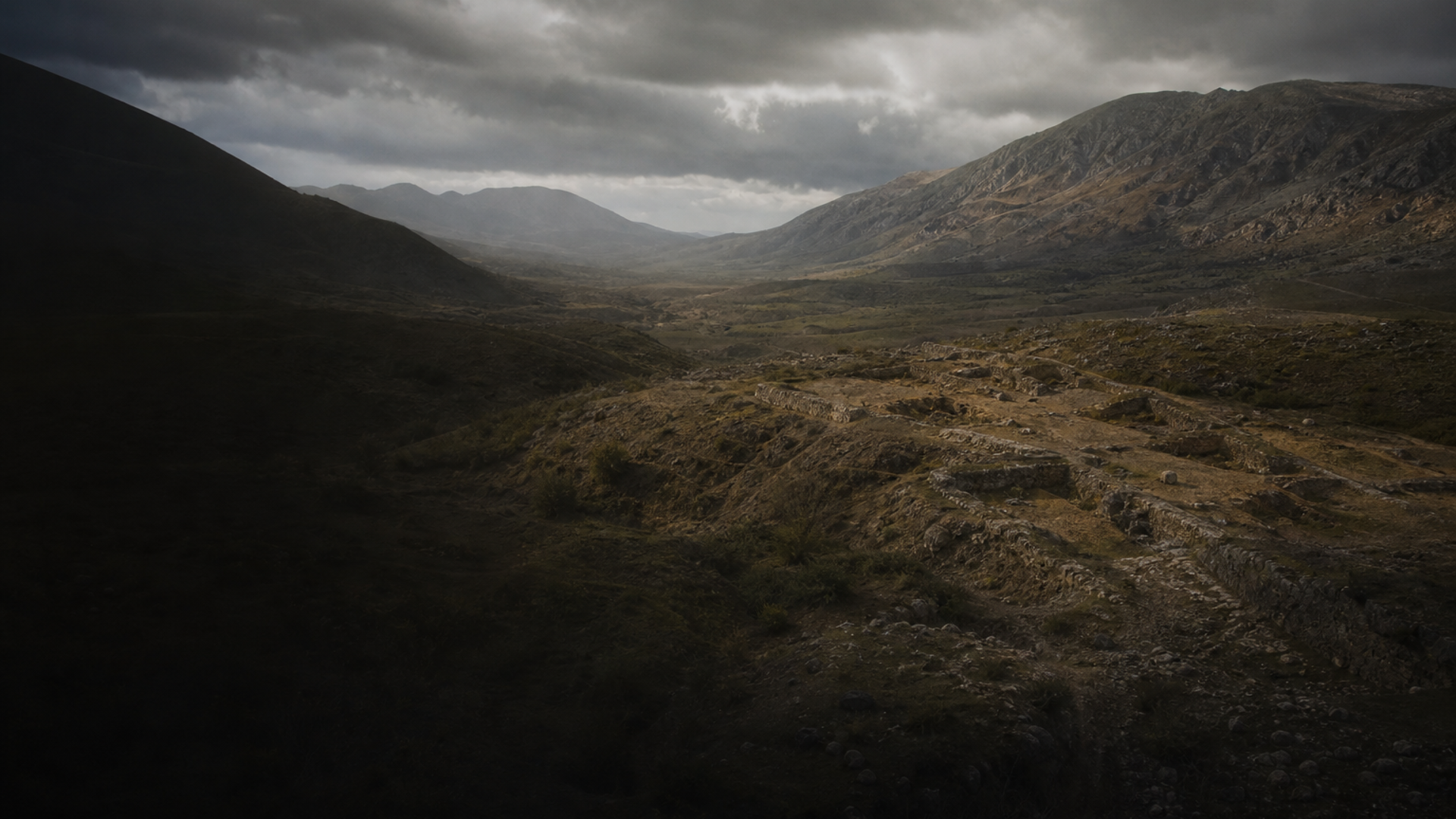
Beneath the karst ridges and river terraces around Shkrel, material traces of the Middle Bronze Age speak in pottery sherds, burial fragments, and occasional metal finds. Archaeological data indicates continuity with broader Balkan Bronze Age traditions: wheel-made ceramics, regional metallurgical styles, and burial practices that reflect shifting social networks across mountainous terrain. The single dated sample (1880–1695 BCE) falls within a period of intensified exchange across the Adriatic and inland Balkans, when communities navigated ecological constraints and long-distance ties.

Limited evidence suggests that the people who left these remains practiced mixed agro-pastoral lifeways adapted to highland valleys. The archaeological record at nearby sites in northern Albania points to small nucleated settlements and funerary variability, implying local groups negotiated identity through craft, mobility, and alliances. Genetic data from Shkrel are preliminary, but they allow us to place one human voice within this broader chorus: maternal lineage H, common across Europe, appears here alongside an archaeological landscape shaped by regional interaction. Taken together, the material and genetic traces hint at a community rooted in local traditions yet plugged into wider Bronze Age currents — though strong conclusions remain premature given the single sample.

  • Single securely dated sample: 1880–1695 BCE
  • Material culture aligns with Balkan Middle Bronze Age traditions
  • Evidence suggests mixed agro‑pastoral economy and regional exchange
Chapter IV

Daily Life & Society

Imagine terraces cut into steep slopes, herds moved seasonally, and households organized around stone foundations and storage pits. Archaeological excavations in northern Albanian highlands reveal everyday items: cooking wares, spindle whorls, and tool fragments that point to textile production, metalworking, and grain processing. These objects form the tactile pulse of daily life — the clink of bronze, the rhythm of spinning, the smell of hearth smoke.

Burial evidence, when present, provides glimpses of social differentiation: variations in grave goods and placement suggest nuanced social roles rather than rigid hierarchies. Material indicators reflect both local craft traditions and imported styles, implying participation in exchange networks that brought raw metals and finished goods across the region. Landscape use appears adaptable; seasonal upland grazing was likely balanced with valley agriculture. While the Shkrel genetic sample does not illuminate social structure directly, combining osteological, material, and environmental data allows a richer reconstruction of community life. Yet, without broader sampling, reconstructions remain provisional — evocative scenes rather than definitive portraits.

  • Artifacts indicate textile production, metalwork, and agriculture
  • Burial variability implies nuanced social roles rather than strict hierarchy
Chapter V

Genetic Profile

The genetic signal from Shkrel is minimal but meaningful. From a single individual dated to 1880–1695 BCE, mitochondrial DNA assigns to haplogroup H — a widespread maternal lineage across Europe and the Balkans. Archaeogenetic studies across the Bronze Age Balkans often recover a mix of local Neolithic-derived ancestries and incoming components associated with steppe-related movements; however, with only one sample from Shkrel we must emphasize the preliminary nature of any inference.

No robust Y‑chromosome profile is reported for this sample, so paternal affinities remain undetermined. Comparative frameworks suggest that maternal haplogroup H at this time could reflect either long-term regional continuity or integration of diverse lineages via mobility and marriage networks. Limited evidence suggests a likely admixture landscape in the western Balkans during the Middle Bronze Age, where local traditions persisted even as gene flow from neighboring regions occurred intermittently. Future aDNA sampling across Shkrel and adjacent sites will be required to test hypotheses about population continuity, sex-biased mobility, and the frequency of steppe-related ancestry in northern Albanian highlands.

Given the sample size (n=1), all genetic interpretations should be treated as hypotheses to be refined by additional data.

  • mtDNA haplogroup H detected (n=1); common across Europe
  • Y‑DNA not determined; broader population inferences are preliminary
Chapter VI

Legacy & Modern Connections

The solitary Shkrel genome is a fragile bridge between past and present. Its maternal lineage resonates with widespread European maternal diversity, suggesting threads of continuity that may extend into later Balkan populations. Archaeologically, material forms and settlement patterns contribute to a long-term story of adaptation in rugged landscapes — a story that continues to shape local identities and land use.

Genetic continuity should not be assumed from one sample, but the find underlines how even single genomes can reframe local histories when integrated with archaeological context. As ancient DNA sampling expands across Albania, these early glimpses will be tested, refined, and woven into a richer narrative about migration, resilience, and cultural exchange in the Bronze Age Balkans.

  • Maternal lineage H links the individual to broader European maternal diversity
  • Find underscores need for more sampling to trace long-term continuity
AI Powered

AI Assistant

Ask questions about the Shkrel Middle Bronze Age Echo culture

AI Assistant by DNAGENICS

Unlock this feature
Ask questions about the Shkrel Middle Bronze Age Echo culture. Our AI assistant can explain genetic findings, historical context, archaeological evidence, and modern connections.
Sample AI Analysis

The Shkrel Middle Bronze Age Echo culture represents a fascinating chapter in human history...

Genetic analysis reveals connections to earlier populations while showing evidence of unique adaptations and cultural innovations. The ancient DNA samples provide insights into migration patterns, social structures, and the biological relationships between ancient populations.

This is a preview of the AI analysis. Unlock the full AI Assistant to explore detailed insights about:

  • Genetic composition and ancestry
  • Migration patterns and origins
  • Daily life and cultural practices
  • Modern genetic legacy
Use code for 30% off Expires May 12