Menu
Store
Blog
Agarak, Armenia (Caucasus)

Agarak Voices: Early Medieval Armenia

Human stories at the crossroads of empires, preserved in bones and genes.

1100 CE - 1379 CE
Scroll to begin
Chapter I

The Story

Understanding the Agarak Voices: Early Medieval Armenia culture

Archaeological and genetic evidence from Agarak, Armenia (1100–1379 CE) offers a preliminary glimpse into Early Medieval Armenian populations. Three sampled individuals show diverse maternal lineages (U, R6b, T); low sample size requires cautious interpretation.

Time Period

1100–1379 CE

Region

Agarak, Armenia (Caucasus)

Common Y-DNA

Undetermined (limited data)

Common mtDNA

U, R6b, T (each in one sample)

Chapter II

Timeline

Key moments in the history of this culture

301 CE

Christianization of Armenia

Armenia adopts Christianity as a state religion, shaping ecclesiastical and social life in the highlands.

885 CE

Bagratid Kingdom established

A native Armenian dynasty reasserts political authority, fostering urban centers and church building.

1236 CE

Mongol incursions

Mongol campaigns reach the Caucasus, producing demographic and economic disruptions across the region.

Chapter III

Origins & Emergence

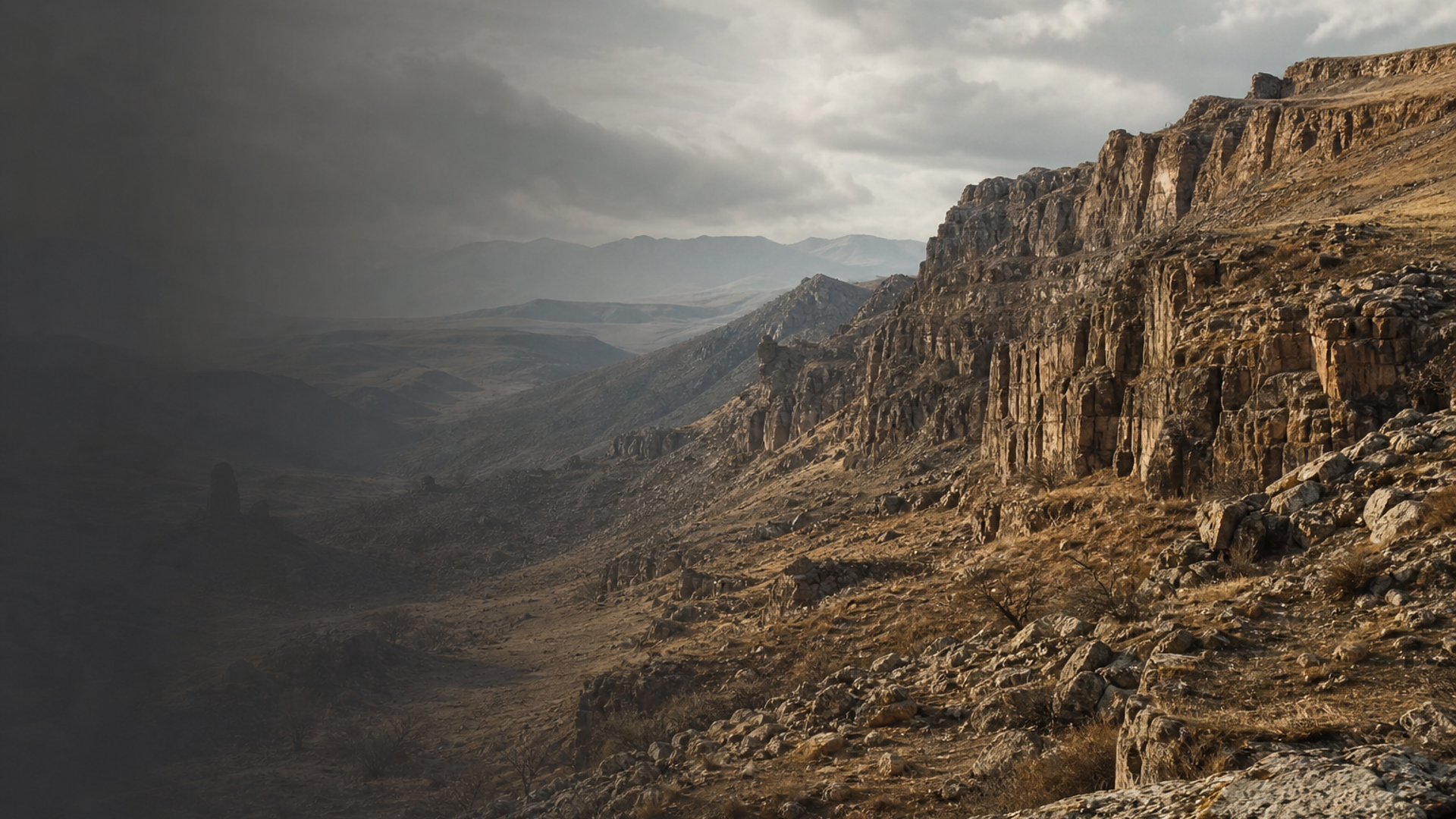
Agarak sits on a high plateau where mountain shadows gather the long histories of the Armenian Highlands. Archaeological data indicates human presence in this region across millennia; the Early Medieval horizon (1100–1379 CE) reflects communities living amid shifting political borders—Byzantine, Georgian, Seljuk, and Mongol rhythms all left their marks. Excavations at Agarak have yielded skeletal remains radiocarbon-dated to this period, providing a rare genetic window into a time of mobility and cultural contact.

Limited evidence suggests these inhabitants were part of continuity from earlier Armenian populations while also participating in broader regional networks of trade, marriage, and warfare. Material culture from nearby sites (church foundations, caravan routes, and rural settlements) points to agrarian village life punctuated by ecclesiastical and defensive architecture. The archaeological record preserves durable signals—settlement patterns, burial orientations, and artifact typologies—that anchor genetic snapshots in space and time.

Because only three individuals have been genetically sampled, conclusions about population origins must remain provisional. Nevertheless, the combined archaeological and genetic approach paints a cinematic fragment: mountain villages negotiating empire, kinship lines threaded across valleys, and maternal lineages arriving, persisting, or transforming in response to centuries of contact.

  • Agarak samples dated to 1100–1379 CE provide rare genetic snapshots.
  • Archaeology shows continuity and regional interaction during Early Medieval period.
  • Small sample size makes demographic generalizations preliminary.
Chapter IV

Daily Life & Society

Archaeological indications of daily life in Early Medieval Armenia conjure scenes of stone houses, terraced fields, and liturgical centers where village rhythms were shaped by seasonal cycles and ecclesiastical calendars. At sites near Agarak, ceramic sherds, agricultural terraces, and field systems point to mixed farming economies—wheat, barley, vines, and pastoralism—sustaining small, kin-based communities. Churches and chapels served as focal points for identity and record-keeping, and inscriptions from the broader region document language, law, and lineage.

Material culture attests to both continuity with Late Antiquity and adaptations driven by commerce and conflict. Silk Road arteries and overland trade routes funneled goods and ideas; travelers, merchants, and occasional military expeditions would have increased opportunities for genetic and cultural exchange. Burial practices—when preserved—offer clues to social structure, age profiles, and health: dental wear, healed fractures, and isotopic signals (from adjacent studies in the region) reveal diets heavy in cereals and seasonal mobility.

Archaeological interpretations must remain modest here: the Agarak genetic samples are integrated with regional typologies to suggest a community neither isolated nor uniformly cosmopolitan, but embedded in a tapestry of local traditions and long-distance connections.

  • Economy centered on mixed farming, pastoralism, and local craft.
  • Religious and trade networks linked Agarak to wider Armenian Highlands.
Chapter V

Genetic Profile

Three mitochondrial genomes recovered from Agarak reveal maternal haplogroups U, R6b, and T—each present in a single individual. Haplogroup U is widespread across Europe and West Asia and often appears in ancient and modern Armenian and Caucasus contexts; its presence here is consistent with long-standing maternal lineages in the highlands. Haplogroup T has a broad Eurasian distribution and appears in both ancient Near Eastern and European assemblages. R6b is relatively rare and has been reported in parts of South and West Asia; its detection hints at possible connections or gene flow from more southern or eastern corridors, though interpretations are tentative.

No consistent Y-DNA pattern can be offered because paternal markers were not recovered or are presently undetermined in these samples. With only three individuals, any inference about population structure, sex-biased migration, or affinities to neighboring groups must be cautious. Archaeogenetic comparisons with larger datasets from the Caucasus, Anatolia, and Iran will be necessary to place these maternal lineages in a broader demographic framework.

In sum, the genetic signal from Agarak is a whisper rather than a chorus: evocative of continuity and subtle admixture, but far from definitive. Continued sampling and integration with archaeological context will sharpen our view of Early Medieval Armenian ancestry.

  • mtDNA haplogroups detected: U, R6b, T (one each).
  • Y-DNA undetermined; small sample size (<10) makes conclusions preliminary.
Chapter VI

Legacy & Modern Connections

The genetic and archaeological echoes from Agarak link present-day Armenian populations to deep, layered histories in the highlands. mtDNA haplogroups like U and T appear in modern Armenians and neighboring populations, suggesting maternal continuity in parts of the region. The rare R6b signal raises questions about episodic contacts—trade, migration, or individual mobility—that may have introduced less-common maternal lineages.

Culturally, the endurance of language, religious practice, and local architectural forms in the Armenian Highlands forms a backdrop against which these genetic fragments gain meaning. Yet scientific humility is essential: three samples cannot capture the full tapestry of Early Medieval demography. Future work—more genomic sampling, targeted radiocarbon dating, and isotopic studies—will help connect the cinematic fragments from Agarak to the broader narrative of Armenian ancestry and its place at the crossroads of Eurasia.

  • mtDNA suggests some maternal continuity with modern regional populations.
  • Small sample size limits definitive links; additional sampling needed.
AI Powered

AI Assistant

Ask questions about the Agarak Voices: Early Medieval Armenia culture

AI Assistant by DNAGENICS

Unlock this feature
Ask questions about the Agarak Voices: Early Medieval Armenia culture. Our AI assistant can explain genetic findings, historical context, archaeological evidence, and modern connections.
Sample AI Analysis

The Agarak Voices: Early Medieval Armenia culture represents a fascinating chapter in human history...

Genetic analysis reveals connections to earlier populations while showing evidence of unique adaptations and cultural innovations. The ancient DNA samples provide insights into migration patterns, social structures, and the biological relationships between ancient populations.

This is a preview of the AI analysis. Unlock the full AI Assistant to explore detailed insights about:

  • Genetic composition and ancestry
  • Migration patterns and origins
  • Daily life and cultural practices
  • Modern genetic legacy
Use code for 35% off Expires May 20