Menu
Store
Blog
TibetanPlateau_Nudagang Tibetan Plateau, China (Lhasa, Shigatse, Shannan, Nagqu, Nyingchi)

Pre-Tibetan Voices of the Plateau

Archaeology and DNA from Longsangquduo to Lajue reveal a millennial story on the Tibetan Plateau

387 BCE - 1942 CE
4 Ancient Samples
Scroll to begin
Chapter I

The Story

Understanding the Pre-Tibetan Voices of the Plateau culture

Pre_Tibetan (387 BCE–1942 CE) samples from Longsangquduo and seven other plateau sites link archaeological contexts on the Tibetan Plateau with genetic signals—Y haplogroups O, D, N and mtDNA M, A21, D, F, B—highlighting regional continuity, mobility, and high‑altitude adaptation over centuries.

Time Period

387 BCE – 1942 CE

Region

Tibetan Plateau, China (Lhasa, Shigatse, Shannan, Nagqu, Nyingchi)

Common Y-DNA

O (16), D (4), N (1)

Common mtDNA

M (7), A21 (2), D (2), F (1), B (1)

Chapter II

Timeline

Key moments in the history of this culture

387 BCE

Earliest sampled contexts

The earliest dated Pre_Tibetan sample (387 BCE) marks archaeological visibility in valley sites such as Longsangquduo and nearby localities.

Chapter III

Origins & Emergence

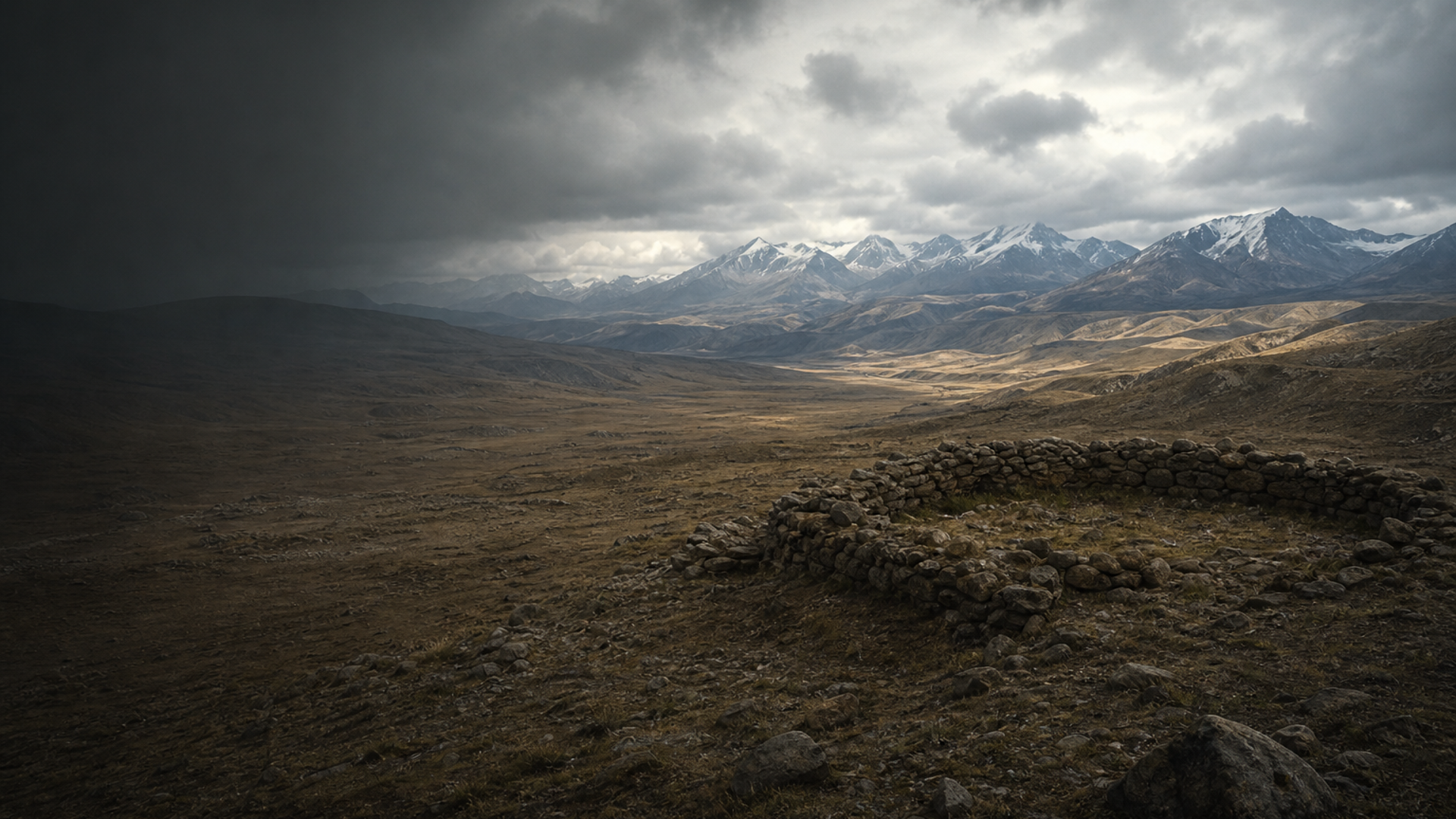
The Pre_Tibetan designation groups 30 samples spanning 387 BCE to 1942 CE from sites across the central and eastern plateau — Longsangquduo (Shigatse), Lajue and Gachong (Lhasa), Latuotanggu and Nudagang (Shigatse), Jiesang (Shannan), Gangre (Nagqu), and Gutong and Kangyu (Nyingchi). Archaeological data indicates these locations were focal points of long‑term occupation in the rain shadows and river valleys of the high plateau.

Material traces — stone foundations, burial clusters, and toolkits recovered at several of these sites — suggest mixed subsistence strategies adapted to thin air: pastoral herd management plausibly combined with cultivation in lower valleys. Limited archaeobotanical evidence from the broader plateau region points to barley and cold‑tolerant crops, while faunal remains imply sheep, goat and possibly yak use; however, preservation is uneven and direct plant/animal associations at every site are not established.

Genetic results show a persistent East Asian signature across centuries, overlapping with archaeological continuity. Interpretation must remain cautious: the 30 samples cover more than a millennium and a half of change, so patterns of continuity may mask episodic migration, local admixture, or cultural reconfiguration. Further sampling across time and settlement types is essential to refine the narrative.

  • 30 samples from nine named plateau sites (387 BCE–1942 CE)
  • Archaeological indicators of mixed pastoral‑agricultural lifeways
  • Long temporal span requires cautious interpretation of continuity
Chapter IV

Daily Life & Society

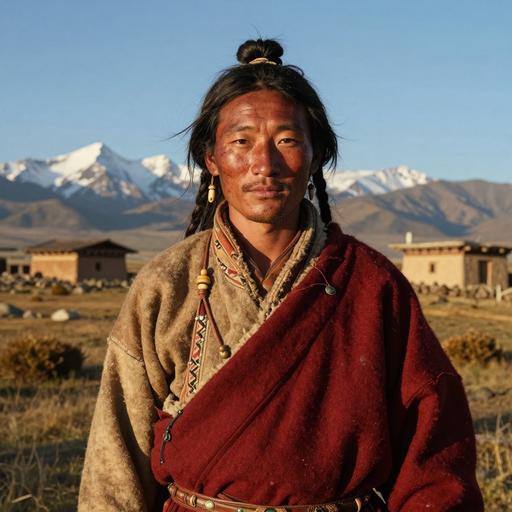
Life on the high plateau was carved out under a harsh sky: cold winters, intense UV, and oxygen‑thin air shaped settlements and social rhythms. Excavations at Longsangquduo and nearby localities reveal compact habitation zones and burial features implying locally rooted communities, while distribution of stone architecture and storage pits hints at seasonal movement and stock management. Archaeological traces — hearths, hand tools, and domestic refuse — suggest households organized production around animals and drought‑tolerant crops in sheltered valleys; pastoral herding likely dominated at higher elevations, with transhumant corridors linking low and high pastures.

Status differences may be glimpsed through burial variability and grave goods at a few sites, but the sample sizes per cemetery are limited and funerary practice varies across the plateau. Trade and exchange routes across river valleys are archaeologically plausible, connecting high communities to lowland networks; exotic objects are rare in the sampled assemblages, which could reflect preservation biases or local economies emphasizing livestock and stone tools over imported prestige goods. Ethnographic analogy and regional archaeology help fill interpretive gaps, but direct, context‑specific evidence remains the most reliable route to understanding daily life.

  • Compact settlements and burial clusters suggest local community life
  • Archaeological indicators point to pastoralism with valley cultivation
Chapter V

Genetic Profile

Genetic data from the 30 Pre_Tibetan individuals provide a window onto ancestry and population dynamics across the plateau. Y‑chromosome results are dominated by haplogroup O (16/21 male calls), a lineage common across East Asia and consistent with gene flow from lowland East Asian sources. Haplogroup D (4/21) appears as well and is notable because D is found at elevated frequencies in some Tibeto‑Burman speaking groups and among Himalayan highland populations; its presence here supports a long‑standing autochthonous highland component, though numbers are small. A single N lineage (1/21) hints at a minor northern or northeastern influence.

Mitochondrial diversity is primarily haplogroup M (7/12 female calls), an East Asian and broadly Asian maternal lineage, with additional mtDNA types A21 (2), D (2), F (1), and B (1). This maternal mix aligns with regional East Asian population structure and suggests both local continuity and periodic admixture.

Caveats: while 30 samples are informative, they are spread over nearly two millennia and multiple sites; temporal substructure can conceal shifts in ancestry. Low counts for specific lineages (e.g., D, N, several mtDNA types) mean conclusions about demographic processes and selection (including any genetic signals of high‑altitude adaptation) remain provisional. Integrating genome‑wide data, isotope studies, and expanded sampling will clarify migration pulses, sex‑biased admixture, and adaptation trajectories.

  • Y: O dominant (16), D present (4), single N (1) — East Asian and highland signals
  • mtDNA: M predominates; A21, D, F, B indicate maternal diversity and admixture
Chapter VI

Legacy & Modern Connections

The genetic and archaeological threads from Pre_Tibetan samples weave into the longer story of peoples on the Tibetan Plateau. The preponderance of East Asian Y and maternal lineages indicates substantial regional continuity that plausibly connects to later Tibetan populations, while the presence of haplogroup D points to enduring highland ancestries that may predate some lowland expansions. Cultural practices inferred from archaeology — pastoral mobility, valley cultivation, and localized burial traditions — resonate with historical and ethnographic patterns observed in Tibetan societies.

These links are suggestive rather than definitive. The long time range and uneven preservation mean that modern Tibetan genetic diversity cannot be reduced to these 30 samples alone. Nevertheless, the combined archaeological and genetic evidence highlights a picture of resilience: human communities repeatedly adapted to extreme environments, maintained regional networks, and absorbed gene flow in ways that shaped the plateau’s biocultural landscape. Future, denser sampling will tie these early voices more tightly to living lineages and refine our understanding of high‑altitude adaptation and cultural continuity.

  • Genetic continuity suggests links to later Tibetan populations, with caution
  • Archaeology and DNA together highlight resilience and long‑term adaptation
Chapter VII

Sample Catalog

4 ancient DNA samples associated with the Pre-Tibetan Voices of the Plateau culture

Ancient DNA samples from this era, providing genetic insights into the people who lived during this period.

4 / 4 samples
Portrait Sample Country Era Date Culture Sex Y-DNA mtDNA
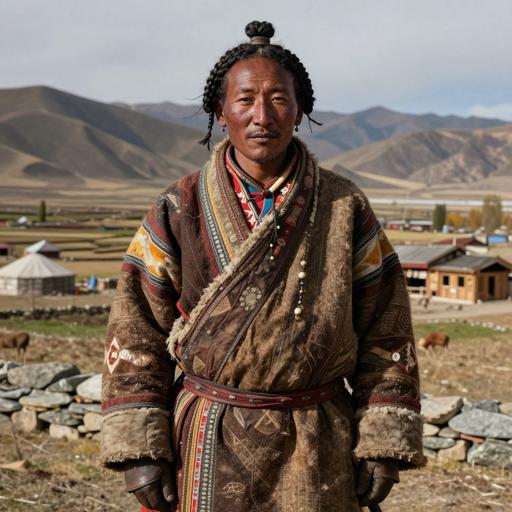
Portrait of ancient individual C5146 from China, dated 353 BCE
C5146
China TibetanPlateau_Nudagang 353 BCE Pre-Tibetan M O-M3873 A21
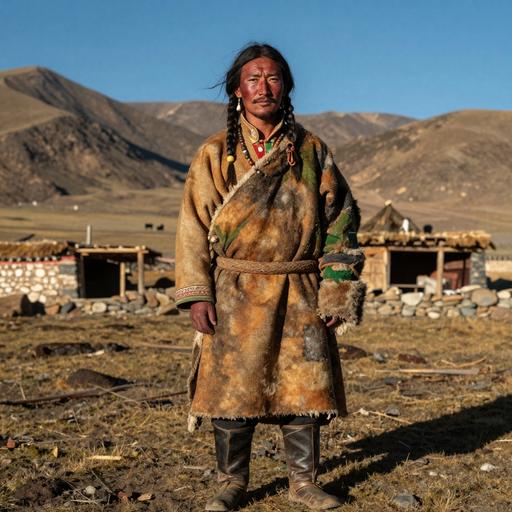
Portrait of ancient individual C5147 from China, dated 346 BCE
C5147
China TibetanPlateau_Nudagang 346 BCE Pre-Tibetan M O-P164 -
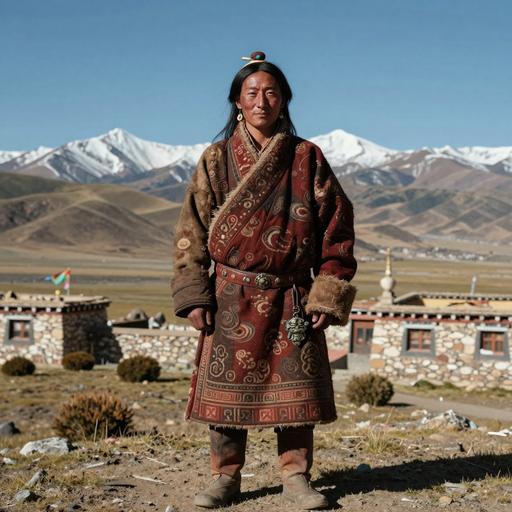
Portrait of ancient individual C5148 from China, dated 346 BCE
C5148
China TibetanPlateau_Nudagang 346 BCE Pre-Tibetan M O-M1706 M9a1a1c1b1a
Portrait of ancient individual C5149 from China, dated 387 BCE
C5149
China TibetanPlateau_Nudagang 387 BCE Pre-Tibetan M O-M1706 -
AI Powered

AI Assistant

Ask questions about the Pre-Tibetan Voices of the Plateau culture

AI Assistant by DNAGENICS

Unlock this feature
Ask questions about the Pre-Tibetan Voices of the Plateau culture. Our AI assistant can explain genetic findings, historical context, archaeological evidence, and modern connections.
Sample AI Analysis

The Pre-Tibetan Voices of the Plateau culture represents a fascinating chapter in human history...

Genetic analysis reveals connections to earlier populations while showing evidence of unique adaptations and cultural innovations. The ancient DNA samples provide insights into migration patterns, social structures, and the biological relationships between ancient populations.

This is a preview of the AI analysis. Unlock the full AI Assistant to explore detailed insights about:

  • Genetic composition and ancestry
  • Migration patterns and origins
  • Daily life and cultural practices
  • Modern genetic legacy
Use code for 30% off Expires May 12