Menu
Store
Blog
Latvia_MM_Kunda Eastern Baltic (Russia, Latvia, Lithuania)

Pre-Baltic Shoreline Foragers

Mesolithic coastal communities of the eastern Baltic seen through archaeology and ancient DNA

6465 CE - 4556 BCE
1 Ancient Samples
Scroll to begin
Chapter I

The Story

Understanding the Pre-Baltic Shoreline Foragers culture

Ancient DNA and archaeology from 20 Mesolithic individuals (6465–4556 BCE) at Donkalnis, Zvejnieki and Yuzhny Oleniy Ostrov illuminate lifeways and mobility in prehistoric Russia, Latvia and Lithuania, revealing maternal continuity (mtDNA U) and a diverse, if modestly sampled, paternal landscape.

Time Period

6465–4556 BCE (Mesolithic)

Region

Eastern Baltic (Russia, Latvia, Lithuania)

Common Y-DNA

F (2), M (2), L (2), R (1), I (1)

Common mtDNA

U (12), R1b (4), U4 (3)

Chapter II

Timeline

Key moments in the history of this culture

6465 BCE

Earliest sampled burial in dataset

The dataset includes a burial dated to ca. 6465 BCE, marking one of the earliest Mesolithic individuals sampled from the eastern Baltic shoreline.

Chapter III

Origins & Emergence

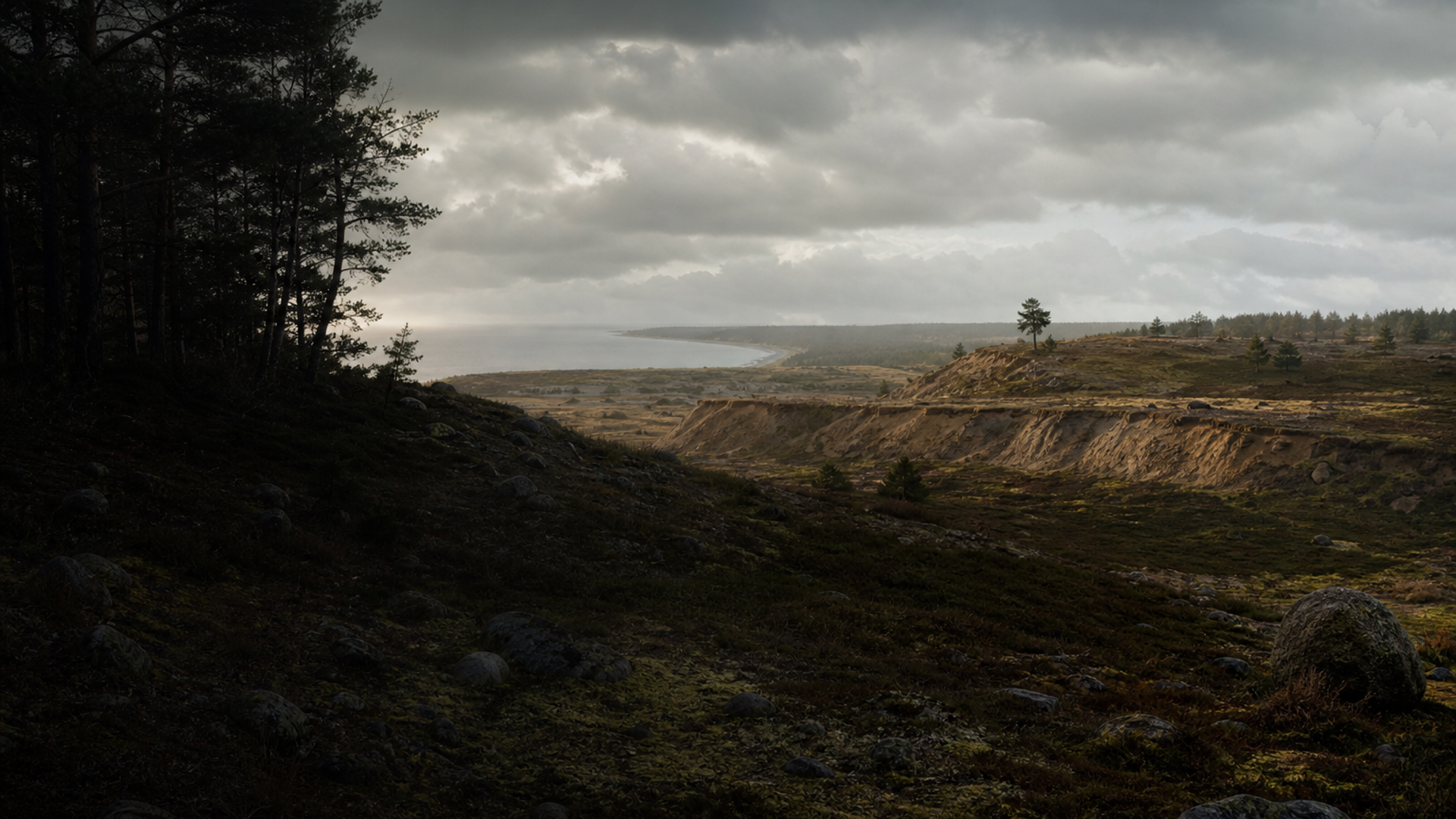
The Pre_Baltic assemblage represents coastal and lacustrine Mesolithic communities occupying the eastern Baltic littoral from roughly 6465 to 4556 BCE. Archaeological data indicates repeated use of shoreline camps, hearths and cemeteries at key sites: Yuzhny Oleniy Ostrov (Republic of Karelia), Zvejnieki (Zemgale, Latvia) and Donkalnis (Telsiai County, Lithuania). These sites preserve rich mortuary deposits, flint and bone tools, and faunal refuse that together suggest economies focused on fishing, seal hunting and seasonal resource aggregation.

Material culture connects these groups to a broader Kunda–Narva horizon: microlithic technologies, polished bone implements and affinity in burial traditions reveal long-term adaptation to post-glacial lake and coastal environments. Limited evidence suggests local continuity in shoreline use across millennia, but the archaeological record also shows adaptability — shifts in tool emphasis and settlement placement as shorelines and ecosystems changed with rising sea levels and forest expansion.

Genetic sampling of 20 individuals provides a temporal anchor to these material patterns. While not exhaustive, the combined archaeological and genetic picture supports a mosaic of long-standing maternal lineages and variable paternal inputs, consistent with small, mobile forager groups that maintained regional ties while incorporating individuals from broader networks.

  • Coastal Mesolithic occupation 6465–4556 BCE at Yuzhny Oleniy Ostrov, Zvejnieki, Donkalnis
  • Material links to Kunda and Narva traditions
  • Adaptation to changing shorelines and seasonal resources
Chapter IV

Daily Life & Society

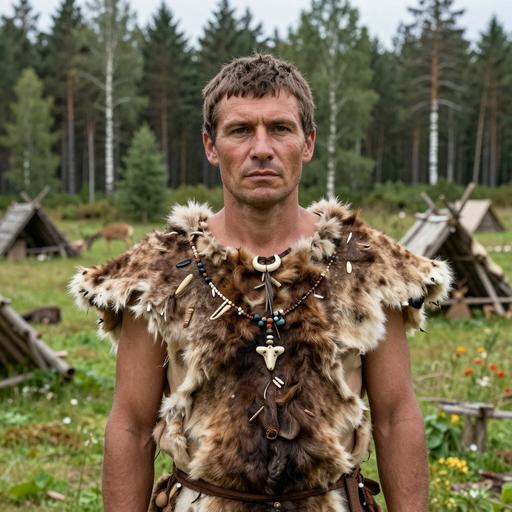
Life along rivers, lakes and the White Sea coast combined skill, mobility and deep ecological knowledge. Excavations at Zvejnieki and Yuzhny Oleniy Ostrov reveal hearth clusters, fishbone concentrations and worked bone artifacts that speak to diets rich in freshwater fish, seals and wild ungulates. Shell and bone ornaments attest to personal expression and social signaling; grave goods at Zvejnieki indicate differentiated burial practices, sometimes with ochre and tools placed with the dead.

Seasonality shaped settlement rhythms: groups likely congregated in productive estuaries and sheltered bays during spring and summer for fishing and sealing, then dispersed inland for hunting and foraging in colder months. Craft specializations—bone combs, harpoons, fishing gear—point to intergenerational skill transmission. Social organization in Mesolithic Baltic contexts is inferred from cemetery sizes and deposition patterns: at Zvejnieki long-used burial grounds suggest persistent community identities, while Yuzhny Oleniy Ostrov’s island cemetery implies ritualized deathscapes with landscape-level significance.

Archaeological data indicates flexible group sizes, kin-based networks and exchange ties across the eastern Baltic. These lifeways created the cultural backdrop against which the genetic patterns in our sampled individuals were formed.

  • Fishing, sealing and seasonal mobility structured subsistence
  • Cemeteries show ritual variation and long-term community use
Chapter V

Genetic Profile

Ancient DNA from 20 Pre_Baltic individuals offers a snapshot of Mesolithic genetic diversity in the eastern Baltic. Maternal lineages are dominated by haplogroup U (12 individuals), with U4 represented within that group (3 individuals) and R1b appearing in four samples — an intriguing presence that merits further contextual study. On the paternal side, Y-chromosome assignments are comparatively sparse and varied: haplogroups F (2), M (2), L (2), R (1) and I (1) appear among the typed males. These Y-haplogroups include lineages not typically emphasized in later northern European Bronze Age contexts, pointing to a complex male ancestry in early Mesolithic foragers.

Interpreting these results requires caution. Although 20 samples is a valuable dataset, it remains modest relative to regional population size and temporal depth. Archaeological data indicates these communities were small and mobile, so genetic drift and localized founder effects likely influenced haplogroup frequencies. The strong signal of mtDNA U aligns with broader Mesolithic European patterns of maternal continuity, while the mixed Y-DNA picture suggests episodic male-mediated gene flow or diverse paternal origins.

Where possible, we link genetic patterns to burial contexts: some mtDNA U lineages recur at Zvejnieki and Yuzhny Oleniy Ostrov, hinting at matrilineal continuity in local cemeteries. Overall, these genetic findings emphasize continuity of maternal pools alongside a patchwork of paternal inputs — a portrait consistent with archaeological indications of connected but mobile coastal foragers.

  • mtDNA dominated by U (12 of 20), including U4 subgroup
  • Diverse Y-DNA (F, M, L, R, I) suggests varied paternal origins
Chapter VI

Legacy & Modern Connections

The Pre_Baltic communities left an imprint on the cultural and genetic landscape of the eastern Baltic. Archaeological continuities in toolkits and burial forms link Mesolithic foragers to later Kunda and Narva traditions, while genetic continuity in maternal lineages (notably mtDNA U) hints at long-term persistence of forager maternal ancestry in the region. Limited but notable appearances of haplogroup R1b and the diverse Y-lineages in this dataset imply complex interactions with neighboring groups over millennia.

Modern populations of the Baltic region carry layered ancestries shaped by Mesolithic foragers, Neolithic farmers and later steppe-derived arrivals. The Pre_Baltic data help anchor the forager component in that mixture, but conclusions remain preliminary: 20 samples provide valuable signals, yet broader sampling across time and space is required to clarify the depth and reach of these Mesolithic lineages.

Archaeological stewardship of sites like Zvejnieki and Yuzhny Oleniy Ostrov, combined with expanding ancient DNA efforts, will continue to refine how these coastal lifeways contributed to the genetic tapestry of northern Europe.

  • Maternal continuity (mtDNA U) links Mesolithic and later Baltic populations
  • Results are informative but preliminary; more sampling needed
Chapter VII

Sample Catalog

1 ancient DNA samples associated with the Pre-Baltic Shoreline Foragers culture

Ancient DNA samples from this era, providing genetic insights into the people who lived during this period.

1 / 1 samples
Portrait Sample Country Era Date Culture Sex Y-DNA mtDNA
Portrait of ancient individual NEO307 from Latvia, dated 6336 BCE
NEO307
Latvia Latvia_MM_Kunda 6336 BCE Pre-Baltic M I-Z161 U5a2d
AI Powered

AI Assistant

Ask questions about the Pre-Baltic Shoreline Foragers culture

AI Assistant by DNAGENICS

Unlock this feature
Ask questions about the Pre-Baltic Shoreline Foragers culture. Our AI assistant can explain genetic findings, historical context, archaeological evidence, and modern connections.
Sample AI Analysis

The Pre-Baltic Shoreline Foragers culture represents a fascinating chapter in human history...

Genetic analysis reveals connections to earlier populations while showing evidence of unique adaptations and cultural innovations. The ancient DNA samples provide insights into migration patterns, social structures, and the biological relationships between ancient populations.

This is a preview of the AI analysis. Unlock the full AI Assistant to explore detailed insights about:

  • Genetic composition and ancestry
  • Migration patterns and origins
  • Daily life and cultural practices
  • Modern genetic legacy
Use code for 30% off Expires May 12