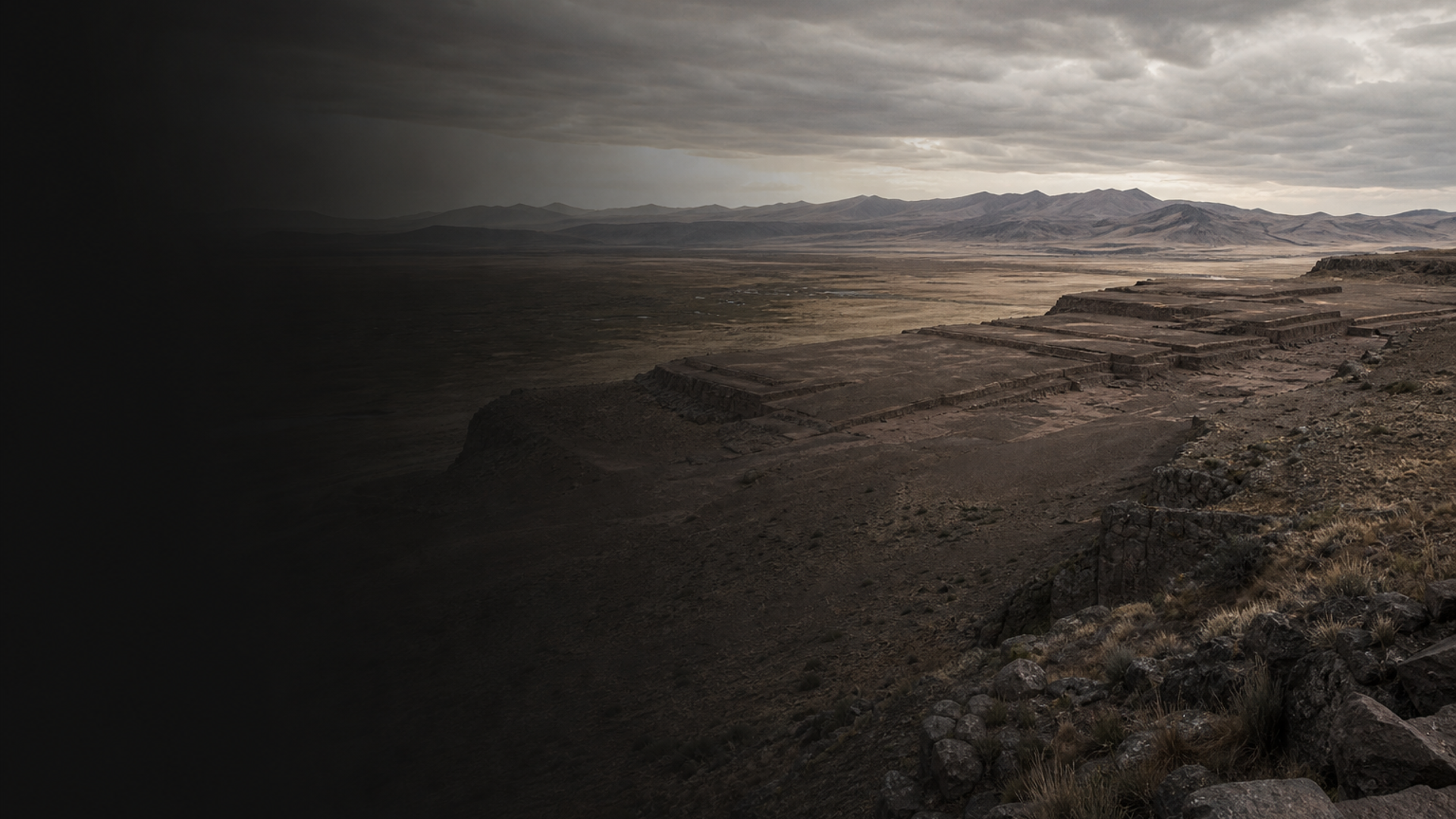
Ancient DNA from five individuals recovered at Akapana (dated 773–1047 CE) provides a preliminary genetic snapshot of Tiwanaku’s ceremonial core. The Y-chromosome is dominated by haplogroup Q in three males—a lineage widely associated with Indigenous peoples of the Americas—suggesting continuity of paternal Indigenous ancestry in these samples. Maternal lineages are diverse: C1b, B2, D1, B2b, and C1c are each present in single individuals, reflecting a mosaic of mtDNA haplogroups commonly observed across Andean populations.
These findings align with broader Andean genetic patterns where haplogroup Q predominates on the paternal side and several Native American mtDNA clades persist on the maternal side. Archaeological data documenting regional exchange at Tiwanaku complicates simple demographic narratives: the presence of diverse mtDNA haplogroups could reflect local diversity, female mobility, or incoming lineages tied to marriage networks or ritual adoption.
Importantly, the sample count is small (N = 5). Limited evidence suggests patterns but cannot establish firm population-level conclusions. With fewer than ten genomes, observed frequencies are provisional; apparent male-line dominance by Q could be influenced by sampling bias or burial practice. Future sampling across broader temporal and spatial contexts at Tiwanaku and neighboring sites is necessary to test hypotheses about patrilineality, mobility, and genetic continuity.
Until then, the Akapana genomes offer cinematic but cautious windows into how stones and genes together tell the story of an Andean ceremonial polity.