Menu
Store
Blog
Aknashen, Armavir Province (Vagharshapat District), Armenia

Aknashen Neolithic Dawn

Early farmers of the Armenian plain, 5985–5742 BCE — where archaeology meets ancient DNA

5985 CE - 5742 BCE
Scroll to begin
Chapter I

The Story

Understanding the Aknashen Neolithic Dawn culture

Aknashen_N represents two Neolithic individuals from Aknashen, Armavir Province, Armenia (5985–5742 BCE). Archaeological remains and preliminary mtDNA (I1, T1a) hint at local early-farmer connections; conclusions remain tentative given the very small sample size.

Time Period

5985–5742 BCE (Neolithic)

Region

Aknashen, Armavir Province (Vagharshapat District), Armenia

Common Y-DNA

Not reported (no Y-haplogroups in dataset)

Common mtDNA

I1 (1), T1a (1) — sample size n=2

Chapter II

Timeline

Key moments in the history of this culture

5900 BCE

Occupation of Aknashen (approx.)

Archaeological and radiocarbon evidence places Neolithic occupation of Aknashen in the late 7th to early 6th millennium BCE; the two sampled individuals date to c.5985–5742 BCE.

Chapter III

Origins & Emergence

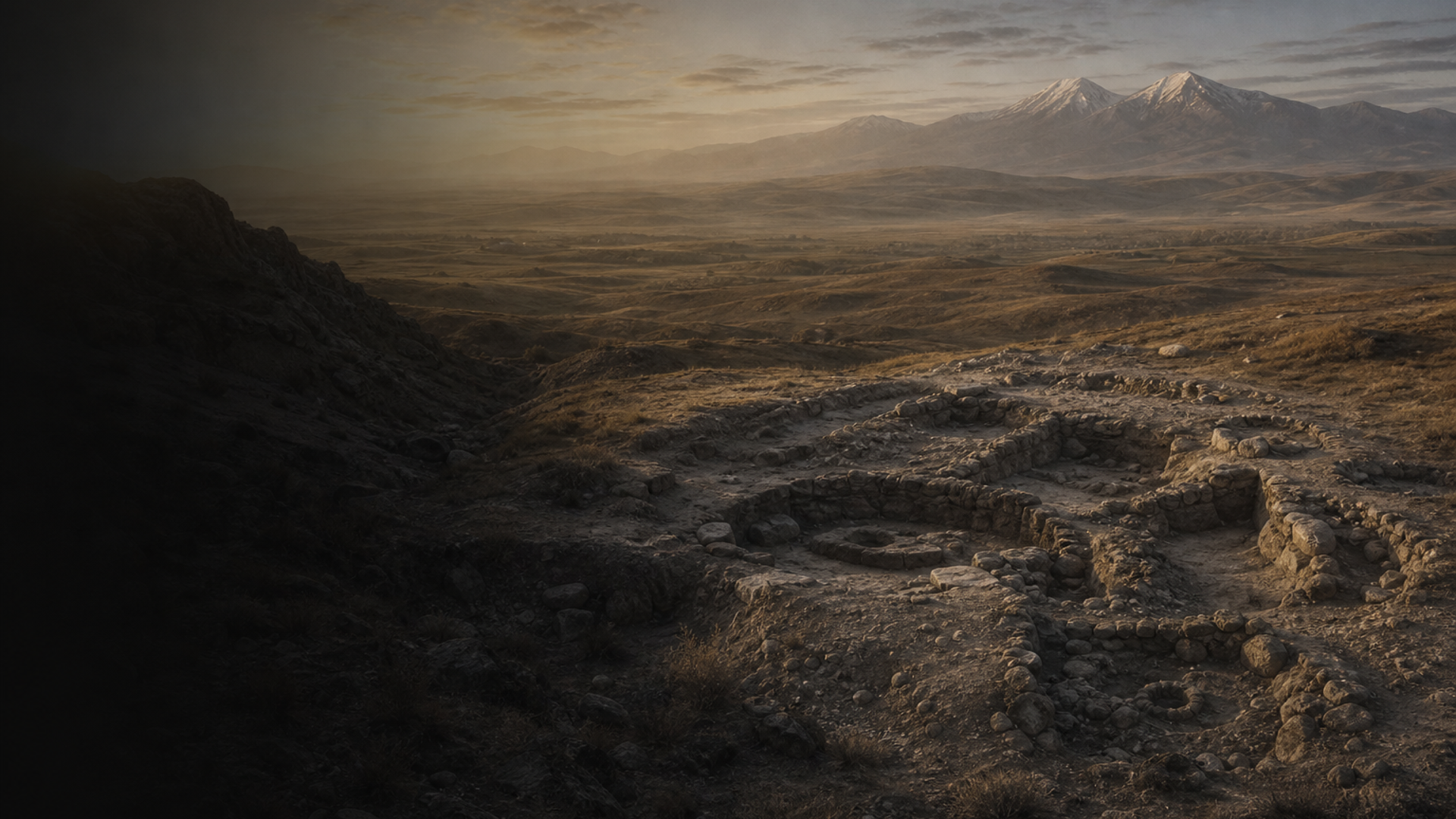
Aknashen sits on the fertile plain of Armavir in western Armenia, a landscape where early communities experimented with cultivation and settled life. Archaeological data indicates occupation phases in the late seventh to early sixth millennium BCE; the dated range for these two individuals (5985–5742 BCE) places them firmly within the Neolithic transformation of the southern Caucasus. Excavations at Aknashen have revealed house floors, pottery fragments, hearths, and traces of storage — material signatures of a community transitioning from foraging to farming economies.

The emergence of Aknashen-style settlements reflects broader Neolithic processes: the introduction and intensification of domesticated cereals and legumes, management of herd animals, and the development of distinctive ceramic styles. Limited evidence suggests local adaptation to highland and plain ecotones and participation in regional exchange networks that moved raw materials and ideas across the South Caucasus. While the archaeological assemblage provides a tangible portrait of daily life, connecting objects to people requires human remains; the two genomic samples provide rare, direct windows into the lives of Aknashen residents but cannot by themselves resolve the full story of population origins or mobility.

Because the sample count is very small, interpretations of population formation at Aknashen must remain cautious. Ongoing fieldwork and additional ancient DNA sampling will be necessary to refine models of how farming spread and how local forager groups and incoming farmer lineages interacted in this pivotal region.

  • Neolithic village context on the Armavir plain (late 7th–6th millennia BCE)
  • Material culture shows farming, storage, and emerging craft specializations
  • Two dated human samples provide limited direct evidence of population identity
Chapter IV

Daily Life & Society

Archaeological indicators from Aknashen suggest a settled community organized around domestic production and local resource use. Hearths, storage pits, and pottery sherds point to household-scale processing of plant foods and long-term storage — practices associated with cereal cultivation. Faunal remains in comparable Neolithic sites across the region indicate managed sheep, goats, and cattle; while specific species lists for these two burials are limited, regional zooarchaeological patterns support a mixed farming economy.

Craft and exchange likely complemented subsistence: obsidian sourcing studies elsewhere in the South Caucasus show long-distance movement of high-quality lithic raw materials, and similar exchange networks probably brought exotic goods or stylistic influences to Aknashen. Social life would have centered on kin-based households, with communal tasks around planting, herding, and pottery production. Burials and mortuary treatment at Aknashen and nearby sites suggest varying degrees of ritual expression, though preservation and sampling biases complicate broad generalizations.

Archaeological data indicates that households balanced risk through storage and diversified herding, while emerging craft skills and exchange fostered regional connections. Yet many aspects of social organization — hierarchy, mobility, and marriage patterns — remain only partially visible without larger osteological and genomic datasets.

  • Household-focused economy: cultivation, herding, storage
  • Participation in regional exchange networks (material and stylistic)
Chapter V

Genetic Profile

The Aknashen_N dataset currently comprises two individuals dated to 5985–5742 BCE. Mitochondrial DNA from these individuals yields haplogroups I1 and T1a (one of each). Both haplogroups occur broadly across Neolithic and later West Eurasian contexts: T1a has been observed in early farmer-associated remains in Anatolia and Europe, while sublineages of haplogroup I appear in various European and West Asian ancient samples. These maternal lineages are compatible with a picture in which Neolithic populations of the southern Caucasus carried a mix of maternal lineages seen among early farmers and local hunter-gatherers.

However, critical limitations shape interpretation. The absence of reported Y-DNA for these two individuals prevents insight into paternal ancestries and patrilineal structure. Most importantly, with only two genomes the statistical power to detect ancestry components, admixture events, or demographic continuity is minimal. Archaeogenetic work across the region has shown that South Caucasus populations often carry ancestry derived from Anatolian farmer-related groups and local Caucasus hunter-gatherers in varying proportions; the Aknashen mtDNA results are not inconsistent with those broader patterns but do not by themselves demonstrate them.

In sum, the genetic signals from Aknashen_N are intriguing but preliminary. Expanded sampling, including autosomal data and male Y-chromosome results, will be necessary to place these individuals within the deeper demographic tapestry of Neolithic Armenia.

  • mtDNA: I1 and T1a observed (each in one individual) — consistent with West Eurasian Neolithic maternal diversity
  • Sample size (n=2) and lack of Y-DNA/autosomal data make conclusions highly tentative
Chapter VI

Legacy & Modern Connections

Aknashen's earliest farmers contributed cultural and biological threads to the long human story of the Armenian Highlands. Agricultural practices, household technologies, and settlement forms established during the Neolithic created conditions for later population growth and cultural complexity across the region. Genetic continuity in parts of the Caucasus has been reported in broader studies, but it is important to emphasize that modern Armenian ancestry results from multiple layers of migration and admixture over millennia; direct one-to-one continuity from two Neolithic individuals cannot be assumed.

Nevertheless, these Aknashen individuals anchor a moment when farming lifeways were taking root in the Armavir plain. Even preliminary ancient DNA evidence helps bridge material culture to biological history, enabling more nuanced questions about mobility, kinship, and interaction. As more genomes from the South Caucasus are published, Aknashen will serve as an early data point for testing models of local continuity versus replacement and for tracing how Neolithic genealogies contributed to the genetic landscape of subsequent Bronze Age and historic populations.

  • Neolithic practices at Aknashen laid groundwork for later regional cultural development
  • Genetic links to modern populations are possible but require larger datasets to confirm
AI Powered

AI Assistant

Ask questions about the Aknashen Neolithic Dawn culture

AI Assistant by DNAGENICS

Unlock this feature
Ask questions about the Aknashen Neolithic Dawn culture. Our AI assistant can explain genetic findings, historical context, archaeological evidence, and modern connections.
Sample AI Analysis

The Aknashen Neolithic Dawn culture represents a fascinating chapter in human history...

Genetic analysis reveals connections to earlier populations while showing evidence of unique adaptations and cultural innovations. The ancient DNA samples provide insights into migration patterns, social structures, and the biological relationships between ancient populations.

This is a preview of the AI analysis. Unlock the full AI Assistant to explore detailed insights about:

  • Genetic composition and ancestry
  • Migration patterns and origins
  • Daily life and cultural practices
  • Modern genetic legacy
Use code for 35% off Expires May 20