Menu
Store
Blog
Azerbaijan_Caucasus_lowlands_LateC Jalilabad district, Azerbaijan

Alkhantepe: Echoes of the Late Chalcolithic

A single genome from Uchtepe village opens a cautious window into 3776–3651 BCE Azerbaijan

3776 CE - 3651 BCE
1 Ancient Samples
Scroll to begin
Chapter I

The Story

Understanding the Alkhantepe: Echoes of the Late Chalcolithic culture

Ancient DNA from Alkhantepe (Uchtepe, Jalilabad district) dated 3776–3651 BCE reveals Y-DNA G1 and mtDNA K. Limited sample size makes conclusions preliminary, but the find links Late Chalcolithic Azerbaijan to broader Caucasus and Near Eastern population histories.

Time Period

3776–3651 BCE

Region

Jalilabad district, Azerbaijan

Common Y-DNA

G1 (n=1)

Common mtDNA

K (n=1)

Chapter II

Timeline

Key moments in the history of this culture

3700 BCE

Burial at Alkhantepe

A human burial at Alkhantepe (Uchtepe village, Jalilabad) dated to 3776–3651 BCE yields the single genome linking this site to Late Chalcolithic Azerbaijan.

Chapter III

Origins & Emergence

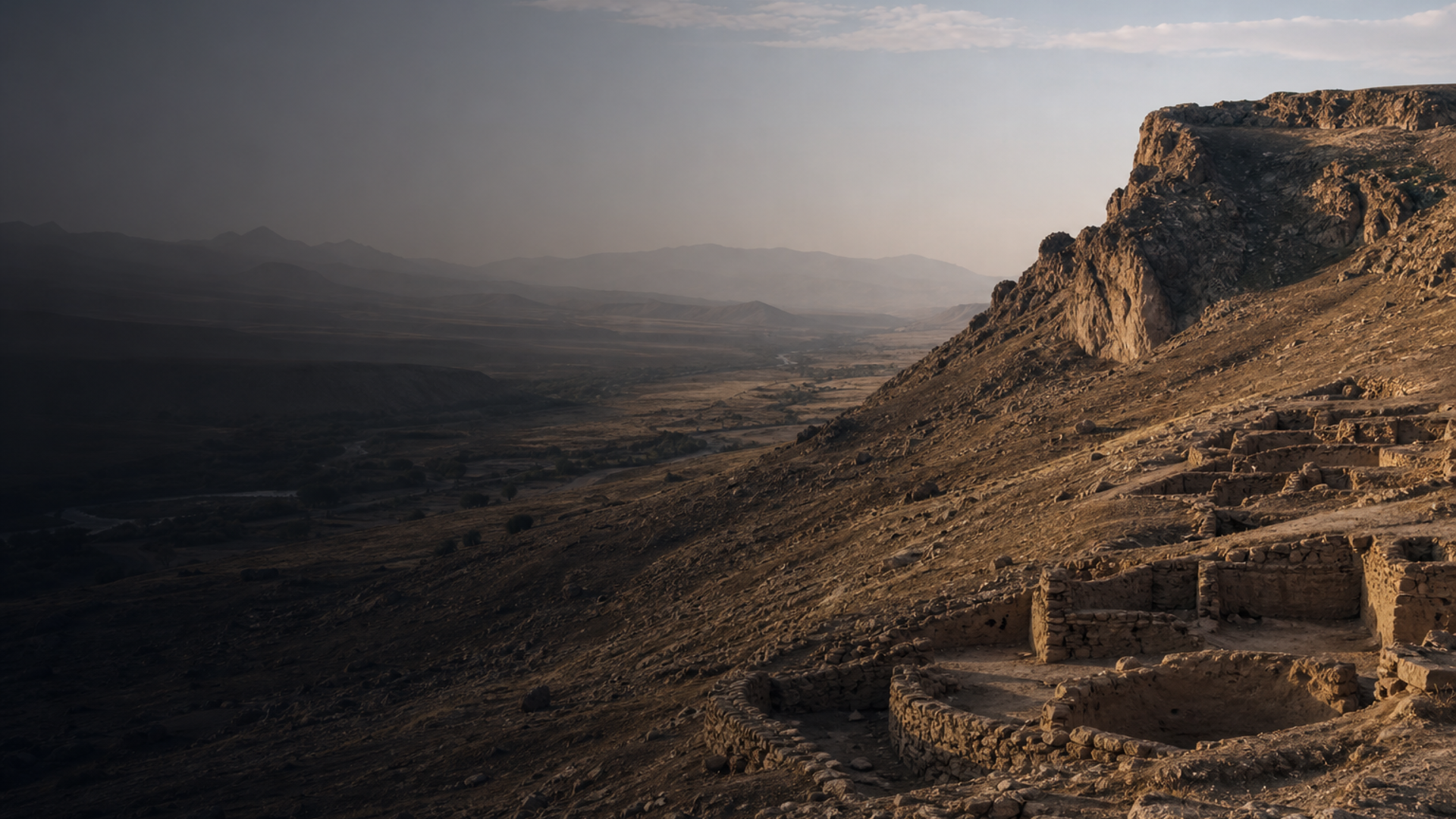
Alkhantepe sits in the lowland margins of the South Caucasus, where river plains and glacial-fed valleys funneled human movement between the Near East, the Iranian plateau, and the Anatolian highlands. The radiocarbon-calibrated interval for the recovered individual (3776–3651 BCE) places this person in the Late Chalcolithic, a transitional era when copper objects and increasingly complex social networks began to reshape lifeways across the region.

Archaeological data indicates that Late Chalcolithic communities in Azerbaijan practiced mixed farming, animal herding, and regional exchange of crafted goods. Pottery styles, metallurgical traces, and settlement traces in nearby sites point to a mosaic of local traditions interacting with wider Caucasian and Near Eastern currents. The genetic signal from Alkhantepe, while derived from a single individual, offers a rare, direct link between skeletal remains and the demographic processes that produced those material cultures.

Limited evidence suggests these lowland communities were not isolated; the landscape encouraged both mobility and cultural blending. Whether the Alkhantepe individual represents a long-standing local lineage, a newcomer from adjacent highland belts, or admixture of multiple ancestries remains an open question pending more samples. For now, the burial anchors human biography to a precise moment in a dynamic prehistoric frontier.

  • Site in Jalilabad district bridges lowland Caucasus and Near East
  • Dated securely to 3776–3651 BCE (Late Chalcolithic)
  • Evidence suggests interaction networks rather than isolation
Chapter IV

Daily Life & Society

The human story visible at Alkhantepe is largely inferred from regional archaeological patterns: Late Chalcolithic communities in Azerbaijan occupied riverine terraces and modest tells, combining cereal cultivation, pulse crops, and managed herds of sheep, goats, and cattle. Archaeobotanical and faunal records from the broader lowlands indicate a seasonal rhythm of planting and mobility, with households alternating sedentary tasks—pottery-making, textile production, and metalworking—with transhumant movements that followed pastures.

Architectural footprints across the region vary from single-room dwellings to cluster settlements, and funerary deposits range from simple inhumations to burials accompanied by modest tool or ornament assemblages. Such diversity suggests social differentiation at a small scale: kin groups and craft-specialist households operating within larger exchange networks. Raw materials, like copper and finished ceramics, flowed along river corridors, enabling stylistic and technological borrowing without necessitating wholesale population replacement.

At Alkhantepe, the discovery of a human burial that produced DNA provides a poignant human face to these routines. Yet archaeological evidence specific to daily activities at this village is limited; many inferences derive from neighboring sites. The material world of Late Chalcolithic Azerbaijan was therefore one of pragmatic adaptation—rooted in place, but open to the currents of connection that shaped the wider Caucasus.

  • Mixed farming and herding dominated subsistence
  • Crafts and small-scale exchange connected lowland communities
Chapter V

Genetic Profile

The genomic data from Alkhantepe are simple but evocative: the single recovered male-associated sample carries Y-chromosome haplogroup G1 and mitochondrial haplogroup K. Haplogroup G1 today has a notable frequency in the Caucasus and parts of Iran, and it has been repeatedly observed in ancient and modern samples from that broad region. mtDNA K is commonly associated with Neolithic and post-Neolithic dispersals across Europe and the Near East and is often interpreted as a marker of maternal lineages that spread with early farming and subsequent demographic movements.

Because the dataset here consists of a single individual (sample count = 1), any population-level inference must be tentative. Limited evidence suggests continuity of some paternal lineages in the southern Caucasus, but a lone Y-G1 does not exclude the presence of many other haplogroups in contemporaneous communities. Similarly, the presence of mtDNA K hints at maternal connections to Near Eastern farmer-derived ancestries or later regional exchanges, but it could equally represent a local maternal lineage assimilated into wider networks.

Genetic affinities inferred from genome-wide data (when available) will be crucial to test hypotheses of continuity, migration, or admixture. For now, the Alkhantepe genome is best treated as an initial data point that signals potential links between Late Chalcolithic Azerbaijan and adjacent population histories rather than a definitive map of regional ancestry.

  • Y-DNA: G1, a lineage present in modern and ancient Caucasus/Iran
  • mtDNA: K, associated with Neolithic and post-Neolithic maternal lineages
Chapter VI

Legacy & Modern Connections

The genetic echoes of Alkhantepe resonate into the present but with caution. Haplogroup G1 endures among some populations of the Caucasus and adjacent Iran, suggesting a thread of paternal continuity across millennia in parts of the region. Mitochondrial K appears broadly across Europe and the Near East today, reflecting deep maternal line connections that were woven through Neolithic expansions and later regional interactions.

Archaeologically, cultural innovations of the Late Chalcolithic—copper use, long-distance exchange, and increasingly complex settlement patterns—helped lay the groundwork for the social landscapes that would later host early Bronze Age cultures such as the Kura-Araxes phenomenon. Genetically, the Alkhantepe individual offers a point of contact between material change and inherited ancestry, but conclusions about direct continuity to modern groups must be conservative. With only one genome, the story is a beginning: it illuminates possibilities and invites systematic sampling to move from evocative hint to robust narrative.

This solitary ancient genome therefore functions less as an endpoint and more as an invitation: to expand sampling in the Jalilabad lowlands, to integrate archaeological context and genome-wide data, and to chart how the human tapestry of the South Caucasus was woven over deep time.

  • Y-G1 persists regionally; mtDNA K links to broader Near Eastern/European lineages
  • Single-sample evidence warns against broad continuity claims; more data needed
Chapter VII

Sample Catalog

1 ancient DNA samples associated with the Alkhantepe: Echoes of the Late Chalcolithic culture

Ancient DNA samples from this era, providing genetic insights into the people who lived during this period.

1 / 1 samples
Portrait Sample Country Era Date Culture Sex Y-DNA mtDNA
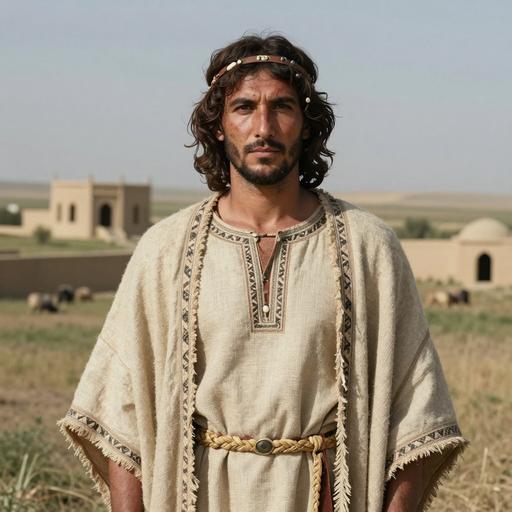
Portrait of ancient individual ALX002 from Azerbaijan, dated 3776 BCE
ALX002
Azerbaijan Azerbaijan_Caucasus_lowlands_LateC 3776 BCE Ancient Near Eastern Civilization M G1 K1a12a1a
AI Powered

AI Assistant

Ask questions about the Alkhantepe: Echoes of the Late Chalcolithic culture

AI Assistant by DNAGENICS

Unlock this feature
Ask questions about the Alkhantepe: Echoes of the Late Chalcolithic culture. Our AI assistant can explain genetic findings, historical context, archaeological evidence, and modern connections.
Sample AI Analysis

The Alkhantepe: Echoes of the Late Chalcolithic culture represents a fascinating chapter in human history...

Genetic analysis reveals connections to earlier populations while showing evidence of unique adaptations and cultural innovations. The ancient DNA samples provide insights into migration patterns, social structures, and the biological relationships between ancient populations.

This is a preview of the AI analysis. Unlock the full AI Assistant to explore detailed insights about:

  • Genetic composition and ancestry
  • Migration patterns and origins
  • Daily life and cultural practices
  • Modern genetic legacy
Use code for 35% off Expires May 21