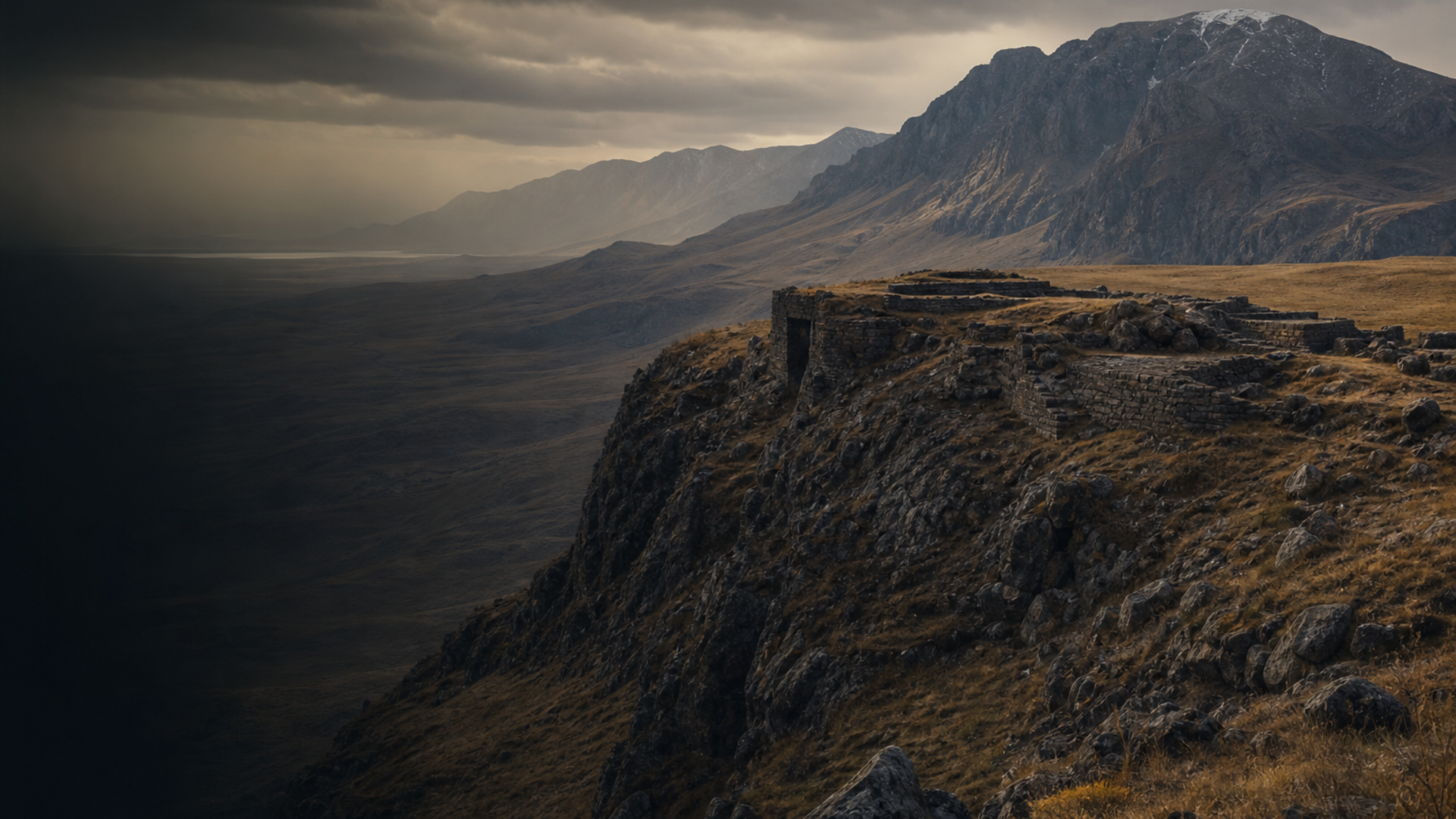
Archaeological excavations reveal a society shaped by highland agriculture, pastoral mobility and craft production. House foundations, storage pits and pottery assemblages recovered at settlement loci imply mixed farming of barley, pulses and herded sheep and goats. Cemetery evidence from Tekhut, Noratus and Pidjut Znganek monument shows varied funerary practice — single inhumations, grouped burials and occasional richer graves with bronze tools or weaponry — suggesting social differentiation and household-based status rather than extreme hierarchical stratification.
Craftspeople worked bronze and stone, producing utilitarian and ritual objects whose stylistic traits link the region to the broader Late Bronze Age Caucasus. Exposed landscapes, river corridors, and mountain passes funneled trade and seasonal movement; ethnographic analogy and isotopic work elsewhere indicate that some individuals may have practiced seasonal transhumance. The archaeological record preserves fragments of daily life — grinding stones, spindle whorls, and charred seeds — which when paired with DNA allow us to imagine kinship networks, residence patterns and the movements of women and men within and between communities.