Menu
Store
Blog
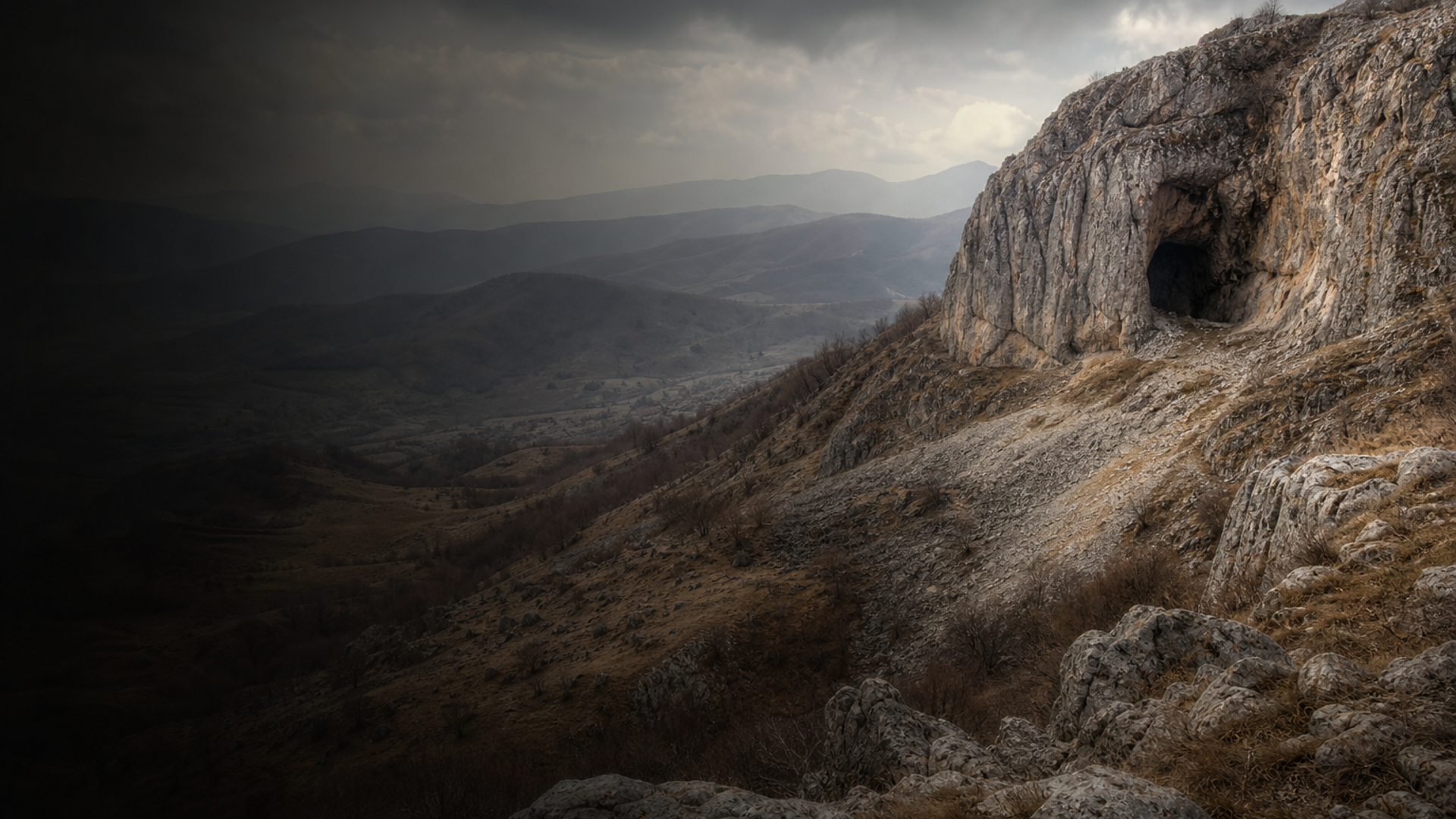
Balkan Mountains, Bulgaria (Bacho Kiro Cave)

Bacho Kiro: Voices of the Late Pleistocene

Early modern humans from Bacho Kiro Cave (44–32k BCE): archaeology meets preliminary aDNA

44169 CE - 32667 BCE
Scroll to begin
Chapter I

The Story

Understanding the Bacho Kiro: Voices of the Late Pleistocene culture

Fossils and artifacts from Bacho Kiro Cave in the Balkan Mountains preserve human life 44,169–32,667 BCE. Six ancient DNA samples offer tentative genetic glimpses that, combined with stratigraphy and artifacts, illuminate early modern human presence in southeastern Europe.

Time Period

44,169–32,667 BCE (Late Pleistocene)

Region

Balkan Mountains, Bulgaria (Bacho Kiro Cave)

Common Y-DNA

Not reported / no consensus

Common mtDNA

Not reported / no consensus

Chapter II

Timeline

Key moments in the history of this culture

44169 BCE

Oldest dated human remains at Bacho Kiro

Oldest currently published radiocarbon-calibrated date for human-associated deposits at Bacho Kiro Cave (~44,169 BCE).

Chapter III

Origins & Emergence

Bacho Kiro Cave sits in the limestone of the Balkan Mountains, a threshold between Mediterranean and continental ecologies. Archaeological excavations have revealed stratified Upper Paleolithic deposits that record human presence during the Late Pleistocene, roughly 44,169 to 32,667 years before present (calibrated BP), a period of dynamic climate oscillation and population movement. The material record — lithic technology, ochre fragments, and spatially associated human remains — places these deposits in the context of early modern human expansions across Europe after the arrival of Homo sapiens.

The cinematic image of small groups moving through cold, open landscapes belies a record grounded in layers of charcoal, stone, and bone. Limited evidence suggests episodes of repeated occupation, specialized tool use, and symbolic behavior at the site, although preservation and excavation limits mean interpretations must remain cautious. With only six aDNA samples available from the site, genetic conclusions about origins and population continuity are preliminary. Archaeological data indicate Bacho Kiro was one node within a wider network of Late Pleistocene populations in southeastern Europe, a landscape that likely saw both local persistence and incoming gene flow during episodes of climatic stress and opportunity.

  • Site: Bacho Kiro Cave, Balkan Mountains, Bulgaria
  • Date range: ~44,169–32,667 BCE (Late Pleistocene)
  • Evidence: stratified Upper Paleolithic layers with human remains and artifacts
Chapter IV

Daily Life & Society

Archaeological traces at Bacho Kiro evoke daily rhythms of survival and sociality under Late Pleistocene skies. Hearths and concentrations of charcoal imply controlled fire use for warmth and cooking; flint knapping debris and retouched blades point to a toolkit adapted for hunting, hide working, and woodworking. Faunal remains — where preserved — reflect resource exploitation of steppe and forest-edge environments, suggesting flexible subsistence strategies tuned to seasonal availability.

Ornaments and pigments, when present, hint at social signaling, identity, or ritual practice, though sparse finds mean any claims about complex symbolism should be phrased cautiously. Spatial patterning in the cave suggests activity areas rather than dense permanent habitation: short-term occupations, task-specific zones, and repeated returns over millennia. Mobile groups likely moved across the Balkan corridors, exploiting ecological niches and maintaining social networks. With only six human genetic samples available, reconstructions of kinship, residence patterns, or community structure remain speculative but can be informed by combined archaeological and genetic approaches as more data accumulate.

  • Evidence for hearths, flint tool production, and seasonal resource use
  • Sparse symbolic materials suggest potential social signaling, but interpretations are tentative
Chapter V

Genetic Profile

Ancient DNA from Bacho Kiro is an especially evocative bridge between bones and biography. Six samples dated within the site's 44–32k BCE range provide the first genetic window into these individuals, but the small sample count (<10) means all population-level inferences are provisional. Genetic data can address ancestry affinities, levels of archaic admixture, and relationships to contemporaneous groups elsewhere in Europe and West Asia.

Preliminary analyses (limited sample size) suggest these individuals fall within the broader diversity of early Eurasian modern humans rather than representing an isolated lineage; however, the absence of widely reported consensus Y-chromosome or mitochondrial haplogroups from the site prevents firm assignment of maternal or paternal lineages in the public record. Where comparable Upper Paleolithic genomes have been studied, researchers often observe complex patterns of shared ancestry and variable archaic introgression; whether the Bacho Kiro individuals share these exact patterns remains an open question. Future sequencing of additional individuals and higher-coverage genomes will clarify migration routes, degrees of continuity with later Balkan populations, and micro-scale kinship within the cave assemblage.

  • Sample count: 6 — conclusions are preliminary
  • Initial genetic signals align with early Eurasian modern human diversity, but details remain unresolved
Chapter VI

Legacy & Modern Connections

Bacho Kiro's long-ago inhabitants contribute to our understanding of how modern humans occupied Europe’s southeastern margins during a time of environmental challenge. Archaeologically, the site anchors cultural sequences in the Balkans; genetically, even a handful of ancient genomes can reveal threads of ancestry that echo into later populations. However, direct lines from these individuals to modern Bulgarians or other present-day groups cannot be drawn with confidence from the current dataset — the region experienced many demographic events in the intervening tens of millennia.

The true legacy of Bacho Kiro is methodological and narrative: combining stratigraphy, artifact analysis, and aDNA illustrates how fragmented remains can be woven into life histories. As more samples are recovered and sequenced, the cave will likely refine models of post-glacial recolonization, local persistence, and the tapestry of ancestries that ultimately helped shape Eurasian genetic diversity.

  • Important archaeological anchor for Late Pleistocene Balkans
  • Existing aDNA is informative but insufficient to claim direct continuity with modern populations
AI Powered

AI Assistant

Ask questions about the Bacho Kiro: Voices of the Late Pleistocene culture

AI Assistant by DNAGENICS

Unlock this feature
Ask questions about the Bacho Kiro: Voices of the Late Pleistocene culture. Our AI assistant can explain genetic findings, historical context, archaeological evidence, and modern connections.
Sample AI Analysis

The Bacho Kiro: Voices of the Late Pleistocene culture represents a fascinating chapter in human history...

Genetic analysis reveals connections to earlier populations while showing evidence of unique adaptations and cultural innovations. The ancient DNA samples provide insights into migration patterns, social structures, and the biological relationships between ancient populations.

This is a preview of the AI analysis. Unlock the full AI Assistant to explore detailed insights about:

  • Genetic composition and ancestry
  • Migration patterns and origins
  • Daily life and cultural practices
  • Modern genetic legacy
Use code for 35% off Expires May 20