Menu
Store
Blog
Baja_Mexico Baja California, Mexico

Baja Peninsula Foragers

Archaeology and DNA illuminate millennia of coastal life on Baja California

3000 BCE - 1500 CE
2 Ancient Samples
Scroll to begin
Chapter I

The Story

Understanding the Baja Peninsula Foragers culture

Archaeological and ancient DNA evidence from Iron Springs and Comondu, Baja California (3000 BCE–1500 CE) reveal coastal foragers bearing Native American Y haplogroup Q and mtDNA B and C. Limited samples make conclusions preliminary, but findings align with broader Indigenous genetic lineages.

Time Period

3000 BCE – 1500 CE

Region

Baja California, Mexico

Common Y-DNA

Q (observed in 1/2 samples)

Common mtDNA

B, C (each observed in 1/2 samples)

Chapter II

Timeline

Key moments in the history of this culture

2500 BCE

Early coastal occupation

Archaeological deposits indicate sustained coastal foraging and shellfish use on the Baja peninsula, forming the basis of long-term subsistence strategies.

Chapter III

Origins & Emergence

The archaeological horizon represented by the Baja_Mexico identifier spans a sweeping temporal arc—from early Holocene coastal adaptations around 3000 BCE to late pre-contact occupations near 1500 CE. Archaeological data from sites such as Iron Springs and Comondu on the western Baja peninsula paint a portrait of communities shaped by the sea, the arid interior, and the dramatic peninsular landscape.

Limited stratified deposits and surface assemblages indicate long-term use of shoreline resources, episodic inland forays, and localized technological traditions in lithic production. The peninsular setting fostered both continuity and regional distinctiveness: isolation by desert and ocean led to material cultures that diverge in subtle ways from mainland traditions, yet trade and mobility likely linked Baja groups to broader networks along the Pacific coast.

Because direct, well-dated sequences remain scarce for this specific dataset, interpretations emphasize patterns rather than definitive narratives. Still, the combination of coastal archaeology and genetic signals begins to trace how these groups emerged, adapted, and persisted in a challenging environment for millennia.

  • Occupations span roughly 3000 BCE to 1500 CE across Baja Peninsula sites
  • Coastal adaptation emphasized shellfish, fish, and marine mammals
  • Regional distinctiveness shaped by peninsular isolation and coastal mobility
Chapter IV

Daily Life & Society

Archaeological data indicates that everyday life for Baja coastal groups revolved around tides and seasonal marine productivity. Shell middens, fish-bone concentrations, and scattered hearth features (recorded at localities like Comondu and Iron Springs) suggest organized gathering, processing, and possibly storage of seafood. Material traces—stone scrapers, chipped-stone tools, and worked bone—evoke skilled toolmakers who transformed marine and terrestrial resources into a sustainable economy.

The landscape demanded mobility: small-scale seasonal rounds between shore and inland camps, opportunistic use of freshwater pockets, and knowledge of marine cycles. Socially, low-density populations living in kin-based bands would have emphasized cooperation, sharing, and knowledge transmission across generations. Ceremonial and symbolic life is less visible in the present dataset, but rock art panels and isolated artifact styles in the broader region imply rich belief systems and local identities.

Archaeological interpretations remain cautious: preservation biases favor durable materials, and many coastal deposits were affected by sea-level change. Still, the preserved sites offer a cinematic glimpse of daily rhythms—harvesting at dawn, smoke from hearths, and the quiet choreography of small communities tuned to the sea.

  • Marine resources and shell middens dominate the archaeological record
  • Seasonal mobility between shore and inland freshwater sources
Chapter V

Genetic Profile

Two ancient individuals from Iron Springs and Comondu provide the genetic backbone for this profile. Both samples are precious but sparse: with only two genomes, any population-level inference is preliminary. Genetic data indicate a Y-DNA lineage Q in one male sample and mitochondrial haplogroups B and C in the two individuals (each observed once). These lineages are part of the founding Native American genetic tapestry: haplogroup Q is widespread in paternal lineages across many Indigenous populations of the Americas, and mtDNA B and C are among the primary maternal clades traced to early peopling events.

The observed combination—Q on the Y chromosome and B/C in mtDNA—broadly aligns with expectations for long-term Indigenous presence in western Mexico and along the Pacific coast. However, with n=2, it is impossible to resolve internal population structure, degrees of continuity with earlier Holocene groups, or finer-scale migration events within Baja. Archaeogenomic analysis also reveals the power of integrating archaeological context (site stratigraphy, radiocarbon dates) with DNA: together they situate these individuals in time and landscape, allowing cautious hypotheses about coastal lifeways and genetic continuity.

Further sampling across multiple sites and time slices is essential to test whether these haplogroups reflect local continuity, inputs from mainland groups, or other demographic processes.

  • Y-DNA Q observed (1/2 samples), a common Native American paternal lineage
  • mtDNA B and C detected, both are founding maternal lineages in the Americas
Chapter VI

Legacy & Modern Connections

The genetic markers seen in the Baja_Mexico samples resonate with broader Indigenous American diversity; they are not unique signatures but threads in a larger ancestral fabric. Present-day Indigenous communities along the Pacific and within northwestern Mexico carry related lineages, suggesting potential deep connections—yet direct descent cannot be assumed from two samples alone. Archaeological continuity in tool types, coastal resource strategies, and place-based knowledge likely contributed to the cultural foundations of later communities.

Beyond genetics, the legacy of these ancient coastal societies endures in landscape stewardship, marine knowledge, and the persistence of local place-names and traditions in Baja. Scientific collaboration with descendant communities, expanded sampling, and respectful curation of remains and artifacts will be essential to fully illuminate these links while honoring living heritage.

  • Genetic signals align with Indigenous American lineages but require more data
  • Cultural and ecological knowledge likely influenced later Baja communities
Chapter VII

Sample Catalog

2 ancient DNA samples associated with the Baja Peninsula Foragers culture

Ancient DNA samples from this era, providing genetic insights into the people who lived during this period.

2 / 2 samples
Portrait Sample Country Era Date Culture Sex Y-DNA mtDNA
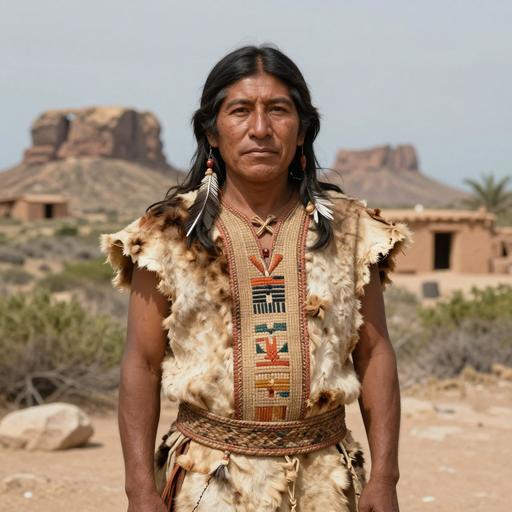
Portrait of ancient individual MX-01 from Mexico, dated 3000 BCE
MX-01
Mexico Baja_Mexico 3000 BCE Mesoamerican Civilizations M Q-L53 B2a5
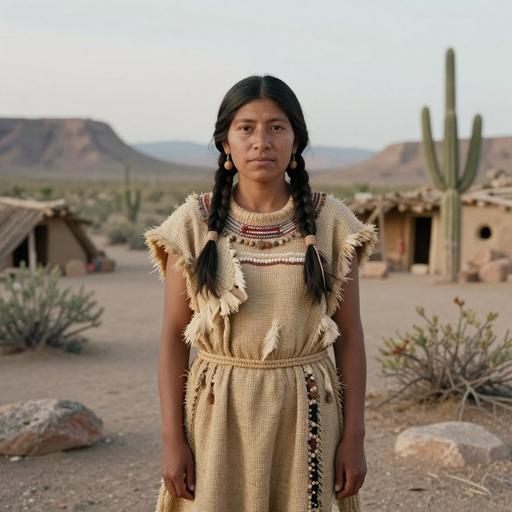
Portrait of ancient individual B-04 from Mexico, dated 3000 BCE
B-04
Mexico Baja_Mexico 3000 BCE Mesoamerican Civilizations F - C1b41
AI Powered

AI Assistant

Ask questions about the Baja Peninsula Foragers culture

AI Assistant by DNAGENICS

Unlock this feature
Ask questions about the Baja Peninsula Foragers culture. Our AI assistant can explain genetic findings, historical context, archaeological evidence, and modern connections.
Sample AI Analysis

The Baja Peninsula Foragers culture represents a fascinating chapter in human history...

Genetic analysis reveals connections to earlier populations while showing evidence of unique adaptations and cultural innovations. The ancient DNA samples provide insights into migration patterns, social structures, and the biological relationships between ancient populations.

This is a preview of the AI analysis. Unlock the full AI Assistant to explore detailed insights about:

  • Genetic composition and ancestry
  • Migration patterns and origins
  • Daily life and cultural practices
  • Modern genetic legacy
Use code for 35% off Expires May 20