Menu
Store
Blog
Belize (Mayahak Cab Pek)

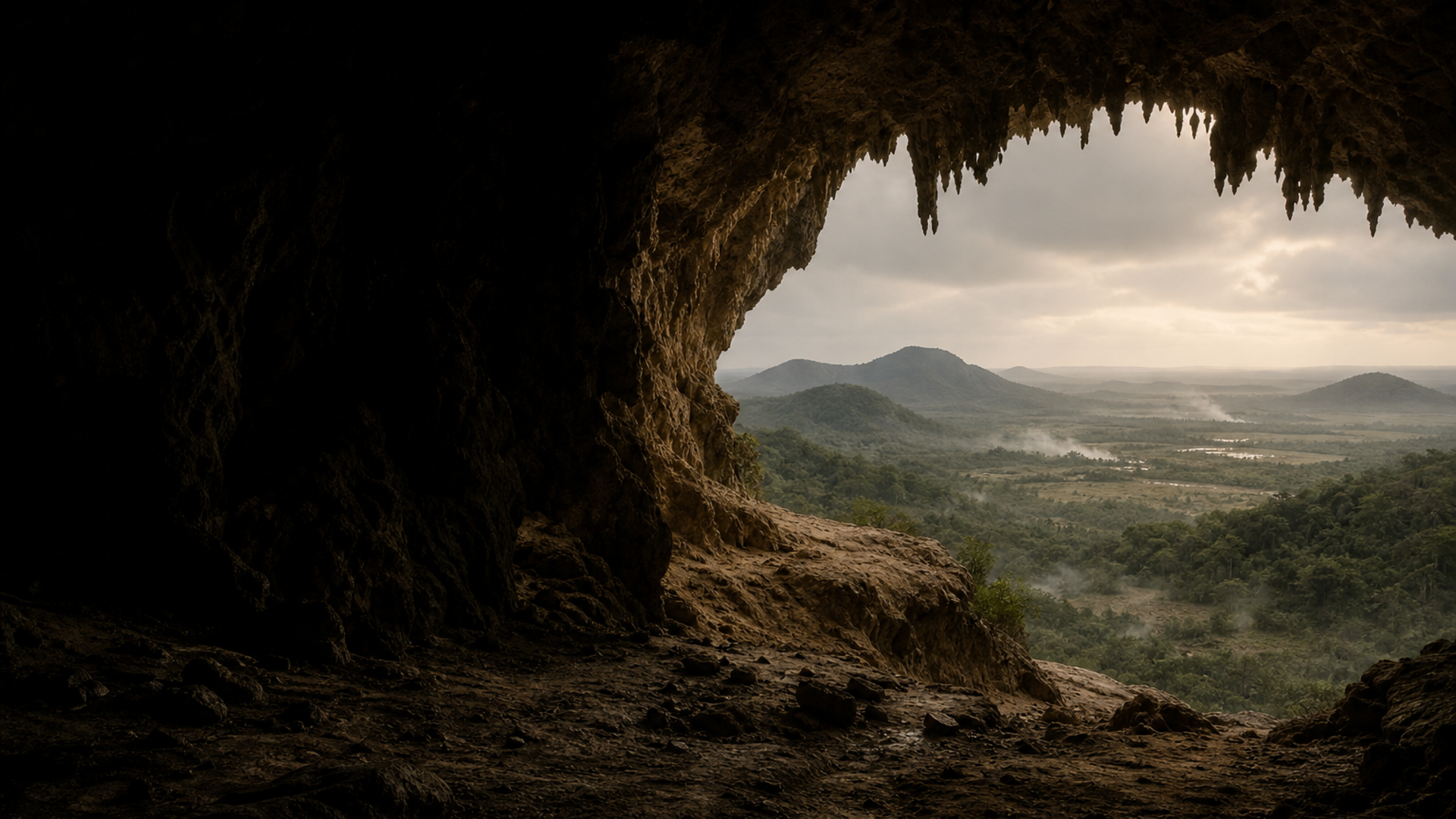
Belize, 11,700 Years Ago — Cave Witness

A lone Early Holocene individual from Mayahak Cab Pek offers a quiet window into Belize's first inhabitants.

10100 CE - 9400 BCE
Scroll to begin
Chapter I

The Story

Understanding the Belize, 11,700 Years Ago — Cave Witness culture

A single Early Holocene burial from Mayahak Cab Pek (c. 10100–9400 BCE) links archaeological stratigraphy with ancient DNA evidence. Limited data hint at deep Native American ancestry patterns, but conclusions remain preliminary given the lone sample.

Time Period

c. 10100–9400 BCE (Early Holocene)

Region

Belize (Mayahak Cab Pek)

Common Y-DNA

Not reported (sample n=1)

Common mtDNA

Not reported (sample n=1)

Chapter II

Timeline

Key moments in the history of this culture

10000 BCE

Burial at Mayahak Cab Pek

A human burial dated to c. 10100–9400 BCE is recovered from Mayahak Cab Pek, providing the lone ancient genome for this cultural identifier.

Chapter III

Origins & Emergence

The bones from Mayahak Cab Pek lie at the threshold of a changing world. Around 10100–9400 BCE, as Ice Age climates relaxed, coastal and inland landscapes of southern Mesoamerica shifted toward the forested mosaics that would define Belize. Archaeological data indicates that cave and rockshelter deposits in the region can preserve stratified sequences of human use, offering snapshots of early lifeways. The solitary individual attributed to Belize_11700BP emerges from this Early Holocene horizon and represents a rare, direct human voice from more than eleven millennia ago.

Limited evidence suggests these people belonged to highly mobile forager communities who exploited riverine, coastal, and forest resources as environments reconfigured after the Pleistocene. The presence of a single, securely dated human sample makes it possible to anchor cultural and environmental reconstructions to a biological individual, but the narrative must remain cautious: one burial cannot capture the full diversity of Early Holocene settlement across Belize. Archaeological patterns across nearby sites, however, hint at an evolving relationship with new plant and animal assemblages, territorial reorganization, and long-distance connections along Gulf and Caribbean corridors.

  • Sample from Mayahak Cab Pek dated to c. 10100–9400 BCE
  • Early Holocene environmental transition in southern Mesoamerica
  • Single-sample evidence—rich but preliminary
Chapter IV

Daily Life & Society

The daily world of Belize_11700BP would have been tactile and immediate: hands on stone, eyes on water, ears tuned to forest sounds. While direct material associations for this specific individual are limited, regional archaeological data indicates small groups of foragers exploited a mix of aquatic and terrestrial resources, moving seasonally to follow fish runs, shellfish beds, and the fruiting cycles of early-Holocene flora.

Shelters ranged from open camps to protective caves like Mayahak Cab Pek, where cave environments could serve ritual and practical roles—places for refuge, processing, and burial. Toolkits were likely composed of flaked stone implements for cutting and scraping, with organic technologies (wood, fiber) that rarely survive in the humid tropics. Social organization was probably kin-based and flexible, with fluid networks for sharing information and raw materials over surprisingly long distances. Archaeological signatures suggest resilient adaptation rather than sedentary agriculture: this was a time of intimate knowledge of microenvironments, where survival depended on mobility, ecological knowledge, and social cooperation.

  • Mobile foraging strategies exploiting riverine and forest resources
  • Use of caves for shelter, processing, and burial
Chapter V

Genetic Profile

Genetic data for Belize_11700BP derives from a single sampled individual recovered at Mayahak Cab Pek. Because only one genome is represented, any interpretations must be framed as provisional. The dataset provided does not report common Y-DNA or mtDNA haplogroups for this individual; therefore haplogroup-level statements are unavailable for this sample.

Despite these limits, the presence of ancient DNA from the Belize Early Holocene adds an important anchor point for broader questions about the peopling of the Americas. Other well-sampled regions show that early American populations descended from Beringian-derived founding groups that diversified after entry into the continents. If future samples from Belize and neighboring regions become available, they can test whether Early Holocene Belize individuals share genetic continuity with later Mesoamerican communities or display distinct ancestries tied to coastal or inland migration routes. For now, this lone genome underlines the promise of ancient DNA in tropical contexts and the urgent need for additional samples: patterns across the region remain speculative until supported by larger datasets (n<10 is preliminary).

  • Single individual with ancient DNA—interpretations are tentative
  • No reported Y or mtDNA haplogroups in current dataset
Chapter VI

Legacy & Modern Connections

The lonely silk of bone from Mayahak Cab Pek ties the deep past to present landscapes and peoples. Limited evidence suggests possible long-term continuities in place use and regional adaptation, but genetic continuity between this Early Holocene individual and modern Belizean populations cannot be asserted from one sample. Museum-quality interpretation therefore emphasizes connectivity and complexity: early inhabitants helped shape resource knowledge, movement corridors, and settlement choices that later groups would inherit and transform.

Cultural memory in the region is layered; archaeological and genetic work together can illuminate how ancient lifeways contributed to the tapestry of later Mesoamerican societies. This sample is a first note — evocative, fragile, and insistently incomplete — reminding researchers that every new ancient genome from Belize refines our understanding of human resilience and migration in the Early Holocene.

  • Suggests possible regional continuity, but evidence is insufficient
  • Highlights the need for more ancient DNA from Belize to trace links to modern populations
AI Powered

AI Assistant

Ask questions about the Belize, 11,700 Years Ago — Cave Witness culture

AI Assistant by DNAGENICS

Unlock this feature
Ask questions about the Belize, 11,700 Years Ago — Cave Witness culture. Our AI assistant can explain genetic findings, historical context, archaeological evidence, and modern connections.
Sample AI Analysis

The Belize, 11,700 Years Ago — Cave Witness culture represents a fascinating chapter in human history...

Genetic analysis reveals connections to earlier populations while showing evidence of unique adaptations and cultural innovations. The ancient DNA samples provide insights into migration patterns, social structures, and the biological relationships between ancient populations.

This is a preview of the AI analysis. Unlock the full AI Assistant to explore detailed insights about:

  • Genetic composition and ancestry
  • Migration patterns and origins
  • Daily life and cultural practices
  • Modern genetic legacy
Use code for 35% off Expires May 20