Menu
Store
Blog
Belize (Mesoamerica)

Belize 4,600 Years Ago

A small genetic window into Late Archaic lifeways in northern Belize

2950 CE - 2469 BCE
Scroll to begin
Chapter I

The Story

Understanding the Belize 4,600 Years Ago culture

Archaeological and genetic traces from Mayahak Cab Pek and Saki Tzul (2950–2469 BCE) reveal Native American maternal lineages (A, C, D). With only five samples, conclusions are preliminary but point to deep regional continuity in Belize's early hunter-forager and burgeoning farming landscapes.

Time Period

2950–2469 BCE

Region

Belize (Mesoamerica)

Common Y-DNA

Undetermined (no robust Y-DNA reported)

Common mtDNA

C5b (2), C1c, D, A

Chapter II

Timeline

Key moments in the history of this culture

2500 BCE

Snapshot of coastal and inland lifeways

Around 2500 BCE, people in northern Belize balanced foraging and early plant use; skeletal samples (Mayahak Cab Pek, Saki Tzul) date to this era and preserve maternal lineages seen across the Americas.

Chapter III

Origins & Emergence

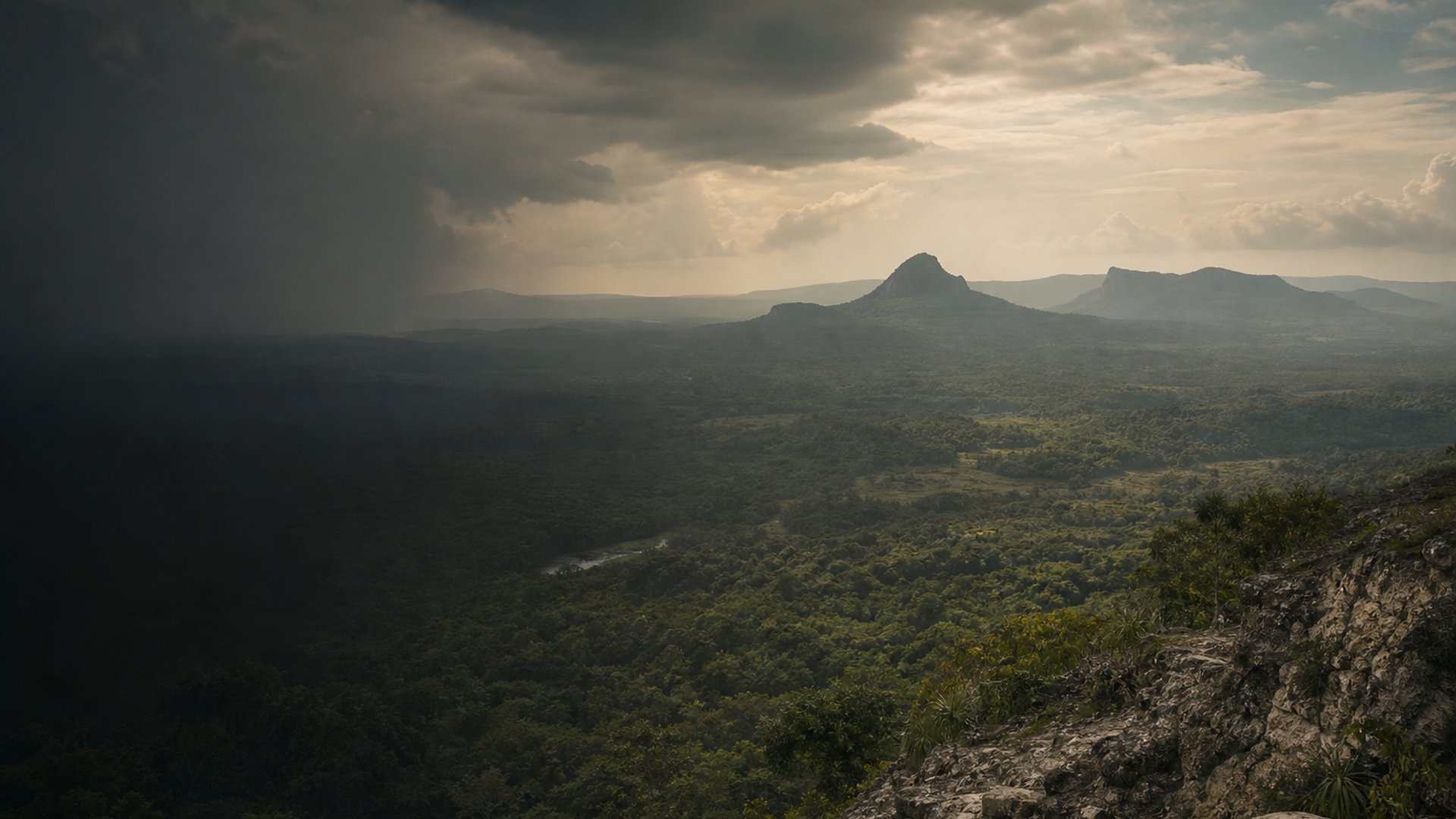
At the dawn of the third millennium BCE, the landscapes of present-day Belize were a tapestry of riverine savannas, wetlands and forest edge—places where people lived close to seasonality and resource pulses. Archaeological deposits dated between 2950 and 2469 BCE at Mayahak Cab Pek and Saki Tzul capture a moment of persistence and transformation. Material remains from this broad region indicate long-term use of coastal and inland resources and the slow adoption of cultivated plants in some locales; however, direct evidence tying these five individuals to specific subsistence strategies is limited.

The bones analyzed from the Belize_4600BP assemblage do not represent a large cross-section of the living community. With only five samples, any narrative about population origins must be cautious: genetic signals may reflect close kinship, mobile forager groups, or small, localized populations rather than broad migrations. Nonetheless, the temporal placement of these remains sits within a critical interval in Mesoamerica when local lifeways were adapting to climatic shifts and the first steps toward sedentism and agriculture were underway.

Archaeological data indicates regional continuity in pottery and lithic traditions later in the Holocene, which complements the genetic snapshot offered here. These remains are cinematic fragments—short scenes in a long human story—illuminating how ancient Belizeans occupied a shifting ecological stage while biological ties knit them into broader Native American lineages.

  • Samples dated 2950–2469 BCE from Mayahak Cab Pek and Saki Tzul
  • Context: Late Archaic to early pre-ceramic/early agricultural transitions
  • Small sample size; regional conclusions remain provisional
Chapter IV

Daily Life & Society

Picture small bands and emerging hamlets moving along rivers, lagoons and forest margins—netting fish at dawn, tending small plantings, and knapping stone into tools for cutting and processing. While the direct archaeological record for these particular individuals is sparse, ethnographic analogues and regional archaeology suggest diets mixed between wild fauna, aquatic resources and early cultigens like squash or maize in their nascent forms.

Material traces in Belize from slightly later periods show increased pottery use and more sedentary settlements; the Belize_4600BP individuals likely lived at the cusp of these transformations. Socially, communities of this era were probably organized around kin networks with fluid memberships, seasonal aggregation, and ritual practices tied to landscape features—caves, rivers, and coastal lagoons that carried spiritual as well as economic value.

Burial treatment, body position, and grave goods (when present at site contexts) can reveal status and belief, but for these five samples the published context is limited. Therefore, reconstructions of hierarchy or long-distance exchange remain tentative. What remains powerful is the human scale: these skeletons were people embedded in an environment that both provided and demanded knowledge, mobility, and cooperation.

  • Likely mixed subsistence: fishing, foraging, early plant management
  • Small, kin-based social groups with seasonal movement patterns
Chapter V

Genetic Profile

The genetic signal from the Belize_4600BP assemblage is concentrated on mitochondrial DNA: out of five individuals, haplogroups detected include C5b (two individuals), C1c, D, and A. These maternal lineages are part of the pan-American genetic tapestry—haplogroups A, C and D are widely distributed among Indigenous peoples across North and South America and are considered descendants of early founding populations that entered the continents during the Late Pleistocene and Holocene.

C5b and C1c within this sample are noteworthy: C-lineages show regional diversity across Mesoamerica and South America, and the presence of multiple C sublineages in this small set hints at maternal diversity within northern Belize around 4600 years ago. However, with only five mtDNA genomes, we must emphasize the preliminary nature of any population-level inference; two C5b individuals could be close maternal relatives or reflect a local maternal founder effect.

Crucially, no robust Y-DNA pattern is reported for these samples, so paternal ancestry and sex-biased mobility remain unknown. Nuclear genome data (if obtained) would help clarify population structure, admixture events, and genetic continuity with later Maya populations. For now, the mtDNA evidence aligns these individuals with broader Native American maternal lineages, suggesting genetic continuity in the region while leaving open questions about migration, interaction, and demographic size.


  • mtDNA lineages: C5b (2), C1c, D, A—consistent with Native American maternal ancestry
  • No clear Y-DNA recovered; small sample size (<10) makes population conclusions preliminary
Chapter VI

Legacy & Modern Connections

These five ancient individuals form a fragile bridge to modern Indigenous communities of Belize and surrounding regions. Their maternal haplogroups resonate with lineages still present among many Native American groups, suggesting threads of continuity across millennia. Such genetic echoes, when respectfully interpreted alongside archaeology and oral histories, can help illuminate long-term human relationships with place.

At the same time, the dataset’s limited size cautions against overreach. Future sampling, community collaboration, and genome-wide analyses are essential to robustly trace ancestry, population change, and the deep-time movements that shaped Mesoamerica. When combined with archaeological context—sites like Mayahak Cab Pek and Saki Tzul—genetics transforms bones into narratives of resilience, migration, and memory that link ancient Belize to living cultural landscapes.

  • Maternal haplogroups align with lineages found across the Americas, suggesting long-term connections
  • Expanded sampling and genomic data needed to clarify continuity with later Maya and regional populations
AI Powered

AI Assistant

Ask questions about the Belize 4,600 Years Ago culture

AI Assistant by DNAGENICS

Unlock this feature
Ask questions about the Belize 4,600 Years Ago culture. Our AI assistant can explain genetic findings, historical context, archaeological evidence, and modern connections.
Sample AI Analysis

The Belize 4,600 Years Ago culture represents a fascinating chapter in human history...

Genetic analysis reveals connections to earlier populations while showing evidence of unique adaptations and cultural innovations. The ancient DNA samples provide insights into migration patterns, social structures, and the biological relationships between ancient populations.

This is a preview of the AI analysis. Unlock the full AI Assistant to explore detailed insights about:

  • Genetic composition and ancestry
  • Migration patterns and origins
  • Daily life and cultural practices
  • Modern genetic legacy
Use code for 35% off Expires May 20