Menu
Store
Blog
Shirak Province, Armenia

Beniamin: A Late Hellenistic Echo

A single burial from Shirak Province offers a quiet window into Armenia around the turn of the era.

61 CE - 44 BCE
Scroll to begin
Chapter I

The Story

Understanding the Beniamin: A Late Hellenistic Echo culture

Archaeological and genetic evidence from one individual at Beniamin (Shirak Province, Armenia) dated 61–44 BCE provides a preliminary glimpse into late Hellenistic Armenia. Limited ancient DNA prevents broad conclusions; archaeological context suggests local Caucasian connections and wider regional interactions.

Time Period

61–44 BCE

Region

Shirak Province, Armenia

Common Y-DNA

Not reported (1 sample)

Common mtDNA

Not reported (1 sample)

Chapter II

Timeline

Key moments in the history of this culture

44 BCE

Beniamin burial dated

Radiocarbon and contextual analysis date the human burial at Beniamin to the late Hellenistic period (circa 61–44 BCE).

Chapter III

Origins & Emergence

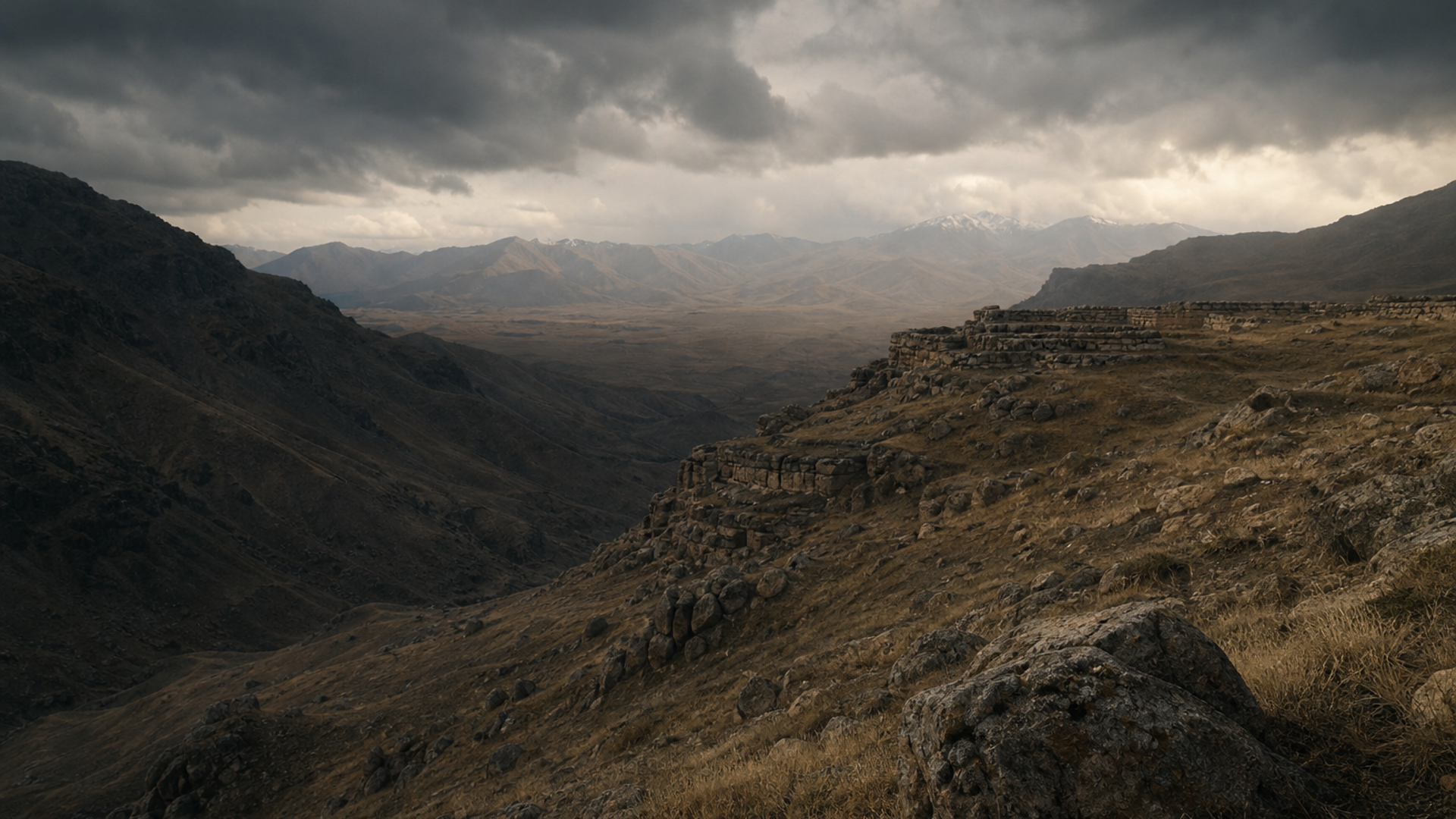
The site of Beniamin sits on the high, wind-cut uplands of Shirak Province in northwestern Armenia. Dated by radiocarbon and contextual stratigraphy to the late Hellenistic interval (commonly reported here as 61–44 BCE), the solitary human sample from this locus is a rare direct voice from a landscape shaped by mountain pastures, fortified hilltops and long-distance corridors between the Anatolian plateau and the Caucasus.

Archaeological data indicates that the region during this era was part of a mosaic of local petty kingdoms and client territories influenced by larger neighbors — Parthia to the southeast and Roman interests to the west. Material culture across contemporary sites in the Armenian highlands often shows hybrid forms: pottery shapes and metallurgical styles that blend indigenous Caucasian traditions with Hellenistic motifs. Limited evidence suggests Beniamin participated in those networks rather than being an isolated backwater.

Because only one human burial has yielded genetic material, any narrative of origin must remain cautious. This single individual offers an initial anchor point: it confirms human presence and provides a time-stamped genetic snapshot, but it cannot alone resolve questions of migration, continuity, or the precise cultural affiliations of the broader population. Additional excavations and samples from nearby settlements and cemeteries are essential to turn this whisper into a chorus.

  • Single dated burial in Beniamin (61–44 BCE) anchors the site chronologically
  • Regional archaeology shows Hellenistic and local Caucasian blends
  • Sparse sampling means origins remain provisional
Chapter IV

Daily Life & Society

In the cinematic sweep of the Armenian highlands, daily life around Beniamin would have been shaped by seasons: spring birthing of flocks, summer grazing on alpine pastures, and winters sheltered in stone-built compounds. Archaeological surveys across Shirak reveal terraced fields, simple storage pits and hearth-centered domestic spaces — patterns consistent with a mixed agro-pastoral economy.

Craft specialists likely worked metal, stone and clay within small village workshops. Traces of traded goods in nearby contemporaneous sites imply that even upland communities accessed imported items and luxury wares along east–west routes. Religious life was probably syncretic: indigenous rites reinterpreted under Hellenistic iconography, with sacred landscapes and ancestor veneration remaining focal points.

Social organization in late Hellenistic Armenia could vary from small kin-based communities to emergent local elites controlling strategic passes. Funerary practice at Beniamin — as elsewhere in the highlands — may reflect status differences through grave goods and burial orientation, but with one sampled burial we cannot generalize the social norms. Archaeological patterns suggest a resilient, adaptable society that balanced local traditions with wider cultural currents.

  • Economy likely centered on mixed farming and seasonal pastoralism
  • Material culture shows both local craft and access to long-distance trade
Chapter V

Genetic Profile

The genetic evidence from Beniamin is best read as a careful, provisional statement. Only one individual has produced ancient DNA data from the site, and no Y-DNA or mtDNA haplogroups have been reported in the provided dataset. This scarcity means that population-level claims — about ancestry proportions, migration events, or shifts in paternal or maternal lineages — are not currently supportable.

Nevertheless, the genomic method offers the kinds of answers we seek when more samples become available. In the wider Armenian Highlands, published ancient DNA studies (from other localities) commonly reveal layered ancestry: deep local Caucasus/Near Eastern components, influences traceable to Anatolian and Iranian Neolithic populations, and variable inputs related to Bronze Age steppe movements. Archaeological data indicates that the late Hellenistic period was one of interaction; genetic data from multiple individuals in this region would allow testing whether those interactions produced detectable admixture signals.

Given the single sample, the responsible interpretation is limited: this individual provides a time-stamped genetic snapshot but not a demographic profile. Any links to modern Armenian genetic continuity must be described as tentative until larger sample sizes (ideally dozens of well-dated individuals) corroborate patterns. In short: promising potential, but preliminary results.

  • Only one ancient DNA sample — findings are preliminary
  • No reported Y-DNA or mtDNA data in the supplied sample
Chapter VI

Legacy & Modern Connections

Beniamin's lone genetic voice resonates across two millennia: it reminds us that modern populations are mosaics constructed from many such snapshots. Archaeological continuity in the Armenian Highlands suggests long-term habitation and cultural persistence, while historical records describe a region repeatedly engaged by larger imperial powers. Integrating the archaeological record with ancient DNA can illuminate the tempo of change: which elements of culture reflected population movement, and which persisted through social transmission.


For contemporary Armenians and scholars alike, the Beniamin sample is a provocation rather than a conclusion. It underscores the value of targeted sampling in under-studied provinces such as Shirak. As more remains are analyzed, researchers will be able to map genetic continuity, admixture events and the biological dimensions of cultural contact. Until then, the connection between this individual and present-day communities must be framed as a hypothesis to be tested rather than a settled fact.

  • Highlights need for more sampling to test continuity with modern Armenians
  • Serves as an initial bridge between archaeology and ancient DNA in Shirak
AI Powered

AI Assistant

Ask questions about the Beniamin: A Late Hellenistic Echo culture

AI Assistant by DNAGENICS

Unlock this feature
Ask questions about the Beniamin: A Late Hellenistic Echo culture. Our AI assistant can explain genetic findings, historical context, archaeological evidence, and modern connections.
Sample AI Analysis

The Beniamin: A Late Hellenistic Echo culture represents a fascinating chapter in human history...

Genetic analysis reveals connections to earlier populations while showing evidence of unique adaptations and cultural innovations. The ancient DNA samples provide insights into migration patterns, social structures, and the biological relationships between ancient populations.

This is a preview of the AI analysis. Unlock the full AI Assistant to explore detailed insights about:

  • Genetic composition and ancestry
  • Migration patterns and origins
  • Daily life and cultural practices
  • Modern genetic legacy
Use code for 35% off Expires May 21



