Menu
Store
Blog
Armenia_Beniamin_EIA Beniamin, Shirak Province, Armenia

Beniamin: A Lone Voice of Early Iron Age Armenia

A single burial from Shirak Province illuminates population threads at the dawn of the Iron Age

1213 CE - 1055 BCE
1 Ancient Samples
Scroll to begin
Chapter I

The Story

Understanding the Beniamin: A Lone Voice of Early Iron Age Armenia culture

Archaeological and genetic data from one Early Iron Age individual (1213–1055 BCE) at Beniamin, Shirak Province, Armenia, offers a tentative glimpse into local continuity and regional interactions in the Armenian Highlands. Limited evidence; conclusions remain preliminary.

Time Period

1213–1055 BCE (Early Iron Age)

Region

Beniamin, Shirak Province, Armenia

Common Y-DNA

Not reported (single sample)

Common mtDNA

Not reported (single sample)

Chapter II

Timeline

Key moments in the history of this culture

1200 BCE

Beniamin individual dated

Single human burial from Beniamin (Shirak Province) dated to c. 1213–1055 BCE, marking an Early Iron Age data point in the Armenian Highlands.

Chapter III

Origins & Emergence

The Beniamin burial sits at the cusp of the Late Bronze and Early Iron Ages in the Armenian Highlands, a period of shifting polities and intensifying regional connections. Archaeological data indicates the site in Shirak Province was occupied within the broad window 1213–1055 BCE. Material culture in nearby contemporary settlements shows continuity with Bronze Age traditions alongside innovations in metallurgy and craft.

Limited evidence suggests communities in this upland corridor maintained long-term ties to neighbouring highland and lowland populations — trading metals, livestock practices, and iconography. The single genetic sample from Beniamin cannot alone map migration routes, but its chronological placement makes it a valuable datum for understanding demographic changes that accompanied the Early Iron Age across Armenia.

In cinematic terms, Beniamin captures a moment when old Bronze Age landscapes were becoming re-sung under iron skies: familiar lifeways refracted through new technologies and wider networks. Archaeological context implies continuity punctuated by interaction rather than wholesale population replacement, although more samples are needed to test that pattern robustly.

  • Site: Beniamin, Shirak Province, Armenia
  • Date range: 1213–1055 BCE (single dated individual)
  • Evidence suggests continuity with Bronze Age traditions alongside new contacts
Chapter IV

Daily Life & Society

Archaeological traces from the region around Beniamin evoke a rugged, endemic lifeway adapted to the Armenian highlands. Domestic architecture of the period often includes stone foundations and storage pits; animal husbandry (sheep, goats, cattle) dominated subsistence alongside dry farming in favorable valleys. Metalwork — increasingly iron alongside bronze — appears in tools and adornment, reflecting technological transitions.

Burial practices across Early Iron Age Armenia range from simple inhumations to more elaborate graves with grave goods. The Beniamin individual came from a context that, while modest, links to regional mortuary traditions: oriented interment, offerings of pottery or metal fragments, and placement within community cemeteries. Such practices suggest social identities negotiated through craft, diet, and kin networks rather than grand urban palaces at this specific locality.

Archaeobotanical and zooarchaeological data from nearby sites indicate seasonal mobility and mixed farming strategies. Life here would have been shaped by steep seasons, communal labor, and long-distance exchange — a landscape of weathered stones, smoke, and the ringing of metalwork as new techniques spread.

  • Subsistence: mixed farming and pastoralism
  • Material culture: increasing presence of iron alongside bronze
Chapter V

Genetic Profile

Only one genetic sample is available for Armenia_Beniamin_EIA (1213–1055 BCE). Because the sample count is one, any genetic inferences are preliminary and must be treated with caution. Archaeogenetic studies of the Armenian Highlands more broadly often reveal a mosaic ancestry: deep local Caucasus/Iranian-related components combined with varying degrees of steppe-related ancestry introduced during the Bronze Age and later movements.

The Beniamin individual's DNA contributes a single data point within this larger tapestry. Archaeological data indicates local continuity in material culture, and genetic evidence from neighboring sites has sometimes supported continuity with incremental admixture rather than massive replacement. Therefore, the Beniamin sample is best interpreted as a tentative indicator that local populations persisted into the Early Iron Age while remaining connected to wider regional gene flow.

Future sampling from Shirak Province and contemporary cemeteries will be required to resolve whether Beniamin represents local ancestry continuity, demographic influx, or admixture dynamics. Researchers should emphasize the limited sample size when integrating these results into models of population history.

  • Sample count: 1 — conclusions are preliminary
  • Findings must be compared cautiously with broader regional aDNA trends
Chapter VI

Legacy & Modern Connections

The single Early Iron Age individual from Beniamin resonates with long-term stories of the Armenian Highlands: persistence of local communities, adaptive economies, and porous frontiers of exchange. Modern populations in Armenia carry complex genetic legacies shaped by millennia of local continuity and episodic admixture. While it is premature to draw direct lines from one ancient individual to present-day groups, this burial adds a human face to the dense palimpsest of the region.

Archaeologically, Beniamin helps anchor narratives about how craft, burial, and subsistence evolved during a transformative era. Genetically, it underscores the need for denser sampling to illuminate how Iron Age social change mapped onto population change. In museum displays, the story of Beniamin can be told as an evocative, cautious beacon: a single ember of DNA that lights questions about ancestry, movement, and the slow accumulation of cultural memory in the Armenian Highlands.

  • Adds to a mosaic of long-term continuity in the Armenian Highlands
  • Highlights need for more samples to link ancient individuals to modern populations
Chapter VII

Sample Catalog

1 ancient DNA samples associated with the Beniamin: A Lone Voice of Early Iron Age Armenia culture

Ancient DNA samples from this era, providing genetic insights into the people who lived during this period.
1 / 1 samples
Portrait Sample Country Era Date Culture Sex Y-DNA mtDNA
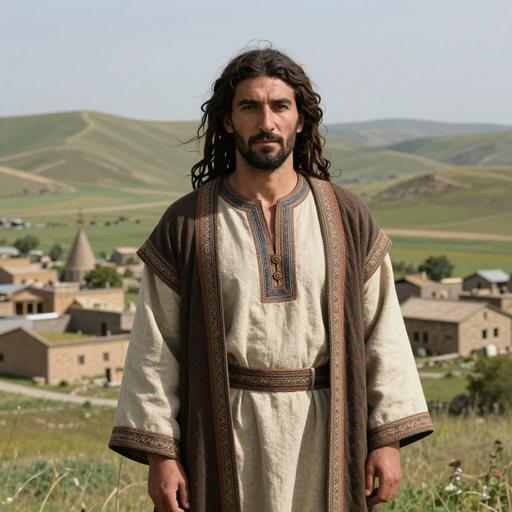
Portrait of ancient individual R11668 from Armenia, dated 1213 BCE
R11668
Armenia Armenia_Beniamin_EIA 1213 BCE Ancient Near Eastern Civilization M - -
AI Powered

AI Assistant

Ask questions about the Beniamin: A Lone Voice of Early Iron Age Armenia culture

AI Assistant by DNAGENICS

Unlock this feature
Ask questions about the Beniamin: A Lone Voice of Early Iron Age Armenia culture. Our AI assistant can explain genetic findings, historical context, archaeological evidence, and modern connections.

Sample AI Analysis

The Beniamin: A Lone Voice of Early Iron Age Armenia culture represents a fascinating chapter in human history...

Genetic analysis reveals connections to earlier populations while showing evidence of unique adaptations and cultural innovations. The ancient DNA samples provide insights into migration patterns, social structures, and the biological relationships between ancient populations.

This is a preview of the AI analysis. Unlock the full AI Assistant to explore detailed insights about:

  • Genetic composition and ancestry
  • Migration patterns and origins
  • Daily life and cultural practices
  • Modern genetic legacy
Use code for 35% off Expires May 21