Menu
Store
Blog
Armenia_Beniamin Shirak Province, Armenia

Beniamin: A Voice from Hellenistic Armenia

A lone genome from Shirak Province illuminates life on the Armenian highland's stage

61 CE - 44 BCE
1 Ancient Samples
Scroll to begin
Chapter I

The Story

Understanding the Beniamin: A Voice from Hellenistic Armenia culture

Archaeological human remains from Beniamin (Shirak Province, Armenia), dated 61–44 BCE, provide a single ancient DNA glimpse into Late Hellenistic Armenia. Limited sample size makes conclusions preliminary, but context ties material culture to regional networks.

Time Period

61–44 BCE

Region

Shirak Province, Armenia

Common Y-DNA

Not reported (single sample)

Common mtDNA

Not reported (single sample)

Chapter II

Timeline

Key moments in the history of this culture

61 BCE

Burial from Beniamin dated

A human remain recovered at Beniamin (Shirak Province) is radiocarbon-dated to the late Hellenistic period (61–44 BCE), providing the single ancient DNA sample for this profile.

Chapter III

Origins & Emergence

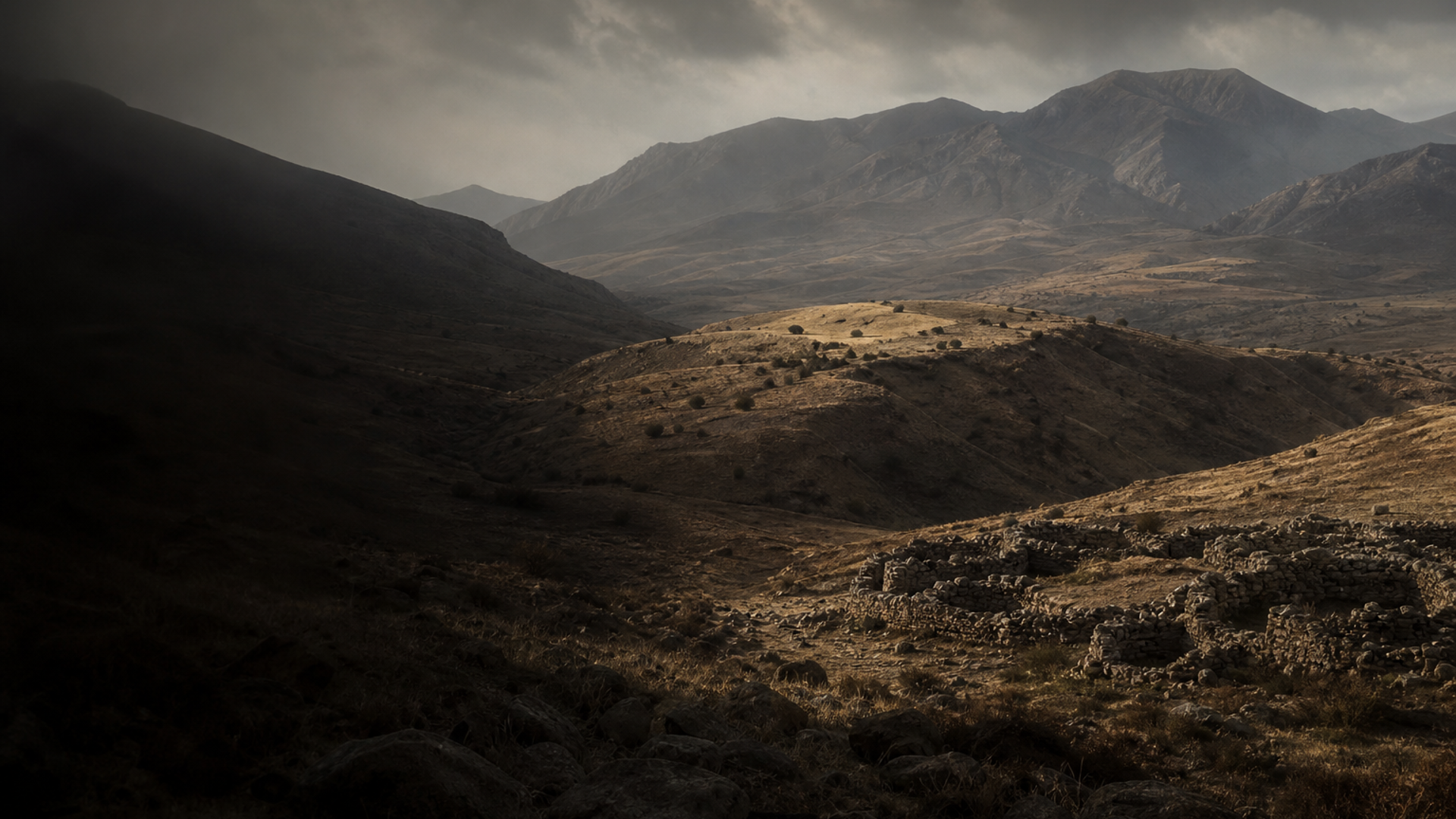
Beniamin sits on the cold, wind-sculpted plateau of the Shirak Province in northwest Armenia. The human remains assigned to the Armenia_Beniamin profile derive from this settlement landscape and are dated to the late Hellenistic era (61–44 BCE). Archaeological data indicates continuity of habitation in the Armenian highlands across the Iron Age into the Hellenistic and early Roman periods, with communities positioned on trade routes connecting the Caucasus, Anatolia, and Mesopotamia.

Limited evidence suggests the individual from Beniamin lived in a society shaped by local Armenian traditions and wider Hellenistic influences — a cultural palimpsest visible in pottery styles, settlement patterns, and mortuary practices across the region. However, with only a single sampled individual, population-level conclusions about migration, admixture, or social change remain tentative. The archaeological record at nearby sites (regional hilltop tell sites and plain settlements) points to mixed subsistence economies of herding and cereal agriculture; these economic strategies likely framed the lifeways of Beniamin inhabitants.

Because the sample count is low, researchers emphasize careful integration of material culture, stratigraphy, and cautious genetic interpretation. Future excavations and additional genomes from Shirak Province will be required to move from evocative possibility to robust narrative.

  • Located in Shirak Province, northwest Armenia
  • Dated to the late Hellenistic period (61–44 BCE)
  • Conclusions are preliminary due to a single sampled individual
Chapter IV

Daily Life & Society

The landscape around Beniamin would have framed daily life with sharp seasonal contrasts: cool highland summers and long winters that favored mixed herding and limited agriculture. Archaeological parallels across the Armenian highlands suggest households organized around extended families, animal husbandry (sheep, goats), and cultivation of hulled cereals. Craft specialization — pottery, textile production, and metalworking — existed at regional centers and likely filtered cultural and economic practices into smaller settlements.

Archaeological data indicates that funerary practices in the wider region combined simple inhumation with varied grave goods, reflecting social differentiation and long-distance contacts. Trade routes passing through the Armenian plateau connected Beniamin to Hellenistic material culture and, intermittently, to luxury exchange networks reaching the Mediterranean and Mesopotamia.

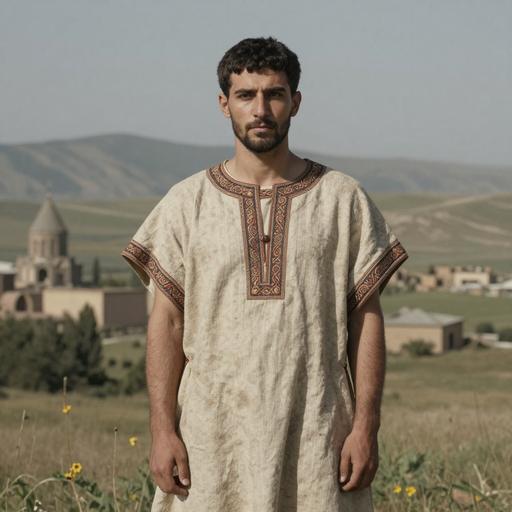
Cinematic image: a single person moving through terraced fields and dusty paths, bound to local rhythms yet touched by imported styles. Yet, without a broader set of burials and domestic assemblages from Beniamin itself, reconstructions of social hierarchy, craft specialization, and long-distance exchange remain hypotheses awaiting more evidence.

  • Mixed economy of herding and cereal cultivation inferred from regional parallels
  • Funerary variability suggests social differentiation and external contacts
Chapter V

Genetic Profile

The Armenia_Beniamin dataset currently rests on a single ancient genome dated to 61–44 BCE from Beniamin, Shirak Province. Because N = 1, genetic inferences must be framed as provisional: this individual offers a snapshot, not a population portrait. Reported common Y- and mitochondrial haplogroups are not available for this profile, and the absence of multiple samples prevents meaningful estimates of genetic diversity, sex-biased admixture, or lineage frequencies.

Broader ancient DNA studies across the Armenian Highland and Caucasus region show recurrent patterns of genetic continuity interspersed with pulses of admixture from Anatolian, Caucasus, and steppe-related sources over millennia. It is therefore plausible that the Beniamin individual reflects a local mosaic of ancestries shaped by long-standing highland populations and episodic contacts during the Hellenistic era. Yet without comparative genomes from neighboring settlements and chronologically adjacent layers, any alignment with regional genetic clusters remains speculative.

Given the single-sample context, responsible interpretation emphasizes archaeological integration: genetic signals must be corroborated with material culture, burial context, and stratigraphic dating. Additional sampling from Shirak Province is essential to test hypotheses about population continuity, mobility, and social structure in Late Hellenistic Armenia.

  • Based on a single genome (N = 1); conclusions are highly preliminary
  • No Y- or mtDNA haplogroups reported for this profile
Chapter VI

Legacy & Modern Connections

The lone genome from Beniamin connects the modern observer to a human life in the Armenian highlands during tumultuous decades of the late 1st century BCE — a period of shifting kingdoms, local resilience, and transregional exchange. Archaeogenetic study, even when constrained by sample size, opens a dialogue between ancient bones and living communities: it invites questions about ancestry, continuity, and cultural memory in contemporary Armenia.

But the legacy is double-edged. With only one sample, the narrative must resist overreach. The responsible scientific stance celebrates the evocative power of the Beniamin individual while insisting that broader claims about population history require more data. Future excavations and targeted ancient DNA sampling in Shirak Province can transform the Beniamin whisper into a chorus that more reliably charts how people in the Armenian highlands moved, mixed, and persisted across centuries.

  • Connects present-day Armenia to a tangible Hellenistic-era individual
  • Highlights need for further excavation and genomic sampling in Shirak Province
Chapter VII

Sample Catalog

1 ancient DNA samples associated with the Beniamin: A Voice from Hellenistic Armenia culture

Ancient DNA samples from this era, providing genetic insights into the people who lived during this period.

1 / 1 samples
Portrait Sample Country Era Date Culture Sex Y-DNA mtDNA
Portrait of ancient individual R11541 from Armenia, dated 44 BCE
R11541
Armenia Armenia_Beniamin 44 BCE Ancient Near Eastern Civilization M - -
AI Powered

AI Assistant

Ask questions about the Beniamin: A Voice from Hellenistic Armenia culture

AI Assistant by DNAGENICS

Unlock this feature
Ask questions about the Beniamin: A Voice from Hellenistic Armenia culture. Our AI assistant can explain genetic findings, historical context, archaeological evidence, and modern connections.
Sample AI Analysis

The Beniamin: A Voice from Hellenistic Armenia culture represents a fascinating chapter in human history...

Genetic analysis reveals connections to earlier populations while showing evidence of unique adaptations and cultural innovations. The ancient DNA samples provide insights into migration patterns, social structures, and the biological relationships between ancient populations.

This is a preview of the AI analysis. Unlock the full AI Assistant to explore detailed insights about:

  • Genetic composition and ancestry
  • Migration patterns and origins
  • Daily life and cultural practices
  • Modern genetic legacy
Use code for 35% off Expires May 21