Menu
Store
Blog
Shirak Province, Armenia

Beniamin, Shirak — Iron Age Armenia

A lone Iron Age genome from Beniamin links burial landscapes in Shirak to regional Iron Age dynamics.

1047 CE - 926 BCE
Scroll to begin
Chapter I

The Story

Understanding the Beniamin, Shirak — Iron Age Armenia culture

Archaeogenetic profile of a single Iron Age individual (1047–926 BCE) from Beniamin, Shirak Province, Armenia. Combines burial context, material culture and limited DNA evidence to explore population continuity and regional interaction in Iron Age Armenia. Conclusions remain preliminary.

Time Period

1047–926 BCE

Region

Shirak Province, Armenia

Common Y-DNA

Unknown (no reported data)

Common mtDNA

Unknown (no reported data)

Chapter II

Timeline

Key moments in the history of this culture

1000 BCE

Beniamin burial dated

Archaeological and radiocarbon dates place the sampled burial at Beniamin in the mid–late Iron Age (1047–926 BCE); this single genome offers a preliminary genetic snapshot of the region.

Chapter III

Origins & Emergence

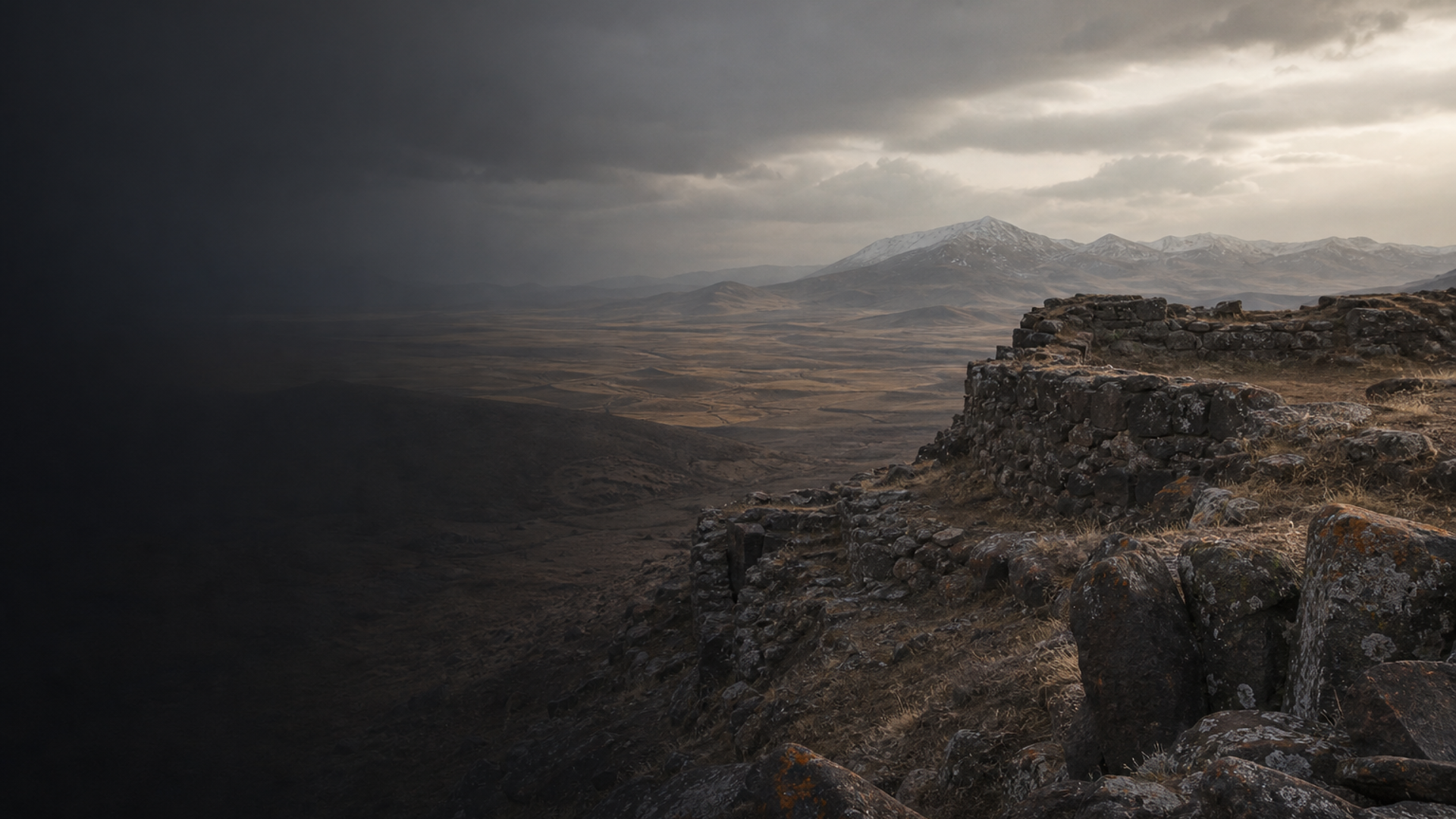
Beniamin sits on the high plains of Shirak Province, a landscape of wind-swept ridges and long occupation histories stretching back into the Bronze Age. The individual sampled here dates to 1047–926 BCE, placing it firmly within the tapestry of Iron Age Armenia, a time when new political entities, including the rise of Urartian power in parts of the Armenian Highlands, shaped settlement patterns and material expression. Archaeological data from Shirak and neighboring valleys indicates continued local traditions of farming and pastoralism, combined with broader exchange networks visible in metalwork and imported ceramics.

This single burial from Beniamin offers a narrow but evocative window into regional emergence: funerary choices, artifact assemblages, and stratigraphic position anchor the person in a specific cultural horizon. Limited evidence suggests interaction across the highlands — trade routes and seasonal mobility likely connected Shirak communities to both lowland Anatolia and the South Caucasus. However, with only one sampled genome, population-level inferences must remain tentative. Archaeological indicators show continuity with Late Bronze Age lifeways, yet they also hint at shifting social landscapes in the early first millennium BCE.

Taken together, the Beniamin find is best read as a local thread in a larger Iron Age fabric — illuminating one life that intersected with broader regional currents rather than rewriting regional history on its own.

  • Single sampled burial dated 1047–926 BCE in Beniamin, Shirak Province
  • Archaeological context aligns with Iron Age Armenia and regional interaction
  • Conclusions about population origins are provisional due to sample size
Chapter IV

Daily Life & Society

The material world of Iron Age Shirak would have been tactile and rhythmic: flocks moving between winter and summer pastures, villages clustered near water, and craftsmen shaping bronze, iron and ceramics by hand. Although direct excavation reports from Beniamin are limited, regional sites in northern Armenia reveal mixed subsistence strategies — cereal cultivation, animal husbandry, and seasonal mobility — that sustained small, interconnected communities.

Funerary practice provides a particularly poignant glimpse into social values. Graves in the region range from simple interments to more furnished burials that include tools, ornaments, and occasionally weapons. These objects are not merely goods; they are curated elements of identity, signaling household roles, craft specializations, or long-distance ties. Architectural remains in nearby Iron Age settlements show mudbrick or stone constructions with storage installations, suggesting food surpluses and surplus management that underpinned social differentiation.

Craft production — metalworking, textile spinning, and pottery — created visible signatures in the archaeological record. Decorative motifs and manufacturing techniques attest to artisan knowledge transmitted across generations and sometimes across borders. The single individual from Beniamin lived amid these practices; their bone chemistry, isotopes, or associated artifacts (where available) could one day reveal diet, mobility, and social position. Presently, such inferences are conjectural and should be treated cautiously.

  • Economy likely based on mixed farming, herding, and seasonal mobility
  • Material culture reflects local traditions with regional exchanges
Chapter V

Genetic Profile

The genetic evidence for Armenia_Beniamin_IA is derived from a single individual dated to 1047–926 BCE. Because the dataset contains only one genome, any population-level claims are highly provisional. Archaeogenetic analyses of the Caucasus and Armenian Highlands more broadly have documented complex ancestry profiles in the Iron Age — often a tapestry of long-established local Bronze Age ancestry with varying input from neighboring regions — but Beniamin’s contribution to this picture is necessarily limited.

For this sample, uniparental haplogroups (Y-DNA, mtDNA) are not reported in the summary dataset, so no definitive statements about paternal or maternal lineages can be made here. Autosomal data from a single individual can still inform preliminary questions: genomic affinities (e.g., clustering with contemporaneous Armenian or Caucasian groups), signals of local continuity versus admixture, and individual mobility through isotopic correlations. Yet with n=1, patterns could reflect family-level idiosyncrasy rather than regional trends.

Best practice emphasizes integrating this genome with other Iron Age and subsequent datasets from Armenia and adjacent regions. As more samples from Shirak and neighboring valleys accumulate, researchers can test whether the Beniamin individual represents typical local ancestry, an immigrant episode, or an outlying genetic profile. For now, the genetic story of Beniamin is an evocative hint — a single strand awaiting the larger weave.

  • Dataset contains one genome (n=1); population conclusions are preliminary
  • No common uniparental haplogroups reported for this sample in the provided data
Chapter VI

Legacy & Modern Connections

Cinematic landscapes and long memory intertwine in the Armenian Highlands: the people of Shirak are heirs to layered histories visible in stone, soil and now in DNA. The Beniamin individual evokes continuity — farmland, upland pastures and pathways of exchange that persisted through the Iron Age into later centuries. Yet genetics warns against simple narratives; a single genome cannot resolve questions about continuity between ancient communities and modern Armenians.

What this sample does offer is a bridge between archaeology and genomics: a concretely dated point where material culture and biological data meet. As more Iron Age genomes are recovered from Shirak and beyond, researchers will be able to map genetic shifts, trace mobility corridors, and correlate cultural change with biological ancestry. Until such datasets grow, statements about modern connections must remain cautious and framed as hypotheses.


In museums and public narratives, Beniamin's story should be conveyed as part of an unfolding inquiry — evocative, grounded in place, and open-ended, inviting further discovery.

  • Provides an anchored data point linking archaeology and genomics in Shirak
  • Cannot alone establish genetic continuity with modern populations; more samples needed
AI Powered

AI Assistant

Ask questions about the Beniamin, Shirak — Iron Age Armenia culture

AI Assistant by DNAGENICS

Unlock this feature
Ask questions about the Beniamin, Shirak — Iron Age Armenia culture. Our AI assistant can explain genetic findings, historical context, archaeological evidence, and modern connections.
Sample AI Analysis

The Beniamin, Shirak — Iron Age Armenia culture represents a fascinating chapter in human history...

Genetic analysis reveals connections to earlier populations while showing evidence of unique adaptations and cultural innovations. The ancient DNA samples provide insights into migration patterns, social structures, and the biological relationships between ancient populations.

This is a preview of the AI analysis. Unlock the full AI Assistant to explore detailed insights about:

  • Genetic composition and ancestry
  • Migration patterns and origins
  • Daily life and cultural practices
  • Modern genetic legacy
Use code for 35% off Expires May 21