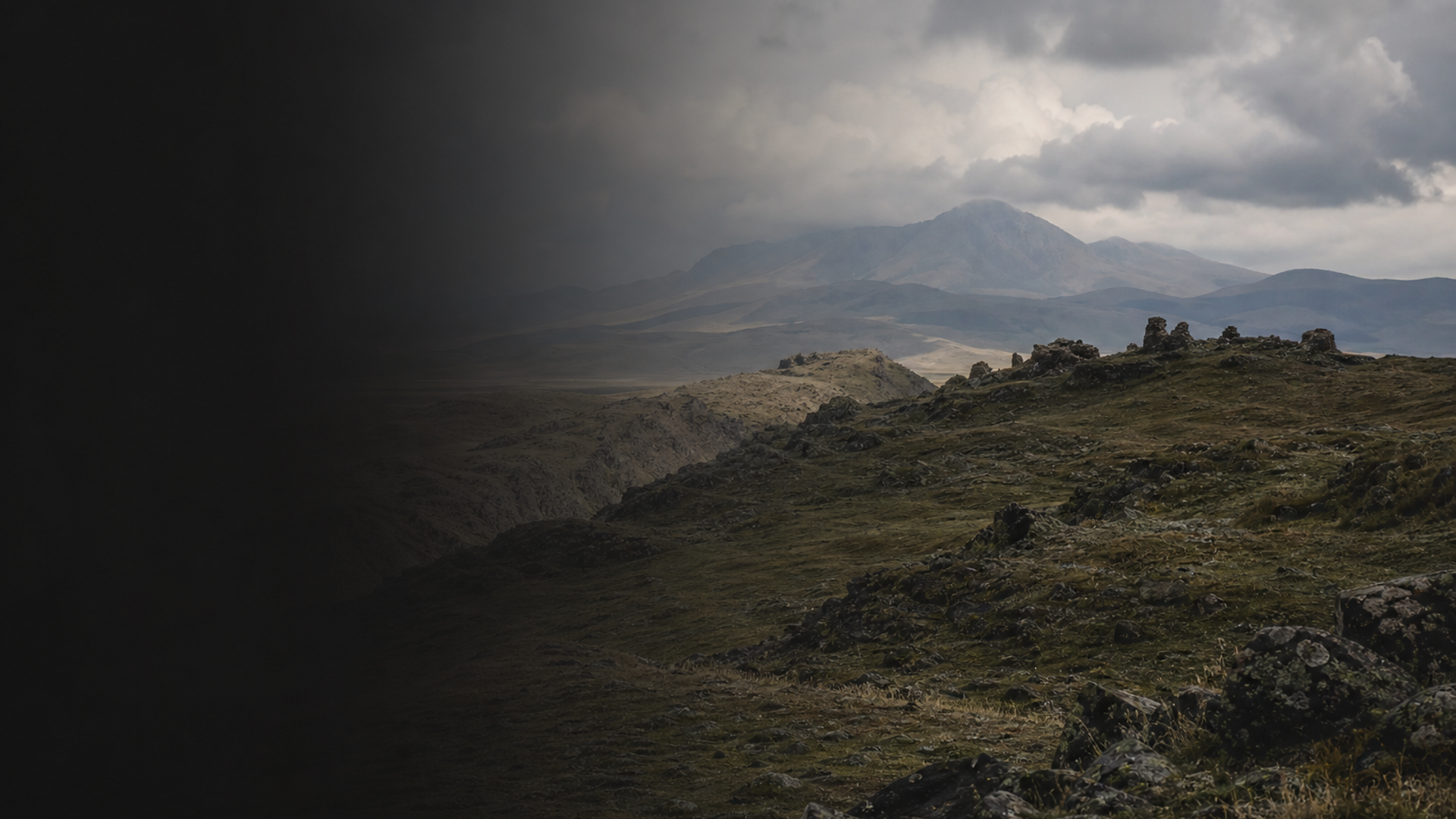
The village of Beniamin sits on the high rolling plateau of Shirak Province in northwestern Armenia — a landscape of wind-creased grasslands and limestone terraces that has been a human corridor for millennia. Archaeological data indicates burial activity in Beniamin dated to the late antique period (419–545 CE), placing these remains squarely in the era often labeled Sasanian Armenia, when the eastern Roman and Sasanian Persian spheres intersected across the Armenian highlands.
Material culture recovered in regional surveys (pottery forms, funerary practice parallels) suggests continuity with local Armenian traditions while also showing affinities with broader Sasanian-era styles. This speaks to a community that maintained local identity even as imperial networks brought administrative, religious, and commercial pressures to the region. Limited evidence suggests that the inhabitants of Beniamin lived within a mosaic of rural hamlets, fortified settlements, and pilgrimage routes that together shaped daily life and long-term demographic patterns.
Because only four ancient genomes have been sampled from Beniamin, conclusions about population origins remain provisional. Archaeology provides the contextual frame — funerary contexts, stratigraphy, and associated artifacts — while genetics begins to probe biological ancestry, migration, and kinship. Combining these lines of evidence produces a vivid but cautious picture: a late-antique Armenian community embedded in the Sasanian world, retaining local practices while engaging with broader regional currents.