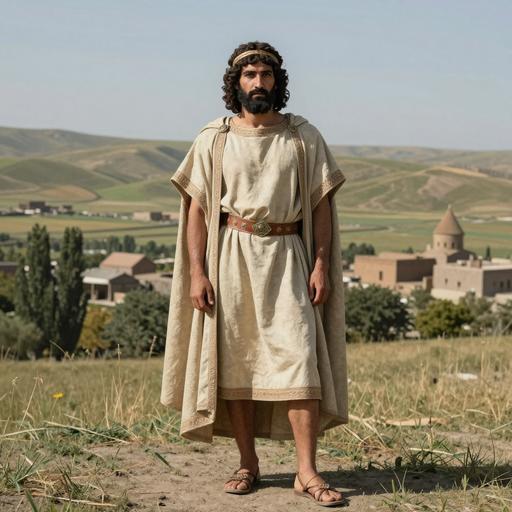
Perched on the high plateau of the Armenian Highlands, the village of Beniamin in Shirak Province yields a slender but evocative archaeological record spanning from the mid-first millennium BCE into late antiquity. Radiocarbon-calibrated samples tied to burial contexts and settlement traces place human activity here between 450 BCE and 550 CE — a period when the Achaemenid imperial system reached into the Armenian marches and later when local polities negotiated Roman, Parthian, and Sasanian pressures.
Archaeological data indicates continuity of occupation rather than abrupt replacement: ceramics, architectural fragments, and mortuary traces (where excavation was possible) suggest a community rooted in highland agricultural and pastoral lifeways while participating in wider economic and cultural networks. Limited evidence suggests some material culture reflects Achaemenid administrative and artistic influences, although local forms persist.
Because the Beniamin dataset is small and sampling is uneven, interpretations about initial settlement or direct political ties must remain cautious. What emerges clearly is a location at the crossroads: topographically conservative yet open to exchange, where local identity was formed in conversation with imperial and regional forces. This interplay between local tradition and external influence frames the archaeological story of Beniamin.