Menu
Store
Blog
Israel_Ashkelon_LBA Israel, Jordan, Lebanon (Levant)

Canaanite Cities of the Levant

Urban seafarers and inland polities from 2340–1100 BCE, seen through archaeology and DNA

2340 CE - 1100 BCE
3 Ancient Samples
Scroll to begin
Chapter I

The Story

Understanding the Canaanite Cities of the Levant culture

Archaeological and genetic evidence from 89 individuals (2340–1100 BCE) illuminates the Canaanite world across Israel, Jordan, and Lebanon—urban life, long-distance links, and a largely local Levantine gene pool with modest incoming lineages.

Time Period

2340–1100 BCE

Region

Israel, Jordan, Lebanon (Levant)

Common Y-DNA

J (dominant), R, E, CT, J2a

Common mtDNA

U, H, N, T, J

Chapter II

Timeline

Key moments in the history of this culture

2500 BCE

Rise of Urban Networks

Early urbanization in the southern Levant sets the stage for Canaanite city-states and regional trade hubs that persist into the Bronze Age.

Chapter III

Origins & Emergence

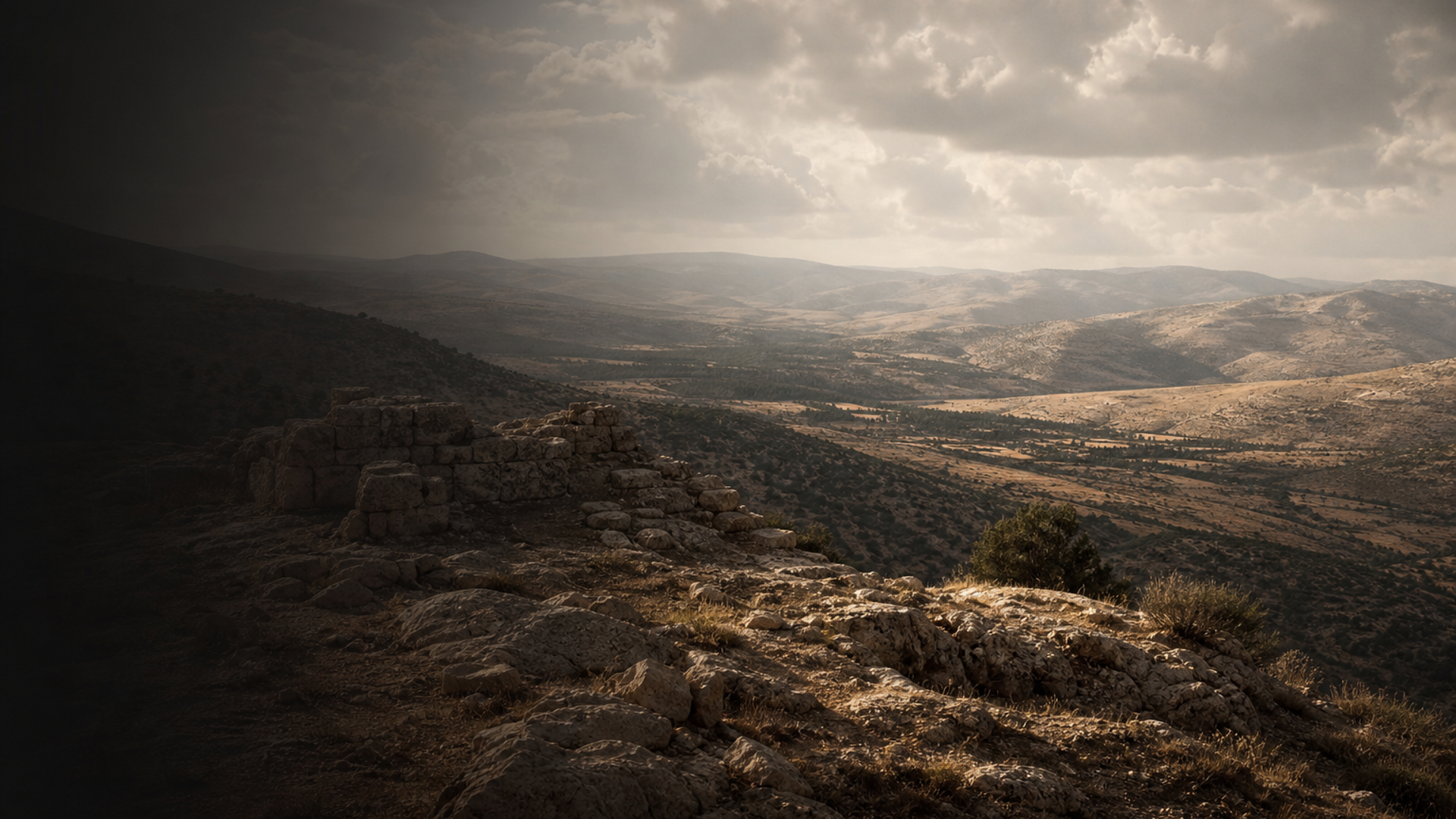
From fortified hilltops to bustling harbors, the people we call Canaanites emerge in the archaeological record as a network of urban polities in the southern Levant. Key sites represented among the genetic samples include Ashkelon, Megiddo (Jezreel Valley), Hazor, Sidon (College Site), Tel Shadud, Yehud, and Baq'ah in Jordan. Material culture—pottery types, urban planning, imported ceramics, and inscriptions—shows long-standing ties across the Eastern Mediterranean and deep continuity with earlier Middle Bronze Age traditions.

Archaeological data indicate that from the early second millennium BCE Canaanite cities consolidated trade, craft production, and political hierarchies. The date range represented here (2340–1100 BCE) spans major geopolitical phases: Middle to Late Bronze Age urbanism, Late Bronze Age internationalism, and the period of Late Bronze Age collapse and transition after ca. 1200 BCE. Limited evidence suggests some demographic mobility linked to seafaring and trade, but the overall picture from sites sampled is of a population rooted in the Levant with cultural adaptability.

Genetic sampling across multiple sites provides a spatially and temporally grounded view of emergence: rather than a sudden replacement, the archaeological and genetic signals point to local development layered with intermittent outside contacts and small-scale gene flow.

  • Urban network across Levantine sites: Ashkelon, Megiddo, Hazor, Sidon, Yehud, Tel Shadud, Baq'ah
  • Cultural continuity from Middle to Late Bronze Age; active international trade
  • Archaeology suggests local development with episodic external connections
Chapter IV

Daily Life & Society

Life in Canaanite towns combined agrarian hinterlands with artisan quarters and port activity. Excavations at Megiddo and Hazor reveal complex streets, storage facilities, and craft workshops; Sidon and Ashkelon emphasize maritime commerce and ship-provisioning infrastructure. Archaeobotanical and zooarchaeological remains indicate mixed farming — cereals, olives, grapes — supplemented by sheep, goats, and cattle. Household archaeology shows specialized production: metallurgy, textile workshops, and storage jars that trace trade routes.

Social organization appears to have been urban and hierarchical, with elites controlling long-distance exchange in timber, metals, and luxury goods. Writing and administrative artifacts (seals, inscribed items) attest to bureaucratic practices in some sites. Religious life was embedded in city topography—shrines, cultic installations, and funerary practices varied regionally but shared common motifs across the Levant.

Material culture, burial patterns, and isotopic studies (where available) show a mix of local lifelong residents and individuals with non-local origins—consistent with merchant mobility and diplomatic ties. This mosaic of rooted communities and moving people produced the richly connected society archaeologists recover in the stratified layers of Canaanite cities.

  • Mixed agrarian-urban economy with specialized crafts and maritime trade
  • Hierarchical urban societies with elites managing international exchange
Chapter V

Genetic Profile

The genetic dataset of 89 individuals dated 2340–1100 BCE provides a robust window into Canaanite population structure. Y-chromosome data are dominated by haplogroup J (37 samples), with smaller counts of R (6), E (3), CT (2), and J2a (2). This prevalence of J is consistent with deep-rooted Levantine paternal lineages; J2a and E occur at lower frequencies and may reflect regional diversity and older Near Eastern ancestries. The presence of R in a minority of males suggests occasional influxes from farther afield—these could represent individuals connected to long-distance trade, mercantile networks, or small-scale migrations rather than wholesale population replacement.

Mitochondrial diversity is similarly broad: U (11), H (10), N (10), T (8), and J (6) point to varied maternal ancestries within the Levantine gene pool. This maternal diversity aligns with archaeological indications of mobility, especially along maritime and inland trade corridors. Overall genomic patterns indicate substantial genetic continuity with earlier Levantine populations across the Middle and Late Bronze Ages, punctuated by modest admixture signals consistent with contacts from Anatolia, the Aegean, and perhaps northern Mesopotamia.

While the sample size is larger than many ancient DNA studies, geographic clustering of samples and temporal depth mean some fine-scale patterns remain uncertain. Future sampling from additional sites and tighter chronological controls will help clarify the timing and sources of the minor non-local components observed here.

  • Dominant Y-DNA haplogroup J, with minority R and E lineages
  • mtDNA diversity (U, H, N, T, J) indicates varied maternal ancestries and mobility
Chapter VI

Legacy & Modern Connections

The Canaanite genetic and archaeological signature contributed substantially to later Levantine populations. Archaeologically iconic cities—Sidon, Tyre, Ashkelon—continued as cultural and commercial centers into the Iron Age and classical periods. Genetically, the predominance of haplogroup J and the mix of mitochondrial lineages in these Bronze Age samples form part of the regional substrate that underlies many modern Levantine populations.

However, continuity is not absolute. Subsequent invasions, migrations, and historical processes (including Iron Age movements, Persian, Hellenistic, Roman, Arab, and later medieval events) layered new ancestries over the Bronze Age core. Therefore, while modern populations in Lebanon, Israel, and Jordan retain elements of Canaanite-era ancestry, they also reflect millennia of additional genetic inputs. The archaeological record paired with ancient DNA thus offers a cinematic view: a rooted Levantine people whose towns hummed with local life and international connections, leaving a genetic echo still detectable in the region today.

  • Canaanite genetic components contribute to the Levantine ancestral foundation
  • Later historical admixture overlays Bronze Age continuity—complex modern heritage
Chapter VII

Sample Catalog

3 ancient DNA samples associated with the Canaanite Cities of the Levant culture

Ancient DNA samples from this era, providing genetic insights into the people who lived during this period.

3 / 3 samples
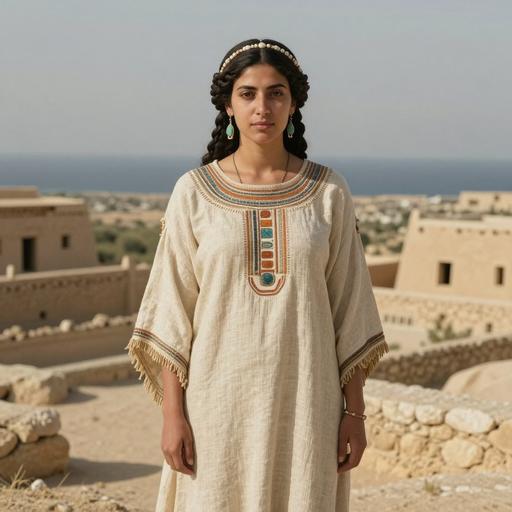
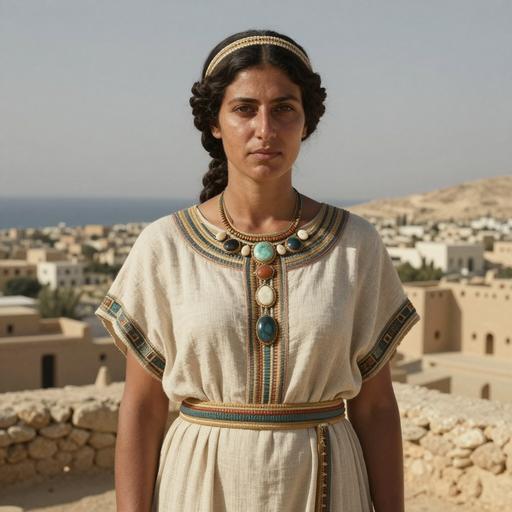
Portrait Sample Country Era Date Culture Sex Y-DNA mtDNA
Portrait of ancient individual ASH034 from Israel, dated 1700 BCE
ASH034
Israel Israel_Ashkelon_LBA 1700 BCE Canaanite F - U3b1a
Portrait of ancient individual ASH029 from Israel, dated 1614 BCE
ASH029
Israel Israel_Ashkelon_LBA 1614 BCE Canaanite F - H66a
Portrait of ancient individual ASH033 from Israel, dated 1745 BCE
ASH033
Israel Israel_Ashkelon_LBA 1745 BCE Canaanite F - U3a-a*
AI Powered

AI Assistant

Ask questions about the Canaanite Cities of the Levant culture

AI Assistant by DNAGENICS

Unlock this feature
Ask questions about the Canaanite Cities of the Levant culture. Our AI assistant can explain genetic findings, historical context, archaeological evidence, and modern connections.
Sample AI Analysis

The Canaanite Cities of the Levant culture represents a fascinating chapter in human history...

Genetic analysis reveals connections to earlier populations while showing evidence of unique adaptations and cultural innovations. The ancient DNA samples provide insights into migration patterns, social structures, and the biological relationships between ancient populations.

This is a preview of the AI analysis. Unlock the full AI Assistant to explore detailed insights about:

  • Genetic composition and ancestry
  • Migration patterns and origins
  • Daily life and cultural practices
  • Modern genetic legacy